The morning rush inside a Seoul coffee shop is a choreographed ballet of urgency. Steam hisses. Digital pagers vibrate in the palms of exhausted office workers. Baristas move with the synchronized precision of assembly-line workers, passing off hundreds of iced Americanos to a demographic that practically runs on caffeine. In South Korea, coffee is not a luxury. It is infrastructure.
When you sit in the corner of one of these bustling hubs, you realize that a brand like Starbucks is not just selling roasted beans. It is selling sanctuary. It is selling a predictable, safe third space between the crushing pressure of the corporate office and the cramped reality of high-rise apartments.
But sanctuary is a fragile thing. It takes decades to build and only seconds to shatter. A single piece of marketing copy, dropped into the digital ether, can turn a beloved daily ritual into a ideological battleground.
That is exactly what happened when Starbucks Korea released a promotional video that sent shockwaves through its massive local customer base. What was meant to be a routine advertisement quickly spiraled into a corporate nightmare, forcing the company’s top executive to make a public, humbling apology.
The crisis did not spark from a defective product or a financial scam. It triggered something far more volatile: the deeply fractured landscape of modern gender politics.
The Anatomy of a Word
To understand why a simple advertisement caused such a fierce backlash, we have to look closely at the language used. Language is a minefield. In highly connected, hyper-competitive societies, words carry historical baggage that can detonate if mishandled.
The promotional material in question featured a casual conversation between characters. During the exchange, a specific term was used to describe a man's behavior regarding money and relationships. To an outsider or a casual observer, the phrase might have seemed like standard, colloquial slang.
It wasn't.
In South Korea, certain terms have become heavily weaponized in an ongoing, intense online culture war between radical feminist groups and anti-feminist men's rights activists. For years, the digital space has been a proxy battlefield. On one side, women fight against deeply entrenched patriarchal norms, digital sex crimes, and systemic inequality. On the other side, young men express intense frustration over mandatory military service, a brutal job market, and what they perceive as reverse discrimination.
When a corporate giant uses a word associated with this conflict, it ceases to be a neutral observer. It accidentally picks a side.
Consider the perspective of a young male consumer waking up, heading to his local branch, and seeing a brand he patronizes employ a term he feels vilifies him. The feeling is not just annoyance. It is a sense of deep betrayal. Suddenly, the morning coffee tastes bitter.
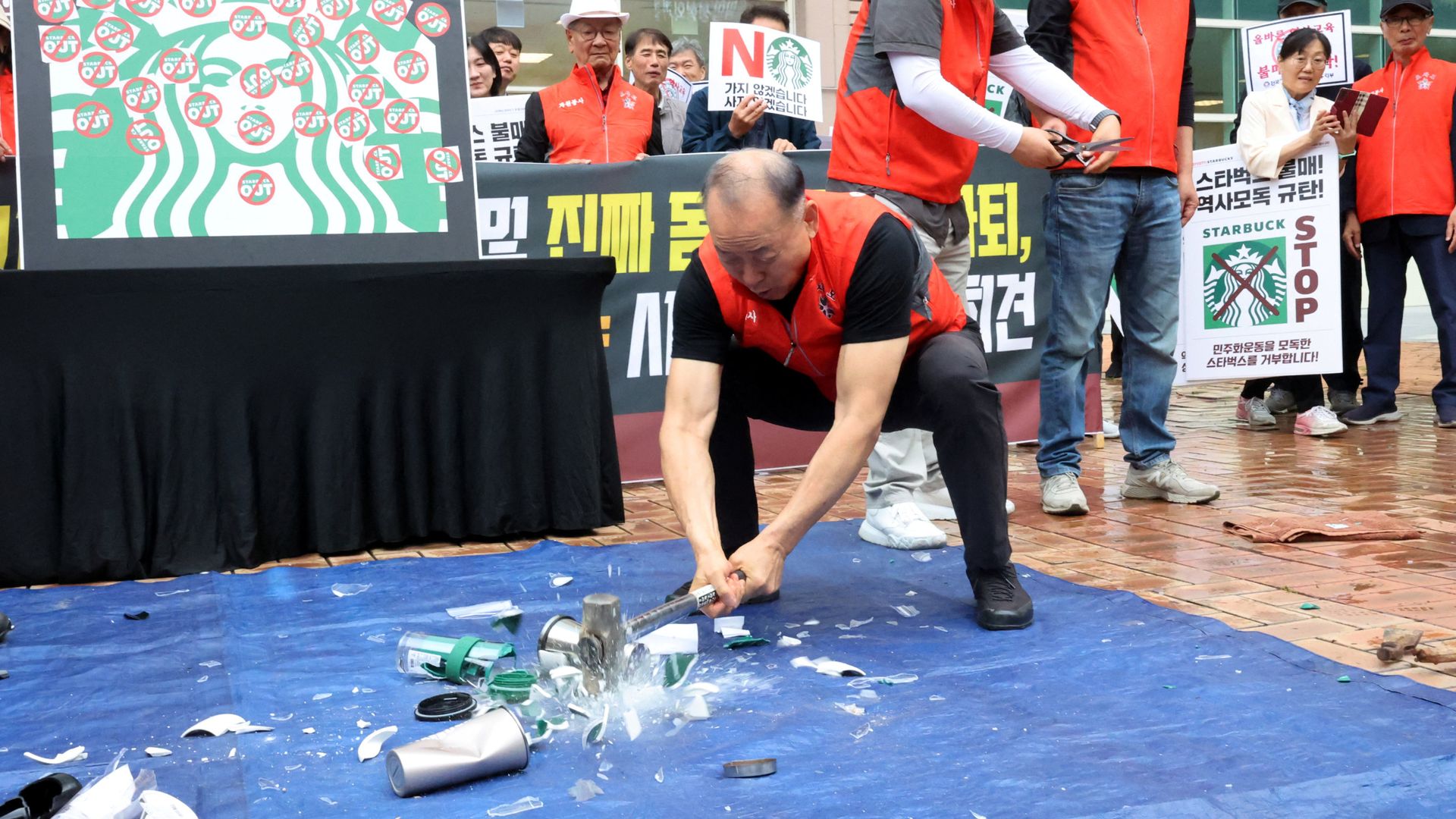
The reaction was swift, coordinated, and devastating. Boycott threats flooded social media platforms. Rating apps were tanked with one-star reviews. Forums burned with anger as users shared screenshots of the offending advertisement, calling for a total abandonment of the green mermaid logo.
For Starbucks Korea, this was not a minor PR hiccup. It was an existential threat to its market dominance.
The High Stakes of the Third Space
South Korea is one of Starbucks’ most lucrative and innovative markets globally. The country boasts thousands of stores, often featuring hyper-localized architecture, high-tech ordering systems, and exclusive merchandise that fans line up for hours to purchase. The brand has achieved a rare status: it is woven into the cultural fabric of daily life.
When a brand occupies that much psychological real estate, the stakes are incredibly high.
"A brand is no longer what we tell the consumer it is—it is what consumers tell each other it is."
This old marketing adage took on a terrifying reality for the executive leadership in Seoul. As the controversy grew, it became clear that remaining silent was not an option. In the digital age, silence is rarely interpreted as neutrality; it is almost always weaponized as complicity.
The burden of fixing this fell squarely on the shoulders of Son Jeong-hyun, the CEO of Starbucks Korea.
Managing a crisis of this nature requires an delicate tightrope walk. Apologize too vaguely, and you infuriate the critics who want blood. Apologize too profusely, and you risk alienating the opposing side of the ideological divide, turning a localized fire into a raging inferno.
Son chose the path of direct accountability. He stepped forward to address the public, issuing a formal, unequivocal apology. He acknowledged that the company had failed to thoroughly vet the content, expressing deep regret for causing discomfort to valued customers. He promised a complete overhaul of their internal content creation and review processes to ensure such an oversight would never happen again.
It was an act of corporate damage control, an attempt to douse the flames before the financial charts started bleeding red.
The Myth of the Apolitical Super-Brand
The real lesson hidden within the Starbucks Korea backlash extends far beyond the borders of Seoul. It exposes a fundamental truth that modern corporations are desperately trying to ignore: the myth of the apolitical super-brand is dead.
For decades, the goal of global capitalism was to be everything to everyone. A soda, a sneaker, or a latte was supposed to transcend politics, uniting people under a banner of shared consumption. But today, consumers do not leave their values at the door when they walk into a store. They view their purchasing power as an extension of their identity. Every dollar, won, or euro spent is a vote cast for the kind of world they want to live in.
This reality places corporate creative teams in an incredibly precarious position.
How do you market a product when the cultural landscape is shifting beneath your feet like tectonic plates? How do you write copy when a single word can be interpreted as a political manifesto?
The answer lies in radical empathy and rigorous cultural competence. It is no longer enough for a marketing team to understand demographics, click-through rates, and color psychology. They must understand the hidden pain points, the societal traumas, and the unspoken tensions of the community they serve. They must listen to the quiet anxieties of the people drinking their coffee.
But the real problem lies elsewhere. Many corporations treat cultural sensitivity as a checkbox exercise—a compliance requirement handled by a detached committee. They look at data points instead of human faces. They analyze trends instead of listening to the underlying heartbeat of the culture.
Consider what happens next when a company forgets this human element. They produce content in a vacuum, focusing on being edgy or relatable, completely blind to the tripwires buried just beneath the surface. Then, when the explosion occurs, they are genuinely shocked by the shrapnel.
The Long Journey Back to Neutrality
Rebuilding trust is an agonizingly slow process. It cannot be achieved with a single press release or a well-drafted executive statement. It requires a quiet, consistent demonstration of respect over a long period.
For Starbucks Korea, the road ahead involves stepping back from the cultural spotlight and focusing entirely on what made them successful in the first place: the craft, the environment, and the flawless execution of the daily routine. They must transform their spaces back into neutral ground, where the only thing that matters is the quality of the brew and the warmth of the service.
The digital outrage will eventually quiet down. The internet, by its very nature, possesses a short memory, always hunting for the next controversy to feed its insatiable appetite for conflict. The boycotts will likely fade as the convenience of the local store outweighs the lingering resentment.
Yet, a scar remains.
The next time a barista hands over a cup with a green sleeve, both the person behind the counter and the customer receiving it will know that the space they occupy is not immune to the storms raging outside. The illusion of perfect sanctuary has been punctured, replaced by a fragile reality.
The steam continues to rise from the espresso machines in Seoul. The doors swing open as the morning sun hits the glass facades. Thousands of people still queue up for their daily fix, reaching out to grab their cups, momentarily united in their need for a jumpstart to the day, carrying their unspoken burdens and quiet battles silently with them into the morning light.


