The air inside a negative-pressure isolation ward doesn’t smell like a normal hospital. There is no scent of industrial lavender or floor wax. Instead, it smells faintly of heavily filtered mechanical air, a sterile breeze cycling through HEPA filters dozens of times an hour. It is a constant, low-frequency hum. Beneath that hum, if you listen closely, you can hear the quiet rustle of layers of plastic and Tyvek moving down a fluorescent-lit corridor.
A specialized medical evacuation plane touched down at Frankfurt Airport under a shroud of strict logistical secrecy. On board was an American medical worker, flying across continents not for a vacation, but to stay alive. The patient had been working in the Democratic Republic of the Congo, fighting an outbreak of Ebola, when the unthinkable happened. A needle stick. A tear in a glove. A moment of fluid contact. In the world of high-consequence pathogens, a millimeter of compromised latex is an ocean.
Suddenly, the caregiver became the patient.
The standard news wire reports this with chilling brevity: a one-line headline, a mention of the Frankfurt University Hospital, a quick nod to the World Health Organization. But the dry facts of global health infrastructure fail to capture what actually happens when a lethal, hemorrhagic virus enters a Western European metropolis. It is a story of terrifying precision, human vulnerability, and the invisible safety nets that keep global panics from erupting on our doorsteps.
The Invisible Border
Viruses do not carry passports. They do not care about geopolitical boundaries, immigration checkpoints, or the foreign exchange rate. To an Ebola virion, a human host in a rural village in North Kivu is functionally identical to a human host sitting in a business-class seat on a commercial airliner.
Consider the journey of this infection. The Democratic Republic of the Congo is home to some of the most dense rainforests on Earth, a landscape where ancient ecosystems hold pathogens that humanity rarely encounters. When an outbreak flares up, local healthcare workers and international volunteers form a literal human shield. They wear heavy yellow suits in suffocating heat. They sweat through their boots. They work until their eyes blur from exhaustion.
When one of those workers is exposed, the clock begins to tick.
The incubation period for Ebola is a cruel waiting game. It can take anywhere from two to twenty-one days for the first symptoms to surface. It starts mimicking a common tropical malaise. A mild headache. A scratchy throat. A low-grade fever that feels like a standard bout of malaria or flu. But then the virus begins its systematic attack on the endothelial cells lining the blood vessels.
The decision to move a patient under these conditions is a high-stakes gamble. You are placing an actively replicating virus into an aluminum tube and flying it at thirty thousand feet across multiple international borders. The logistics require a choreography so tight that a single misstep could result in a catastrophic breach of containment.
The Fortress in Frankfurt
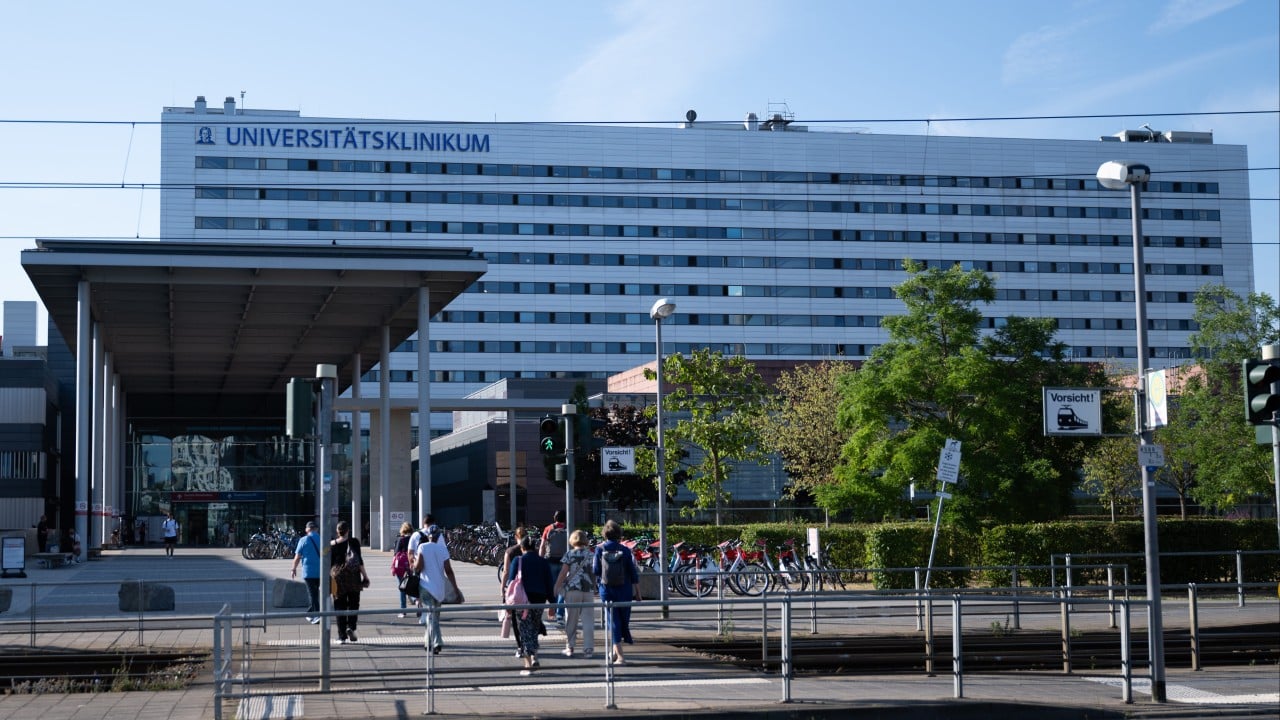
Frankfurt University Hospital houses one of Europe’s most advanced isolation units for highly infectious diseases. This is not a standard intensive care unit with a "Do Not Enter" sign taped to the door. It is a fortress within a fortress.
To understand the scale of defense, look at how a modern bio-containment unit operates. The air pressure inside the patient's room is kept significantly lower than the air pressure in the surrounding hallways. When a doctor opens the door, air rushes in, never out. Any airborne particles are trapped inside, pulled upward into massive filtration systems that neutralize biological material before venting it into the sky.
The staff do not simply walk in and out. The process of putting on and taking off personal protective equipment—known in medical jargon as donning and doffing—is a ritual of absolute focus.
"You learn to breathe differently inside the suit," says a specialist who trained in similar European containment facilities. "Every movement is deliberate. If you have an itch on your nose, you ignore it. If a drop of sweat stings your eye, you let it burn. The moment you reach up to touch your face out of habit, you risk ending up in the bed next to the person you are trying to save."
During the doffing process, a second trained observer stands behind a glass partition, reading from a checklist. They call out every movement over an intercom. Spray your gloved hands with disinfectant. Peel the outer layer down. Step out of the boots. A single mistake during this ten-minute exit sequence is where most healthcare worker transmissions occur. The outside of the suit is considered a hot zone.
The Logistics of Mercy
Why bring an American patient to Germany instead of flying them directly to the United States? The answer lies in the brutal reality of patient stability and aviation medicine.
An Ebola patient can deteriorate with frightening speed. Dehydration, organ failure, and systemic shock can set in over a matter of hours. A trans-Atlantic flight adds thousands of miles and several critical hours to a journey that a fragile body simply might not survive. Germany’s strategic location, combined with its world-class medical infrastructure, makes it the logical sanctuary.
This cooperative effort highlights a fundamental truth about global health: no nation is an island. The defense against an outbreak in Central Africa requires a coordinated, multinational response. An American citizen is infected in Africa, transported by a specialized international medical team, and treated by German physicians using experimental therapeutics developed in laboratories across the globe.
Inside the isolation room, the treatment is a mix of cutting-edge science and basic human endurance. Doctors administer experimental monoclonal antibodies, designs meant to seek out the virus and block it from entering cells. At the same time, the medical team fights a grueling battle of supportive care. They balance electrolytes. They pump liters of intravenous fluids into a failing circulatory system. They manage the agonizing pain.
Behind the thick glass of the containment window, the patient lies hooked to a web of monitors. They are completely isolated from human touch. Every hand that touches them is wrapped in layers of synthetic polymer. Every face they see is hidden behind a clear plastic visor and a respirator mask. The psychological weight of this isolation is an invisible symptom of the disease, a crushing loneliness that accompanies the physical assault of the virus.
The Quiet Room
Late at night, when the rest of the hospital slows down, the isolation wing remains exactly the same. The lights never truly turn off. The hum of the negative pressure system remains constant.
Outside the hospital gates, the city of Frankfurt moves along its tracks. Commuters board trains. Restaurants serve dinner. People complain about the rain or the traffic, completely unaware that a few hundred meters away, a team of scientists and physicians is holding the line against one of the most feared pathogens in human history.
This is the reality of modern medicine. It is not always about grand, sweeping public announcements or dramatic breakthroughs. Most of the time, it is about meticulous attention to detail. It is about a nurse checking a fluid line for the twentieth time in an evening. It is about an environmental services worker autoclaving biohazardous waste at temperatures high enough to melt plastic, ensuring that not a single living cell leaves the facility.
The American patient remains in the care of the Frankfurt specialists. The prognosis of Ebola is always an unwritten book until the final chapters, a daily evaluation of viral load numbers and organ function markers.
Through the glass, a monitor clips a steady rhythm. A gloved hand adjusts an IV line, the movement slow, careful, and heavy with the weight of shared human survival.