A horrific video drops on social media late Monday night. Within minutes, it spreads across timelines, racking up millions of views. It shows a brutal knife attack outside a block of flats in north Belfast. The footage is graphic, showing a man straddling another person on the ground, striking repeatedly at his head and neck.
This isn't just another local crime story. The sheer brutality of the Belfast stabbing has shocked Northern Ireland, drawing direct condemnation from British Prime Minister Keir Starmer, who labeled the attack "sickening." But as the victim fights for his life in a hospital bed, the incident has rapidly evolved into a volatile flashpoint for a much larger, global debate over immigration, algorithmic outrage, and public safety.
The Reality of the North Belfast Attack
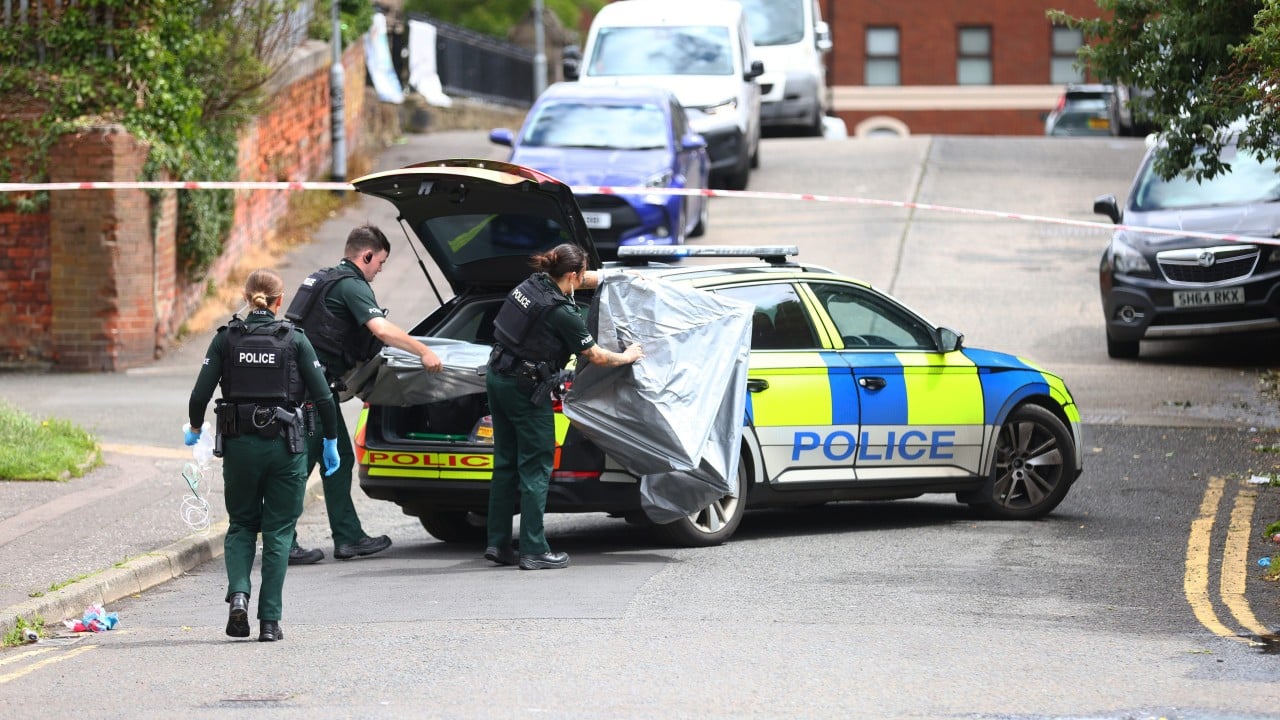
The facts of the incident are grim. Around 10:30 pm on Monday, police responded to a critical incident in a residential area of north Belfast. A man in his 40s had been severely assaulted with a kitchen knife. He sustained deep, life-altering injuries to his face, eyes, and back. As of Tuesday evening, medical staff reported him to be in serious condition.
What the viral videos also captured, however, was the raw courage of ordinary bystanders. Several people rushed the attacker to stop the violence. One local man, identified as Maitiu Mag Tighearnan, used a hurling stick to repeatedly strike the perpetrator, successfully distracting him until authorities could arrive on the scene.
The Police Service of Northern Ireland (PSNI) moved fast. Officers detained a 30-year-old man at the scene, recovering a kitchen knife. Initially, authorities stated the suspect was believed to be Somali, but investigators later corrected his nationality, identifying him as a Sudanese asylum seeker.
On Tuesday night, the PSNI officially charged the suspect with attempted murder, possession of a bladed article in a public place, and making threats to kill. He is scheduled to appear in a Belfast magistrate's court on Wednesday morning.
Tracking the Suspect Journey and Legal Status
In the immediate aftermath of the assault, rumor mills on platforms like X (formerly Twitter) went into overdrive regarding the suspect's legal standing in the United Kingdom. To counter the deluge of conflicting narratives, PSNI Chief Constable Jon Boutcher took the unusual step of laying out the suspect's travel timeline during a public press conference.
The timeline reveals a complex journey through multiple jurisdictions:
- The suspect traveled from Sudan to Paris on an unknown date.
- He flew from Paris to Dublin, Ireland.
- On February 10, 2023, he boarded a cross-border bus from Dublin to Belfast, where he immediately claimed asylum.
- On September 28, 2023, the UK Home Office officially granted him leave to remain in the country, issuing a five-year visa.
Boutcher emphasized that the suspect lived close to the attack site and had no prior record on any national security or local police databases. Assistant Chief Constable Ryan Henderson added that investigators have found zero evidence to suggest a terrorism-related motive, treating the assault as a localized, albeit horrific, attempted murder.
Social Media Magnifies Local Horror into Global Unrest
While local detectives search for a motive, the digital landscape has transformed the crime into political fuel. High-profile, right-wing commentators from both sides of the Atlantic seized on the video to attack current UK border policies.
Tech billionaire Elon Musk amplified a list of potential UK protest locations to his hundreds of millions of followers, writing that change would only happen by protesting "REPEATEDLY and LOUDLY." Meanwhile, far-right political activist Stephen Yaxley-Lennon, known online as Tommy Robinson, circulated the graphic video widely, calling for immediate, mass anti-immigration demonstrations across Central London and Northern Ireland.
This digital pressure translated into immediate real-world fear. By Tuesday afternoon, Sudanese business owners on Sandy Row, a traditional loyalist district in central Belfast, had pulled down steel shutters and closed up shop early, fearing reprisal attacks. Isolated incidents of unrest began appearing by Tuesday evening, including a bus set on fire by protesters in east Belfast.
Political Leaders Demand Calm Amid Rising Tensions
The sudden escalation has put Northern Ireland's political leadership on high alert. The region is no stranger to street friction; just last year, racially motivated riots shook Belfast following a separate sexual assault case. Furthermore, the UK is still feeling the aftershocks of intense protests in southern England last week over the fatal stabbing of student Henry Nowak by Vickrum Digwa, a case that similarly sparked massive debates around race and policing.
In a rare display of total unity, the leaders of Northern Ireland's five main political parties issued a joint statement condemning the north Belfast attack. First Minister Michelle O'Neill and Deputy First Minister Emma Little-Pengelly both took to the airwaves to urge communities to ignore online agitators.
Little-Pengelly acknowledged that residents are feeling a complex mix of fear and anger but urged them not to let faceless internet accounts incite hatred. Justice Minister Naomi Long and police officials also begged the public to stop sharing the graphic video, warning that circulating the footage serves no investigative purpose and actively traumatizes the victim's family while potentially jeopardizing the court prosecution.
Immediate Steps for Navigating the Information Fallout
When high-profile, violent crimes go viral, distinguishing verified facts from politically motivated narrative-spinning is difficult. If you're trying to make sense of the breaking situation in Belfast, focus on these concrete steps:
- Audit your information sources: Rely on formal briefings from the PSNI and established local journalists who are on the ground in Belfast rather than viral social media accounts that leverage outrage for engagement clicks.
- Stop the algorithmic spread: Do not share, view, or retweet the graphic assault footage. Platforms reward high-engagement media, and sharing the clip actively assists far-right coordination efforts while inflicting digital harm on the victim's community.
- Monitor local travel advisories: If you are living in or commuting through Belfast, stay updated on PSNI traffic notices. Spontaneous demonstrations can lead to sudden road closures, public transport diversions, and localized property disruption.



:max_bytes(150000):strip_icc():focal(665x0:667x2)/gettyimages-50733149-2000-8b129a2475974982a915418ce92a73d8.jpg)