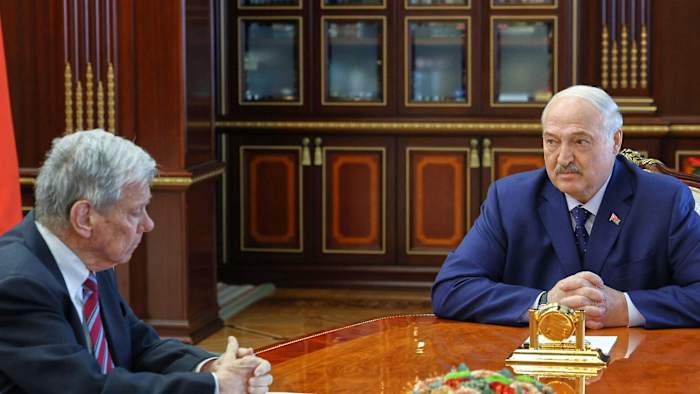
Alexander Lukashenko has spent three decades mastered the art of the geopolitical shakedown, and today he collected his biggest paycheck in years. On Thursday, the Belarusian strongman ordered the release of 250 political prisoners following a high-stakes meeting in Minsk with U.S. Special Envoy John Coale. In exchange, Washington has agreed to dismantle a significant portion of the economic wall it built around the regime, lifting sanctions on major state banks, the Finance Ministry, and the country’s massive potash export sector.
While the humanitarian relief for the families of the freed is undeniable, this is not a simple act of mercy. It is a cold, calculated transaction. By trading human lives for the keys to the global financial system, Lukashenko has effectively validated "hostage diplomacy" as a viable state strategy. For the U.S. administration, the deal represents a "hard-nosed" pivot toward realpolitik, prioritizing a wedge between Minsk and Moscow over the idealistic pursuit of democratic reform.
The Names Behind the Numbers
The 250 individuals walking out of Belarusian penal colonies include some of the most prominent victims of the 2020 post-election crackdown. Among them are human rights defenders Valiantsin Stefanovich and Marfa Rabkova from the Viasna rights group, and journalist Katsiaryna Andreyeva, who was serving an eight-year sentence for "state treason" after filming police violence.
Their freedom is a victory for activists, but the math remains grim. Even after this record-breaking release, more than 850 political prisoners remain in Belarusian cells. Many are held in incommunicado detention, their health failing after years of systemic abuse. By releasing a batch of 250, Lukashenko retains a substantial "inventory" of human capital for future negotiations. It is a revolving door policy where the regime frees 250 today but continues to arrest dozens every month on charges of "extremism."
Washington's Gamble on the Board of Peace
The White House is framing this as a "humanitarian milestone." Special Envoy John Coale’s presence in Minsk—and the suggestion of a potential U.S. visit for Lukashenko—signals a total collapse of the pariah status the Belarusian leader earned after facilitating the 2022 invasion of Ukraine.
The strategy appears to be an attempt to pull Belarus out of the Russian orbit. By offering sanctions relief for Belinvestbank and Belaruskali, the U.S. is giving Lukashenko the one thing Vladimir Putin cannot easily provide: hard currency and access to Western markets. However, critics argue this overlooks a fundamental reality. Lukashenko’s survival is inextricably linked to the Kremlin’s security apparatus. Easing sanctions may fill the regime’s coffers, but it does not necessarily loosen Moscow’s grip on the Belarusian military or its border with Ukraine.
The Economic Payoff
The specific sanctions being lifted are the crown jewels of the Belarusian economy.
- Potash Exports: Removing restrictions on Belaruskali and the Belarusian Potash Company allows one of the world's largest fertilizer producers to resume global trade.
- Banking Access: The delisting of the Development Bank of Belarus and the Finance Ministry reintegrates the state into international credit markets.
- Diplomatic Normalization: Discussions are underway to restore full operations at the U.S. Embassy in Minsk.
This economic lifeline arrives at a moment when the Belarusian economy was beginning to buckle under the weight of long-term isolation. Lukashenko has successfully traded the freedom of 250 citizens—people who should never have been imprisoned in the first place—for the stabilization of his entire autocratic architecture.
The Risks of a Moral Compromise
There is a dangerous precedent being set here. When the West treats political prisoners as currency, it provides a blueprint for every other authoritarian regime looking to escape international pressure. If 250 prisoners are worth a bank and a fertilizer plant, the "price" of a human being has been officially established on the diplomatic market.
Opposition leader Sviatlana Tsikhanouskaya has publicly thanked the U.S. for "saving lives," but her office remains wary. Her advisers point out that the regime took nearly 500 new political prisoners in 2025 alone. The net population of the Belarusian gulag isn't necessarily shrinking; the occupants are simply being cycled through to maximize their value as bargaining chips.
Furthermore, the "Board of Peace" approach assumes Lukashenko is a rational actor who wants independence from Russia. History suggests otherwise. He has used "thaws" with the West many times before, only to pivot back to Moscow the moment his domestic grip is challenged. By rewarding him now, the U.S. risks subsidizing the very repression it claims to oppose.
The Road to 2027
John Coale has expressed hope that all remaining political prisoners will be released by the end of 2026. If that happens, Washington has promised to remove all remaining sanctions tied to the 2020 protests. It is a bold, perhaps naive, timeline.
Lukashenko’s current term runs through next year, and he has already shown he will do whatever is necessary to maintain power. If the U.S. continues to provide economic incentives without requiring structural changes to the Belarusian legal system—specifically the repeal of "extremism" laws used to crush dissent—the prisons will likely fill up again as soon as the next election cycle begins.
The current deal provides a momentary reprieve for 250 families, but it leaves the machinery of the Belarusian police state fully intact and newly funded.
Would you like me to analyze the specific impact of these lifted potash sanctions on global fertilizer prices?