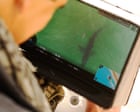
Municipalities are spending millions of dollars to fly camera drones over the coastline, claiming these eyes in the sky keep swimmers safe from sharks. It sounds like a triumph of modern engineering. Local news channels love the footage. Beachgoers feel a comforting sense of surveillance.
It is a complete theater of safety.
The prevailing consensus insists that more data equals better security. We are told that spotting a white shark 200 yards from a surf zone and sounding an alarm protects the public. In reality, this technology does not mitigate risk. It invents panic, misallocates public funds, and fundamentally misinterprets the data it collects. We are weaponizing confirmation bias and calling it public safety.
The Flawed Logic of Increased Sightings
The core argument for beach surveillance programs rests on a simple, flawed premise: drone detections are up, which means we are preventing encounters.
This is a classic tracking fallacy. Drones are not revealing an influx of apex predators targeting swimmers. They are merely revealing what has always been there.
Marine biologists, including Chris Lowe from the Shark Lab at California State University, Long Beach, have documented for years that juvenile white sharks frequently swim within yards of surfers and swimmers without incident. The sharks are indifferent to humans.
When a drone pilot spots a shadow in the water and triggers a beach closure, they are not disrupting an imminent attack. They are disrupting a peaceful coexistence that has occurred naturally for centuries. By turning normal, non-threatening marine behavior into a high-definition crisis, we are teaching the public to fear an illusion.
The Math Behind the Mirage
Let us break down the operational mechanics of aerial beach monitoring. Proponents claim that high-resolution cameras provide a reliable safety net. The physics of light transmission through water says otherwise.
Drone detection capabilities depend on a hyper-specific set of variables:
- Water Clarity: Turbidity renders aerial cameras useless. If the water is murky, a shark can be five feet below the surface and completely invisible from the air.
- Surface Glare: Wind chop and sun angles create surface reflection that blinds digital sensors, even with polarized filters.
- Human Fatigue: Monitoring a tablet screen for four hours under the blazing sun leads to massive cognitive drop-off. Spotting a dark silhouette against a moving background is incredibly difficult over long shifts.
Consider the operational reality. A drone battery lasts roughly 20 to 30 minutes. The pilot flies a grid, lands, swaps the battery, and launches again. During those ten minutes of downtime, the safety net is gone.
If a town relies on this technology to declare a beach "safe," it creates a false sense of security. Swimmers enter the water under the assumption that an invisible shield protects them. If a shark is missed due to glare or a battery swap, the liability increases exponentially because the public has abandoned their natural vigilance.
The Financial Waste of Tech-Driven Bureaucracy
I have watched local town councils allocate six-figure budgets to buy fleets of quadcopters, train lifeguards as FAA-certified commercial pilots, and maintain data storage systems. This is money stripped directly from programs that actually save lives.
Rip currents kill significantly more beachgoers every year than sharks. According to data from the United States Lifesaving Association, rip currents account for over 80% of rescues performed by surf beach lifeguards.
| Hazard | Annual US Fatalities (Average) | Public Safety Funding Priority |
|---|---|---|
| Rip Currents | ~100 | Frequently Underfunded / Understaffed |
| Shark Encounters | < 1 | Disproportionately Funded via Tech Gadgets |
Every dollar spent on drone depreciation, software updates, and pilot training is a dollar taken away from hiring more physical lifeguards, extending tower hours, or improving public education regarding rip tides. We are defunding proven, boots-on-the-ground lifesaving measures to fund a high-tech PR campaign.
The Psychological Toll of Constant Surveillance
What happens to a community when you subject it to constant, anxious monitoring? You destroy the psychological value of the space.
When a drone sirens a warning, hundreds of people flee the water in a state of fight-or-flight. The media picks up the story, the video goes viral, and the collective anxiety of the community spikes.
We are training society to view the ocean as a hostile war zone rather than a natural ecosystem. The irony is that the risk profile has not changed. The probability of an unprovoked shark bite remains lower than the probability of being struck by lightning on the sand. The only thing that has increased is our capacity to record our own paranoia.
Dismantling the Practicality of Beach Alarms
Imagine a scenario where a drone pilot successfully identifies a three-meter shark cruising near a crowded sandbar. The pilot alerts the lifeguard tower. The lifeguards blow their whistles, wave their red flags, and clear the water.
What is the actual outcome?
You have successfully cleared the water for an hour. The shark moves 400 yards down the coast, past the boundary of the drone's flight path, and continues its day. The lifeguards reopen the beach. The shark is still in the neighborhood, but because it is no longer on the monitor screen, the bureaucracy satisfies itself that the danger has passed.
This is not risk management. It is temporary risk displacement. It provides no long-term statistical protection while conditioning the public to rely on a system that cannot scale to cover thousands of miles of open coastline.
The Trade-Off Nobody Admits
Admitting the downside of this perspective is necessary: if you stop flying drones, you lose a tool that occasionally provides interesting ecological data. You lose the ability to spot the rare, genuinely aggressive animal that might be lingering in a specific cove for days.
But the trade-off is entirely worth it.
By grounding the drones, we shift the responsibility of safety back to reality and personal awareness. We accept that entering the ocean involves entering a wild environment with inherent, minor risks. We stop wasting taxpayer money on electronic security blankets that offer nothing but digital theater.
Take the drone money. Buy more lifeguard towers. Pay the guards a higher wage to keep them on the stands longer. Educate swimmers on how to identify rip currents and avoid swimming near baitfish schools or river mouths.
Put down the controllers and look at the actual numbers. Stop flying cameras over the surf to solve a problem that does not exist.