The Weight of a Single Pencil
The room is always cold. If you ask the teenagers who sit in the fluorescent glare of international testing halls, they will tell you that the air conditioning is the first thing that hits you. It freezes the knuckles. It makes the graphite in a number two pencil feel brittle, almost fragile, as it presses against the white expanse of a blank page.
Consider a seventeen-year-old student named Justin. He is hypothetical, but his blistered middle finger and the dark circles under his eyes are entirely real, shared by thousands of teenagers from Shanghai to Baltimore. Justin has spent the last four years of his life preparing for a test that most adults cannot read, let alone solve. He is staring at a problem concerning a complex geometric configuration. To the untrained eye, it looks like a chaotic spiderweb of intersecting lines and circles. To Justin, it is a battlefield.
For decades, this battlefield had a predictable flag flying over it. The United States and a select handful of post-industrial Western nations owned the top steps of the podium at the International Mathematical Olympiad. It was an accepted truth of the modern era that while East Asia could produce brilliant memorizers and hyper-disciplined technicians, the profound, chaotic leaps of creative mathematical genius belonged to the West.
That truth is dead.
Quietly, over the span of a decade, the mathematics gap between China and the United States has shrunk to a razor-thin margin. In many recent campaigns, the line has crossed entirely. The supremacy of Western quantitative dominance is cracking, not under the weight of missiles or trade tariffs, but under the soft, rhythmic scratching of pencils in classrooms across the Pacific. Now, Hong Kong has thrown down a massive gauntlet, launching an ambitious bid to host the global event in 2030. This is not a mere bid for a trophy or a week of tourism. It is a declaration of a civilizational shift.
The Quiet Shift on the Blackboard
To understand why a math competition matters, we have to look past the spreadsheets and look at the raw human currency of the twenty-first century. Every piece of encryption securing your bank account relies on prime numbers. Every algorithmic prediction dictating global supply chains is built on advanced calculus. The nation that commands the sharpest mathematical minds commands the future of artificial intelligence, cryptography, and quantum computation.
For a long time, the United States maintained its lead through a brilliant, system-wide vacuum cleaner. It sucked up the finest minds from every corner of the earth. If a brilliant young mind emerged in Bucharest, Taipei, or Lagos, they inevitably ended up at MIT, Princeton, or Stanford. The American team at the international level was frequently composed of first- and second-generation immigrants whose parents recognized that quantitative excellence was the ultimate golden ticket.
But a system that relies on importing genius is vulnerable when the home countries decide to keep their geniuses at home.
China realized this early. The country transformed its domestic training pipeline into a high-powered engine of intellectual development. The selection process for their national squad makes Olympic gymnastics training look casual. It begins with millions of elementary school children and filters them down through layer after layer of grueling regional tournaments until only a tiny, hyper-elite vanguard remains.
The results are staggering. The gap has narrowed to the point of irrelevance, and the momentum has reversed. The United States team, long guided by legendary coaches, finds itself locked in a grueling, year-on-year dogfight with a Chinese squad that seems to operate with the collective precision of a supercomputer.
The Mechanics of Dominance
What happens when a society decides that its ultimate cultural heroes are not influencers or athletes, but top-tier thinkers?
The difference is structural. In the West, high-level mathematics is often viewed as a solitary pursuit, a lonely walk taken by eccentric outcasts who happen to possess a strange genetic mutation for numbers. We romanticize the lone genius solving an equation on a windowpane in the dead of night.
In the updated eastern pipeline, math is a team sport. It is treated with the same institutional reverence that Texas reserves for high school football. The training camps are communal, intense, and deeply collaborative. Students do not just learn how to solve a problem; they learn how to tear a problem apart from five different angles simultaneously, passing the intellectual baton to one another with breathless speed.
Consider what happens next: Hong Kong enters the fray.
By bidding for the 2030 global tournament, Hong Kong is positioning itself as the literal and metaphorical bridge of this new era. The city occupies a unique, precarious, and fascinating space in the global imagination. It is the place where Western capital and Eastern discipline have rubbed against each other for over a century, creating a high-voltage friction.
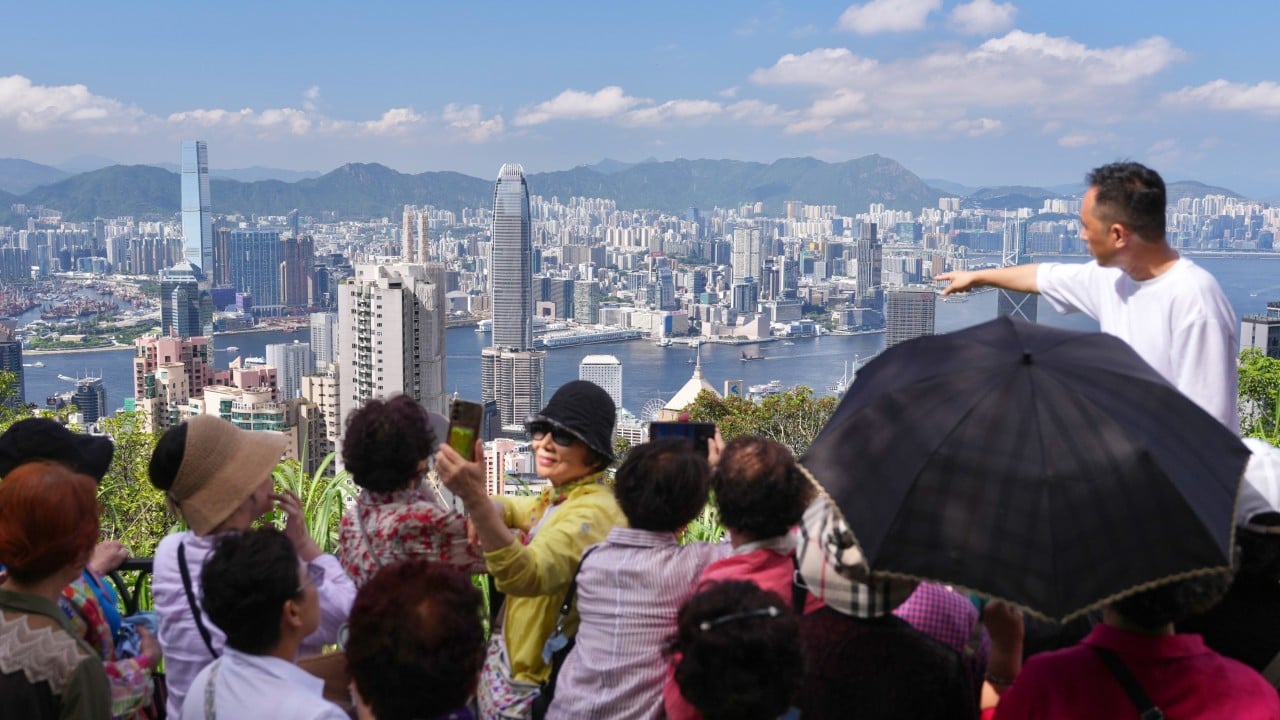
Hosting the event in 2030 is a calculated move to show the world that the center of gravity has permanently shifted. It is a message to every young brilliant mind in the region: you no longer need to board a flight to Boston or London to be at the center of the intellectual universe. The center of the universe is right here, overlooking Victoria Harbour.
Why 2030 Changes the Geography of Genius
The year 2030 sounds like the distant future, but in the timeline of human development, it is tomorrow morning. The ten-year-olds who are currently discovering the beauty of Euclidean geometry in primary schools are the exact individuals who will step off the planes in Hong Kong to compete for global dominance.
This is where the human element becomes almost painful to watch. The pressure on these kids is immense. We are talking about teenagers who carry the geopolitical anxieties of superpowers on their backs. When they fail to solve a problem, it is not just a bad grade; it feels, to them, like a national defeat.
I remember talking to an instructor who had spent years preparing students for this level of competition. He described the look in a student's eyes when a proof falls apart in the final twenty minutes of a four-hour exam session. It is a look of absolute, hollow exhaustion. The mind has run at maximum capacity for so long that it literally begins to reject the data. The fingers tremble. The vision blurs.
Yet, they return to the desk. Why? Because there is a specific, intoxicating beauty in absolute certainty.
In a world full of messy political compromises, shifting moral boundaries, and unreliable narratives, mathematics offers something rare: an undeniable truth. If you prove a theorem correctly, it is correct. It is correct in New York, it is correct in Beijing, and it will be correct a thousand years from now. That certainty is the real siren song drawing these young minds into the fray.
The Hong Kong bid is a bet on that beauty. It is an investment in the idea that the city can serve as a neutral, pristine sanctuary for pure thought, even as the geopolitical waters around it grow increasingly choppy. It invites the world to witness a contest where the only weapons allowed are graphite, paper, and the sheer force of human ingenuity.
The pencils are sharpening. The clocks are ticking. And when the final scores are tallied in 2030, we may look back at the quiet rooms of Hong Kong and realize we witnessed the birth of a completely different world order, written in the elegant, unyielding language of mathematics.