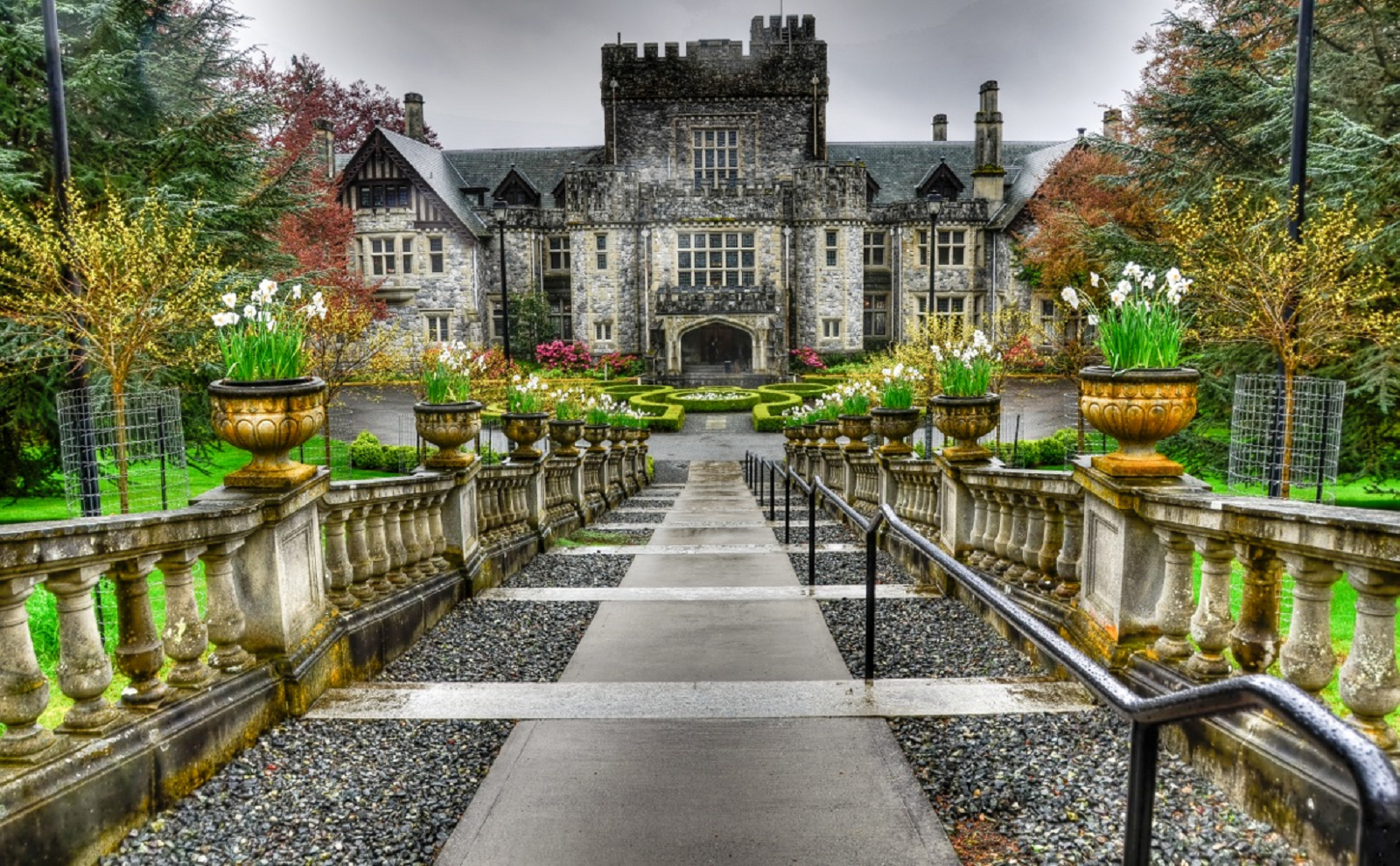
The iron gates of Hatley Castle have served as a cinematic icon and a public sanctuary for decades. Now, they represent a high-stakes standoff between historical reconciliation and the anxiety of a public watching their common ground shift underfoot. As a proposed treaty nears its final stages, the transfer of this federal Crown land to the Songhees Nation has transformed from a routine bureaucratic settlement into a political lightning rod. At the center of this firestorm is a simple, visceral question: who truly owns the right to walk on the grass of a national historic site?
The math behind the current deal is intricate, involving over 30 parcels of land scattered across Vancouver Island. By transitioning these assets from federal control to the Songhees Nation, the government aims to replace decades of legal uncertainty with a definitive, modern treaty. Yet, the transition is colliding with the hard reality of public perception. For the average resident in Colwood or Victoria, this is not merely a legal reclassification of property. It is the sudden introduction of ambiguity into a space they have long considered their own.
Legal architects of the treaty, such as representatives for the Te’mexw Treaty Association, argue that the transfer is a mechanism for stability. By moving the land into the hands of the First Nation, they suggest, the parties move away from the chaotic cycle of litigation that has defined B.C. land claims for generations. Under this view, certainty is the ultimate goal. If a First Nation owns the land, the rights and responsibilities are clear. The problem arises when the definition of those responsibilities diverges from the public’s expectations of access.
The uncertainty is not entirely unfounded. Consultation documents acknowledge a sharp change: once a parcel transfers, it ceases to be public land. Access, therefore, becomes a matter of governance by the First Nation rather than a right guaranteed by the Crown. While advocates claim there is no long-term intent to bar the public, the transition creates a legal bridge that currently lacks a permanent safety rail. Critics point to this structural shift as a potential loss of public equity, turning a taxpayer-funded asset into a private one.
Political friction has turned this negotiation into a wedge issue. Skepticism toward Indigenous title claims is rising, and opposition figures are utilizing the Hatley Castle situation to paint the current government as reckless with public heritage. When an iconic movie location—a backdrop for the X-Men franchise and Deadpool—becomes a bargaining chip in a multi-decade treaty process, the optics are inherently volatile. The concern is that the government is trading away public access for the sake of checking a box in a reconciliation checklist.
We must scrutinize the mechanics of how this transfer will actually function. The current plan suggests that once the Songhees Nation holds the title, Royal Roads University could theoretically purchase the land back from the nation. This multi-step maneuver hints at a future where land is bought and sold, effectively bypassing the status of protected Crown property. If the university, which currently leases the site for a nominal fee, becomes a private landowner, the public's current status as a guest on the grounds will be subject to the university's institutional priorities.
The legal reality is that modern treaties are meant to be final. They are designed to prevent the next 30 years of court battles. However, by including high-profile, beloved community spaces in these packages, the government has inadvertently made reconciliation a source of friction rather than harmony. The government minister responsible for these relations has suggested that access could remain similar to how parks handle seasonal or cultural closures. This comparison does little to assuage those who fear that occasional closures for environmental or ceremonial reasons might eventually evolve into permanent restrictions.
There is a fundamental collision between two different ways of valuing land. One side views the territory through the lens of colonial history and public entitlement; the other views it as the reclamation of inherent rights and a path toward economic self-determination. When these two worldviews meet at the front gates of a historic castle, there is no compromise that satisfies both. A guarantee of eternal public access would effectively strip the First Nation of the very power that the treaty is supposed to restore.
The Esquimalt Nation has already initiated a civil claim to halt the transfer, signaling that the friction is not merely between the government and the public, but among the Nations themselves. This adds a layer of complexity that is often ignored in official press releases. The treaty is not a static document; it is a live, breathing, and deeply contested legal instrument. Relying on the promise of future cooperation is a gamble that many taxpayers, already weary of rising costs and diminished public space, are unwilling to take.
We are left with a situation where the government is attempting to modernize land ownership while struggling to maintain the trust of a public that fears the gradual erosion of their shared history. If the treaty is ratified, the transition will shift the burden of proof. It will no longer be the government’s job to explain why a space is open; it will be up to the new owners to decide if it remains that way. That shift in power, regardless of the stated intentions, is what drives the current unrest.
The path forward requires more than vague assurances that things will remain the same. It requires explicit, legally binding language that defines exactly what public access looks like in the wake of title transfer. Without that, the government is not achieving certainty. It is merely trading a legal problem for a social one. As the final signatures draw near, the focus will inevitably tighten on the specific clauses governing the castle grounds. The result of those negotiations will serve as a bellwether for every other land transfer currently in the hopper.
Public support for reconciliation hinges on whether the public feels they are being invited into the process or being shown the exit. At Hatley Castle, the gate remains open for now. Whether it stays that way depends on whether the people in power can prove that self-determination and public enjoyment are not mutually exclusive. The coming months will reveal if they have a plan for the former that doesn’t demand the sacrifice of the latter.