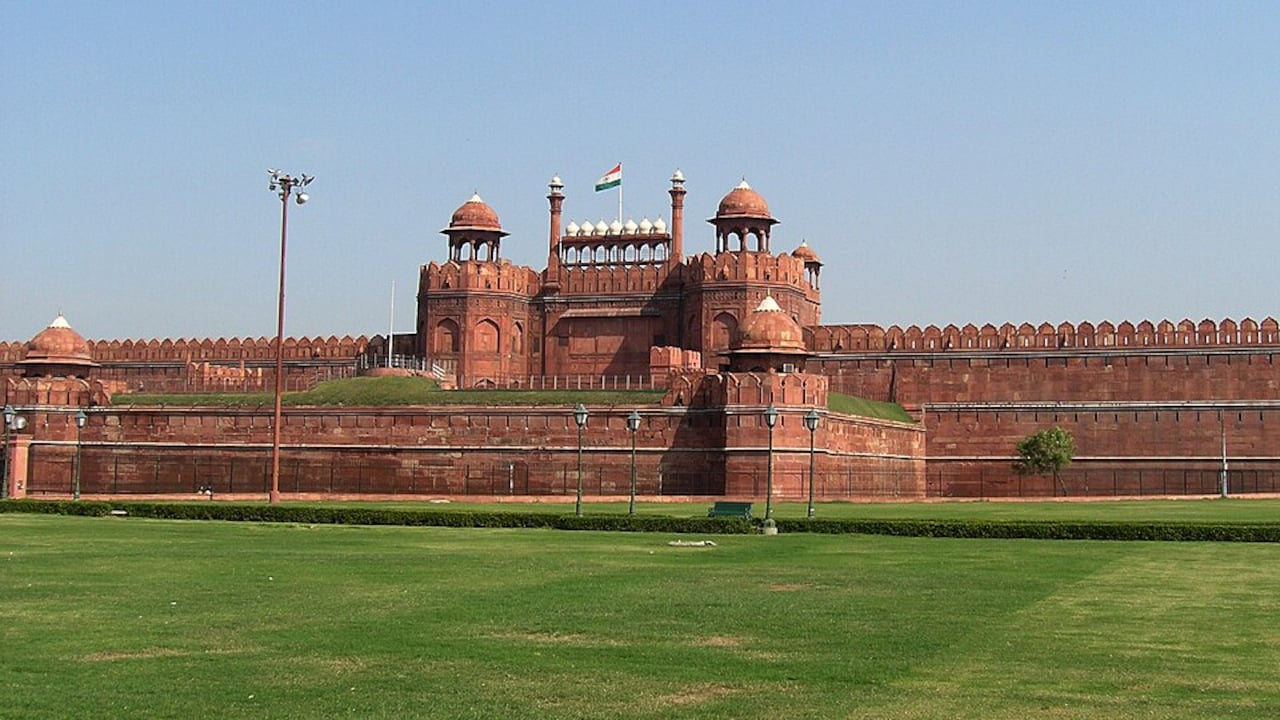
The heavy iron gates of the Red Fort do not shut quietly. They meet with a deep, metallic clang that reverberates through the choked arteries of Old Delhi, slicing through the perpetual symphony of motorcycle horns, street vendors, and the shouting of rickshaw pullers.
For the next few weeks, the great red sandstone monolith is silent. Read more on a related topic: this related article.
To the casual tourist arriving at the Netaji Subhash Marg entrance, the sudden closure feels like a personal affront. They stand there, clutching their digital tickets or guidebooks, staring at the newly erected barricades and the stern-faced guards of the Delhi Police and the Central Industrial Security Force. A sign, stark and uncompromising, delivers the news: the monument is closed to the public until the national flag is unfurled on the morning of August 15.
But to understand why this yearly shuttering matters, one must look beyond the inconvenience of a disrupted travel itinerary. The annual lockdown of the Red Fort is not merely an administrative exercise in security. It is a quiet, breathless pause in which a historical relic is stripped of its identity as a tourist attraction and reassembled into the very altar of a nation's identity. More analysis by AFAR delves into similar views on this issue.
The Empty Courtyards of Shah Jahan
Consider Ramesh.
Ramesh is a third-generation photographer who has spent forty years coaxing tourists into posing in front of the Lahori Gate. He knows exactly where the afternoon sun hits the red sandstone to make it look like molten gold. He knows how to position a family so the towering minarets seem to frame them like royalty. For Ramesh, the closure of the fort is a sudden, sharp intake of breath in his financial year.
For weeks, his camera will sit in its worn leather case. The bustling plazas where thousands of feet tread daily are suddenly reclaimed by the local birds and the heat haze rising from the red stone.
"The fort feels different when it is empty," Ramesh says, squinting through the dust of Chandni Chowk. "It is no longer a museum. It becomes a temple again. A temple where we prepare for the high priest."
The silence inside is absolute. Without the chatter of school tours and the shuffle of thousands of sneakers, the whispers of the past grow louder. Built by the Mughal Emperor Shah Jahan in the mid-seventeenth century, these walls have witnessed the rise and fall of empires, the plunder of Nadir Shah, the heavy-handed occupation of the British military, and the trial of the Indian National Army officers.
When the government locks those gates in late July, they are not just keeping people out. They are letting the history settle.
The Invisible Army of the Night
Behind the locked gates, a frantic, highly orchestrated transformation begins. It is a monumental task carried out by hundreds of workers whose names will never appear in the news reports.
Carpenters, painters, gardeners, and security personnel sweep through the sprawling complex. The manicured lawns, which usually suffer under the weight of thousands of daily picnics, are trimmed with mathematical precision. The ancient stone paths are washed clean of the grime of Delhi’s relentless summer.
There is a strange contrast in this preparation. Workers scale bamboo scaffolding to touch up the delicate white marble of the Diwan-i-Khas, where the legendary Peacock Throne once sat, while miles of high-voltage cables are threaded through the old British army barracks. Modern metal detectors are calibrated alongside the ancient moat. Snipers map out their sightlines from the octagonal towers that once held imperial archers.
This is the dual reality of the Red Fort. It is a fragile piece of world heritage and a high-security military zone. Balancing these two identities requires an extraordinary amount of care. The Archaeological Survey of India must watch over every nail driven into the wooden stages, ensuring that the preparation for a modern political event does not scar the centuries-old masonry.
Every step is watched. Every corner is swept. The air itself feels charged with anticipation.
The Great Disruption on the Streets
Outside the walls, the closure ripples through the delicate economic ecosystem of Old Delhi.
The street vendors selling plastic toys, cold water, and roasted chickpeas find their customer base evaporated overnight. The cycle rickshaw riders, who rely on transporting tired tourists from the metro station to the ticket counter, must now compete for local commuters who pay a fraction of the price.
Yet, there is little anger. Instead, there is a weary, prideful resignation.
The people of Old Delhi have lived this rhythm for decades. They know that this disruption is the price of their front-row seat to history. On August 15, the eyes of the entire country—and indeed, much of the world—will be fixed on this very spot. The Prime Minister will ascend the ramparts, the tricolor flag will rise against the blue sky, and twenty-one gun salutes will echo across the Yamuna River.
For the locals, the weeks of barricades, traffic diversions, and intense security checks are a yearly tax they pay for living in the shadow of giants.
The Transition from Stone to Symbol
Why does this particular fortress hold such a tight grip on the collective consciousness?
Many forts across India are larger, older, or more architecturally complex. Yet, none of them carry the weight of Lal Qila. When the British army took control of the fort after the uprising of 1857, they systematically destroyed beautiful marble halls and replaced them with drab, functional barracks. They did this to humiliate the local population, to show that the heart of the old empire was now under the boot of the new.
Because of this, the Red Fort became the ultimate symbol of resistance. To reclaim the fort was to reclaim India.
When Jawaharlal Nehru hoisted the flag of independent India from the Lahori Gate on August 16, 1947, he was not just performing a ceremony. He was exorcising a ghost. He was declaring that the desecrated palace of the Mughals and the former barracks of the British army now belonged to the people.
This is the ghost that the authorities guard so fiercely every August. The security measures are extreme because the symbol is invaluable. A breach here is not just a security failure; it is a wound to the national psyche.
The Silent Sentinel Waits
As the days tick closer to the middle of August, the intensity of the work reaches a fever pitch. The final rehearsals begin. Security forces conduct mock drills in the early hours of the morning, their boots clicking in unison on the asphalt before the city wakes up.
The tourists will have to wait. The cameras of the travelers will remain pointed elsewhere for now, capturing the Humayun’s Tomb or the Qutub Minar instead.
But those who know the city understand that the Red Fort is at its most beautiful during this period of isolation. Unburdened by the crowds, wrapped in the tight embrace of security, it stands in the Delhi monsoon rain, its red sandstone deep and blood-dark against the grey sky. It looks less like a tourist destination and more like what it was always meant to be: a silent sentinel guarding the memory of how a nation found its voice.
The gates will open again. The crowds will return, bringing back the noise, the litter, and the vibrant, chaotic life of the modern city. But for now, the fort rests, preparing for the one day of the year when it stops being a monument and becomes the absolute center of the world.


.png?width=1200&auto=webp&trim=0%2C0%2C0%2C0)