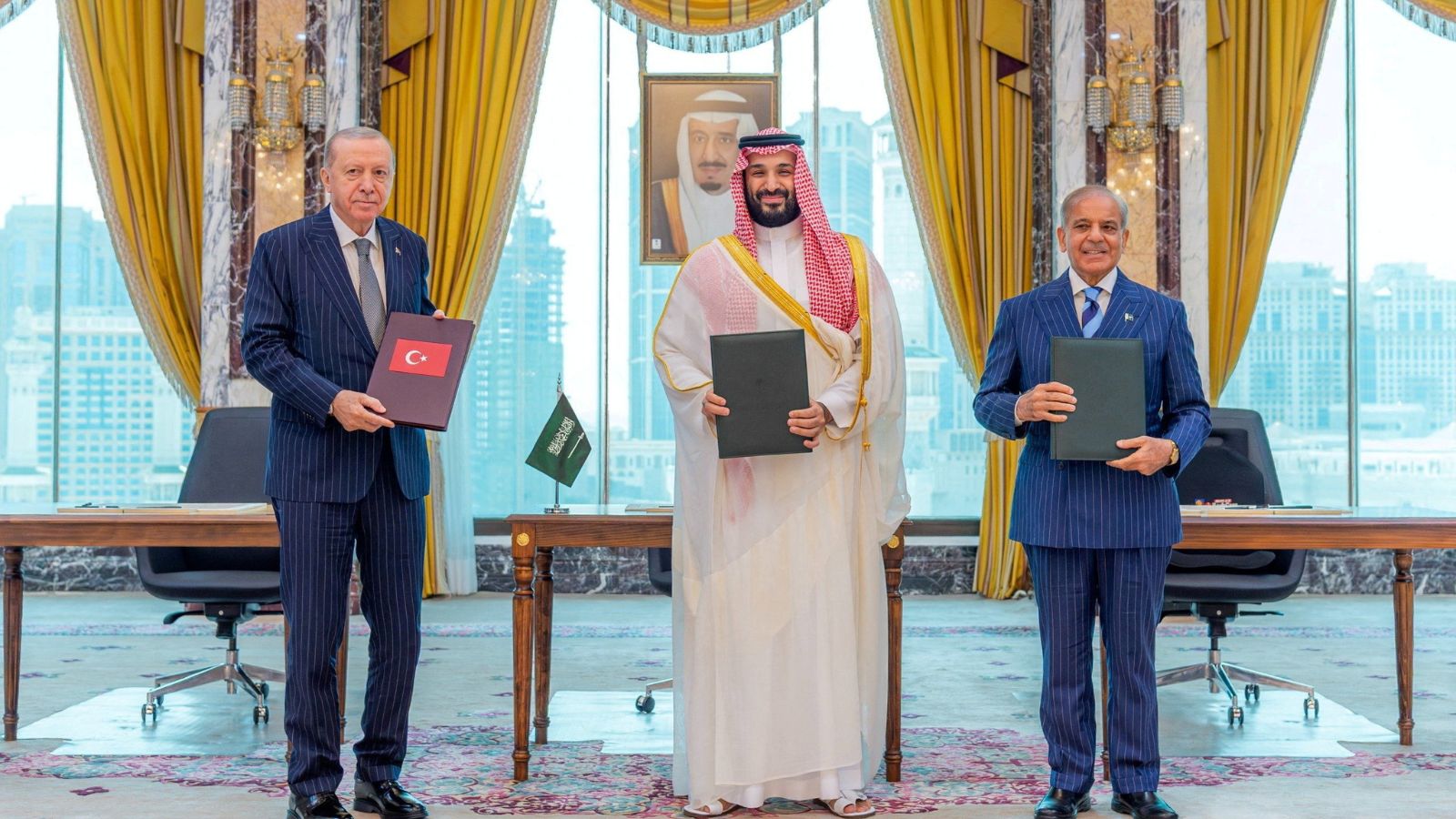
Foreign policy in Dhaka is shifting fast. When junior ministers recently announced that Bangladesh holds a positive view toward the Mecca Joint Defence Agreement, foreign desks took notice. Signed on August 7, 2026, by Saudi Arabia, Pakistan, and Turkey, this security framework treats an attack on one member as an attack on all. For a country like Bangladesh, evaluating membership in what some loosely term an "Islamic NATO" marks a distinct departure from old diplomatic playbooks.
You have to look at the broader picture to understand why Dhaka is even entertaining the idea. Ever since the political transition of 2024, Bangladesh has been recalibrating its external relations. Traditional anchors are being re-examined under a newly minted "Bangladesh First" doctrine. Joining or cooperating with a trilateral arrangement involving Riyadh, Islamabad, and Ankara is not just a diplomatic nod; it is a calculated gamble on economic security, defense modernization, and geopolitical independence.
The Economic and Strategic Drivers Behind Dhaka's Pivot
Remittances dictate financial stability in Bangladesh. Saudi Arabia remains a primary source of income for millions of overseas workers sending money home, contributing billions annually to the local economy. Aligning closer with Riyadh through formal security or economic frameworks helps safeguard these vital labor corridors.
Defense procurement plays an equally crucial role. Turkey and Pakistan already supply military hardware ranging from naval vessels and armored vehicles to drones and training programs. Formalizing cooperation under a wider pact could streamline technology transfers and joint defense manufacturing.
Energy security remains another silent driver. Disruptions in the Middle East hit energy-importing nations hard. By drawing closer to major Gulf and regional players, Dhaka wants to secure stable oil and liquefied natural gas shipments while protecting crucial maritime trade routes for its garment exports.
Navigating Domestic Sensitivities and Regional Friction
Every foreign policy choice comes with a price tag. Partnering in a defense pact that includes Pakistan brings immediate historical baggage. Domestic secular groups and veterans of the 1971 war maintain deep reservations about close military alignments with Islamabad. Any administration in Dhaka must tread carefully to avoid severe domestic political backlash.
Neighboring dynamics add another layer of complexity. India watches these developments closely. The prospect of Pakistan expanding its strategic footprint toward Bangladesh introduces fresh anxiety along India's eastern flank. Dhaka insists its foreign policy aims for balance rather than confrontation, but managing relations with New Delhi while cozying up to a Saudi-Pakistani-Turkish axis will test the diplomatic agility of the current leadership.
Moving Beyond Non-Alignment
For decades, Bangladesh relied on a predictable, non-aligned posture. The modern global economy doesn't reward standing still. Multilateral partnerships are shifting, and regional middle powers are creating their own security architectures.
Dhaka has not signed on the dotted line yet. Officials continue to emphasize that national interest will dictate the final verdict. Prime Minister Tarique Rahman’s upcoming visit to Riyadh will likely clarify whether this diplomatic flirtation turns into a formal alliance. Watch the upcoming bilateral talks closely, because the outcome will redefine South Asian geopolitics for the next decade.