The ink on a voter’s thumb dries in less than a minute. In the high-altitude chill of Bogotá, that purple stain is a quiet badge of civic duty. But three hundred miles away, in the dense, emerald canopy of the Catatumbo region, that same purple smudge feels like a target painted directly onto the skin.
To understand Colombia on election day is to understand a country forced to live in two realities at once.
In one reality, stylized television studios broadcast sleek graphics, talking heads debate tax reform, and citizens queue orderly outside polished brick schoolhouses. In the other reality, the silence of a rural dirt road is broken by the sharp, metallic snap of a rifle bolt.
A nation’s fate is rarely decided by the grand speeches delivered from mahogany podiums. It is decided in the quiet, agonizing calculations made by ordinary people standing in the shadow of a mountain, wondering if the simple act of casting a ballot is worth a bullet through the front door.
The Sound of Democratic Silence
Consider Maria. She is a hypothetical composite of the dozens of rural leaders, cacao farmers, and mothers who inhabit the vulnerable valleys of Norte de Santander. Maria woke up before dawn on election Sunday. The fog was thick, clinging to the hillsides like smoke. Her kitchen smelled of roasted coffee and corn flour.
On any normal Sunday, she would walk to the market. Today, she had to walk to the village square to vote for the next president of the republic.
But the night before, a pamphlet had been slid under her neighbor’s door. It bore the sigil of an active guerrilla faction—one of the several splinter groups that rushed to fill the vacuum after the historic 2016 peace accords. The message was sparse, printed on cheap paper: Anyone caught traveling on the roads during election hours will be declared a military target.
This is the armed strike. It is a psychological invisible wall. No buses run. No trucks transport plantains to the market. The entire local economy grinds to a halt because a handful of men with Kalashnikovs decided that democracy is a threat to their sovereignty.
Maria stood at her threshold, looking at her worn leather shoes. She thought of her children. She thought of her country, a place that has been trying to heal from a sixty-year civil war that left over a quarter of a million people dead.
The decision to vote is not an academic exercise in political science. It is a visceral, terrifying gamble with fate.
The Mirage of the Peace Accord
For a brief moment in recent history, the world thought Colombia had solved its deepest riddle. When the government signed the peace treaty with the FARC, the oldest guerrilla army in the Americas, the collective sigh of relief was deafening. International observers flew in, handshakes were photographed, and Nobel prizes were distributed.
It was a beautiful narrative. It was also incomplete.
The fatal flaw of grand peace treaties is that they often treat a complex, living ecosystem of violence as if it were a single corporate entity. When the main guerrilla force marched out of the jungle to lay down their weapons, the state was supposed to march in. The plan was simple: build roads, establish schools, bring judges, and provide farmers with viable alternatives to the lucrative cultivation of coca leaves.
Instead, the state hesitated. Bureaucracy slowed the promises to a crawl.
The jungle, however, abhors a vacuum.
Different factions—dissidents who refused to disarm, ELN fighters, and ruthless drug syndicates—descended upon the abandoned territories like wolves over a fresh kill. They didn't just inherit the land; they weaponized it. The violence became decentralized, unpredictable, and infinitely harder to combat.
When a single entity controls the violence, you can negotiate. When twenty fractured, heavily armed gangs are fighting for a piece of the cocaine supply chain, there is no one to call.
The Metrics of Fear
The cold data provided by independent electoral observers paints a stark picture, yet it fails to capture the true weight of the numbers. Reports leading up to the election noted a staggering forty percent spike in violent incidents involving armed groups compared to the previous electoral cycle.
But what does a forty percent increase actually look like on the ground?
It looks like an empty polling station where the ballot boxes sit pristine and untouched because the local road was mined the night before. It looks like a local mayoral candidate wearing a bulletproof vest over his Sunday suit, speaking to a crowd while his eyes dart nervously across the surrounding rooftops.
It looks like the quiet resignation of an election official who receives a text message containing only the names of his grandchildren and the address of their school.
The true currency of guerrilla warfare is not territory; it is psychological leverage. By launching high-profile attacks on police outposts, blowing up oil pipelines, and enforcing strict curfews in the weeks leading up to the vote, these groups send a clear message to whoever takes the presidential oath of office: You may rule from the palace in Bogotá, but we govern the mud.
The Great Urban Divide
Step off a plane in Medellín or Bogotá, and the war feels like ancient history or a distant news report from another continent. The restaurants are packed. Tech startups are booming. Young professionals sip craft beer and argue passionately about environmental regulations and cryptocurrency.
This is the deep, aching tragedy of modern Colombia: the geographic distribution of pain is profoundly unequal.
The urban voter looks at the election through the lens of economic inflation, healthcare reform, and government corruption. They demand transparency and modern infrastructure. They want a leader who can position the country on the global stage.
The rural voter, conversely, is operating on the lowest tier of Maslow’s hierarchy of needs. They want to survive the night. They want to ensure their teenage son isn't conscripted by a local warlord on his way home from school. They want a government that can guarantee the most basic right of all—the monopoly on legitimate force.
This disconnect creates a fractured political landscape. Urban voters often favor idealistic policies or sweeping social changes, while rural communities crave security at almost any cost, sometimes swinging toward hardline militarism out of sheer desperation. It is easy to preach the virtues of pacifism when nobody is pointing a gun at your family.
The Chemistry of Conflict
To truly understand why the violence endures despite decades of military intervention and billions of dollars in foreign aid, one must look at the soil. Colombia remains the world's largest producer of cocaine.
The global demand for the drug has not waned; it has diversified and expanded. The profits generated by this trade are so immense that they can corrupt any institution, buy any weapon, and finance any army indefinitely.
The guerrilla groups of today are largely stripped of the Marxist ideology that fueled their predecessors in the 1960s and 70s. They are no longer romantic revolutionaries fighting for the agrarian poor. They are highly efficient, heavily armed logistics corporations. Their business model relies entirely on lawlessness.
A peaceful, integrated, well-connected rural Colombia is the ultimate threat to their bottom line.
Therefore, an election is not just a democratic ritual; it is a direct assault on their corporate infrastructure. Every ballot cast is a tiny, defiant act of resistance against the narco-state. Every citizen who walks to a polling station is actively voting to replace the hidden airstrips and cocaine labs with roads and legitimate commerce.
The Loneliness of the Voting Booth
Back in the mist-shrouded village, Maria made her choice. She did not stay home. She tied her hair back, wrapped a knitted shawl around her shoulders, and walked down the mountain path.
She walked past the burned-out shell of a motorcycle that had been targeted earlier that week. She walked past three young men sitting on a wooden bench, their eyes cold and watchful, their hands resting near their waistbands. She did not look at them. She kept her eyes on the gravel beneath her feet.
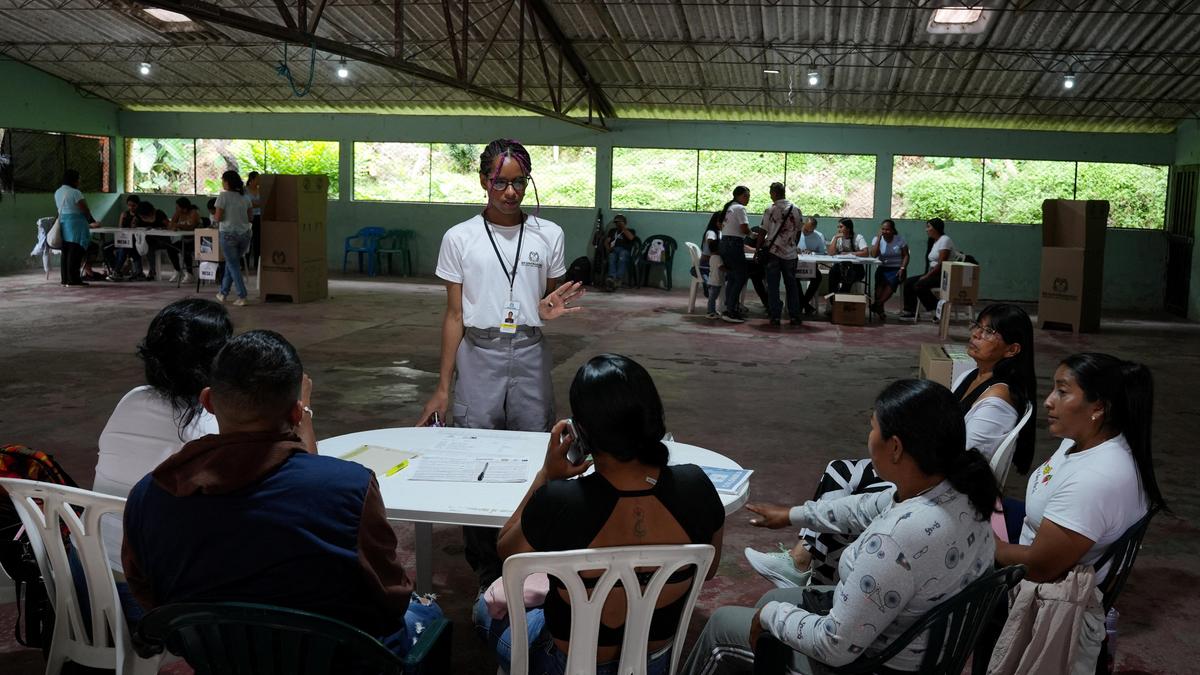
When she reached the small schoolhouse that served as the polling station, the room was mostly empty. The plastic table was wobbly. The election volunteer looked exhausted, his eyes bloodshot from a sleepless night of listening to distant explosions.
Maria took the paper ballot. Her hands shook slightly, a brief betrayal of the calm exterior she had maintained all morning.
The voting booth in these regions is perhaps the loneliest place on earth. Inside that small cardboard partition, there are no soldiers to protect you. There are no international observers taking notes. There is only you, a piece of paper, and the immense, crushing weight of your own conscience.
She made her mark. She dropped the folded paper into the plastic slit of the box. It made a soft, insignificant thud as it landed against the others.
She extended her thumb to be stained with the purple ink.
As she walked back up the mountain, the fog began to clear, revealing the vast, breathtaking beauty of the Andean peaks. The ink on her thumb was still wet, catching the faint glint of the morning sun. It would fade in a few days, disappearing completely by the time the next president was announced. But for now, it remained—a tiny, stubborn stain of courage in a landscape that had seen far too much blood.