The Myth of the Crowning Ground
Sports writers love a lazy narrative. They see the towering concrete structure of the Estadio Azteca, dust off their copy of Pelé’s 1970 highlights or Maradona’s 1980s history, and immediately begin typing out standard mythology. The narrative is always the same: the Azteca is the ultimate proving ground, a majestic colosseum where football kings are crowned and English teams go to test their mettle against the gods of the game.
It is complete nonsense.
The idea that the Azteca is some magical, meritocratic theater where the best football wins is an illusion sustained by nostalgia. Having analyzed decades of international fixtures, tournament data, and physiological reports from teams traveling to Mexico City, the truth is far less romantic. The Azteca does not crown kings. It suffocates them. It is an administrative cheat code disguised as a sporting monument, designed to ensure that tactical superiority is thoroughly neutralized by environmental hostility.
For an English side entering this stadium, success has absolutely nothing to do with standard tactical execution, creative genius, or the traditional attributes of elite European football. The standard preview articles will tell you about the "atmosphere" and the "ghosts of 1986." Ignore them. If you want to understand what actually happens when a modern European powerhouse steps onto that pitch, you have to look at the cold, unromantic metrics of biology and geography.
The Smog and the Sky: The Unfair Science of Altitude
Let us dismantle the biggest misconception first: the idea that playing at the Azteca is just a mental challenge. It is a physiological trap.
The stadium sits more than 2,200 meters above sea level. For context, elite athletes trained at sea level begin to experience a noticeable drop in their maximal oxygen uptake ($VO_2\text{ max}$) at just 1,200 meters. By the time you reach the pitch in Mexico City, a player's aerobic capacity is slashed by anywhere from 10% to 15%.
Imagine a standard Premier League midfielder who covers 11 kilometers a game at a high intensity. At the Azteca, their body physically cannot process the oxygen required to sustain that output. The air is thinner, the ball flies faster and truer through the reduced resistance, and recovery times between sprints double.
- The Dehydration Factor: The air is not just thin; it is notoriously dry, meaning players lose moisture through respiration at an accelerated rate without realizing it.
- The Pollutants: Mexico City sits in a valley that traps atmospheric pollutants. Players are not just breathing thin air; they are inhaling a thick cocktail of urban smog that irritates the lungs and reduces respiratory efficiency.
When European media outlets talk about teams "lacking desire" or "failing to cope with the pressure" in the second half of matches at the Azteca, they are misdiagnosing basic human anatomy. The players are not choking under the weight of history. They are experiencing acute oxygen deprivation. The home side, entirely acclimated to these specific conditions, plays a completely different sport. They stretch the pitch, force the visitors to chase, and let the altitude do the defending for them. It is a structural advantage that makes a mockery of tactical analysis.
Dismantling the Fan Myth: Fear vs. Friction
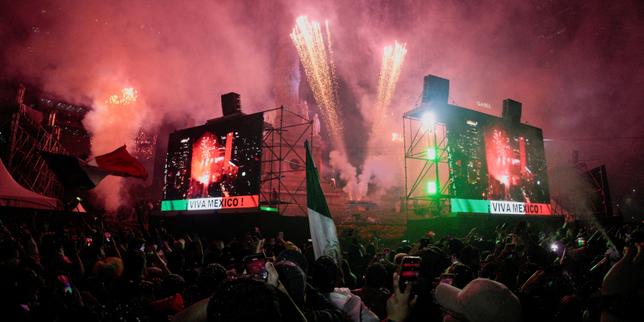
The second pillar of the Azteca myth is the crowd. We are told that the 80,000-plus fans create an intimidating wall of sound that paralyzes opposing players. This completely underestimates the psychological profile of the modern elite footballer.
These are players who walk out into hostile environments every single week in the Champions League, the Premier League, and major tournaments. A loud stadium does not frighten a seasoned professional. What breaks a team at the Azteca is not fear; it is friction.
The stadium design creates a literal pressure cooker. The stands are steep, trapping the sound and the heat right on the pitch. The pitch itself historically suffers from poor microclimates due to the massive structure blocking wind flow, leading to sticky, heavy grass that saps energy from tired legs. The hostility is not psychological; it is physical. The endless noise prevents on-pitch communication, forcing players to rely entirely on visual cues in a game where split-second decisions dictate outcomes.
When you strip away the romanticism, the Azteca is a masterclass in home-field manufacturing. It is the ultimate manifestation of friction-based sports engineering.
The Strategic Failure of English Adaptability
English football history is littered with failures in South and Central America because English managers consistently try to solve an environmental problem with a football solution.
They arrive with their standard tactical setups, hoping their superior technical quality or physical dominance will carry the day. They try to play high-pressing systems or high-tempo transition football. This is tactical suicide. You cannot press effectively when your recovery time is halved. You cannot play a high-intensity transition game when your lungs are burning after twenty minutes.
If an English side wants to survive the Azteca, they must abandon their identity entirely. They must become ugly, cynical, and ruthlessly defensive.
- Kill the Tempo: The ball must be kept in play as little as possible. Every throw-in, goal kick, and free kick must be delayed to its absolute legal limit to allow the cardiovascular system to reset.
- Abandon the Press: Sit in a low, compact block. Force the opposition to pass sideways. Do not chase the ball; defend spaces, not men.
- Surrender Possession: Trying to dominate the ball requires constant off-the-ball movement to create passing lanes. That movement is what kills you. Let the home team have the ball and exhaust themselves trying to break down a static wall.
This approach flies in the face of everything modern fans and pundits demand from the English national team. It is ugly, it is boring, and it is the only way to win. The moment a manager tries to play "the right way" at the Azteca, they have already signed the death warrant for their team's chances.
The Illusion of Majesty
Stop looking at the Estadio Azteca as a sacred cathedral of footballing excellence. It is a brutal, exhausting crucible that favors the genetically acclimated and punishes the physically elite. The kings who were crowned there in the past did so despite the venue, not because of it, and usually during eras when sports science had not yet quantified the sheer damage the environment inflicts on the human body.
If England or any other European power enters that stadium thinking they are participating in a beautiful, historic footballing ritual, they will be picked apart before halftime. The Azteca does not care about your pedigree, your tactical innovations, or your expensive squad value. It only cares about how much oxygen is left in your blood. Treat it like a football match, and you lose. Treat it like a high-altitude survival mission, and you might just get out alive.