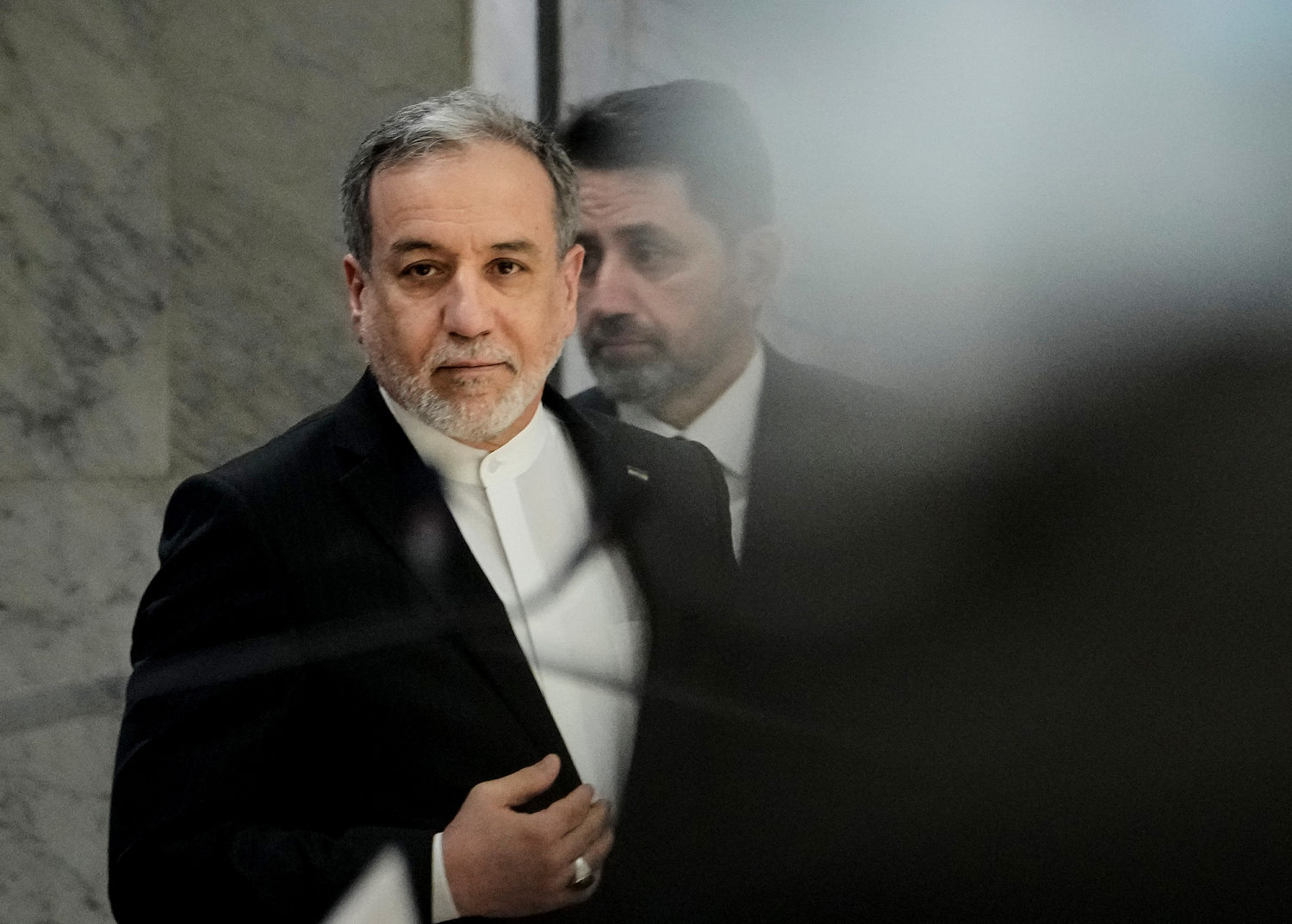
The divergence between the United States and Israel regarding the management of the Iranian conflict represents a structural mismatch in kinetic risk pricing. While Washington treats diplomatic engagement as a mechanism to establish a stable, post-conflict equilibrium, Jerusalem views the formal state apparatus of Iran as an extension of a singular existential threat vectors. The friction generated by this divergence materialized during the spring 2026 diplomatic track, when US intelligence modeled a high probability that Israel intended to execute targeted kinetic operations against Iran’s primary interlocutors: Foreign Minister Abbas Araghchi and Parliament Speaker Mohammad Bagher Ghalibaf.
This operational friction exposed a fundamental misalignment in the strategic cost functions of both allies. For the United States, preserving the physical security of the Iranian negotiating team was a prerequisite for diplomatic continuity. For Israel, the consolidation of decapitation operations remained a dominant strategy, irrespective of the diplomatic timeline.
The Dual-Track Interdiction Model
The strategic mismatch operates along two conflicting theories of conflict termination. The United States adheres to a de-escalation framework wherein a 14-point memorandum and an interim 60-day ceasefire serve as the baseline for a long-term regional framework. To advance this framework, the Trump administration required a functional, authoritative counterpart in Tehran capable of enforcing compliance across a highly fractured domestic landscape.
Conversely, the Israeli operational model functions on maximum degradation of the adversary’s command-and-control hierarchy. This strategy prioritized the elimination of the Iranian state structure, beginning with the joint kinetic operations on February 28 that targeted Supreme Leader Ayatollah Ali Khamenei.
By mapping the historical progression of the 2026 conflict, a clear pattern of strategic interdiction emerges across three distinct operational phases:
Phase One: Total Leadership Degradation
During the initial high-intensity phase of the war, the targeting of top-tier political and security personnel matched both US and Israeli immediate objectives—neutralizing command nodes. The kinetic elimination of Ali Larijani, Iran’s top national security official, and Kamal Kharazi, a former foreign minister, occurred precisely when these figures were exploring introductory communication lines with Washington. In this phase, the tactical utility of decapitation overrode the embryonic value of diplomatic channels.
Phase Two: The Diplomatic Friction Point
The friction point shifted following the April 8 ceasefire. The emergence of Araghchi and Ghalibaf as the designated faces of the Iranian negotiating team transformed them, in the view of the United States, from legitimate kinetic targets into essential strategic assets. The United States calculated that the assassination of either negotiator would permanently collapse the diplomatic track, triggering an unmanaged return to high-intensity regional warfare.
Phase Three: Operational Intervention
When intelligence indicated that Araghchi and Ghalibaf remained on an active Israeli target list despite the commencement of talks, the United States executed an indirect deterrence strategy. Because direct bilateral mandates were insufficient to alter Israeli targeting packages, Washington utilized regional intermediaries—specifically Qatar and Pakistan—to pass specific threat intelligence to Tehran.
This culminated in the April 12 air-intercept incident. Following high-level talks with US Vice President JD Vance in Islamabad, Ghalibaf’s return flight to Tehran was compromised when Iranian security forces, alerted to the movement of two Israeli fighter jets entering western Iranian airspace via Iraq, ordered an emergency diversion to Mashhad.
The Asymmetrical Cost Matrix of Diplomatic Decapitation
The variance in how Washington and Jerusalem calculated the value of the Iranian negotiators can be understood through an asymmetrical cost matrix.
                          Israeli Strategy                     US Strategy
                  +-----------------------------------+-----------------------------------+
Target Survival   | High Risk: Allows Iran to rebuild | High Value: Preserves diplomatic  |
                  | state authority and consolidate   | off-ramp; prevents unmanaged      |
                  | military command structures.      | escalation and regional spillover.|
                  +-----------------------------------+-----------------------------------+
Target Kinetic    | High Reward: Disrupts succession  | Catastrophic Cost: Destroys the   |
Elimination       | planning; maintains permanent     | negotiating pathway; forces a     |
                  | structural paralysis in Tehran.   | return to active kinetic warfare. |
                  +-----------------------------------+-----------------------------------+
The primary systemic risk identified by US analysts was the "Succession Vacuum Bottleneck." The kinetic campaigns of early 2026 had already depleted Iran's institutional elite. Had Israel successfully eliminated Ghalibaf and Araghchi during the active negotiation window, it would have produced a state-level command vacuum. From an empirical negotiation standpoint, a state completely stripped of its moderate or pragmatic bureaucratic layer cannot execute, ratify, or enforce international agreements. The Pakistani diplomatic warning to the United States in March summarized this operational reality: if these specific actors were eliminated, there would be no one left with the institutional authority to sign a binding ceasefire.
Furthermore, the survival of the negotiating team carries distinct tactical hazards for Israel. A formal pause in hostilities provides Iran's state apparatus with the operational breathing room needed to reconstitute its deeply degraded logistics networks. Consequently, Israel viewed the US-led diplomatic track not as a path to a durable peace, but as a tactical window of vulnerability that permitted the Iranian regime to institutionalize its survival.
Intelligence Sharing and the Erosion of Coalition Trust
The mechanics of the April 12 evasion highlight a critical structural vulnerability within the US-Israeli intelligence-sharing architecture. While the Prime Minister’s Office in Jerusalem officially dismissed reports of the plot as absolute fabrication, the operational behavior of regional states confirms a high-alert environment.
The implementation of Pakistani fighter-jet escorts for the Iranian delegation from Islamabad to the Iranian border, combined with the real-time diversion of Ghalibaf’s aircraft to Mashhad, demonstrates that tactical intelligence was actively flowing through parallel, non-allied channels.
This creates a systemic breakdown in coalition cohesion:
- Sovereign Deception Countermeasures: To prevent its diplomatic initiatives from being short-circuited, the United States was forced to treat its closest regional ally as a wild-card kinetic actor. Passing threat vectors to third-party intermediaries like Doha and Islamabad reflects a calculated decision to prioritize diplomatic process preservation over absolute intelligence enclosure with Israel.
- Espionage Escalation: The expansion of Israel’s intelligence and surveillance networks to monitor both Iranian and US diplomatic personnel during the Bürgenstock summit in Switzerland and subsequent meetings in Doha indicates that the intelligence contest is no longer strictly bilateral. Israel's collection requirements have expanded to capture the exact parameters of American diplomatic concessions.
- The Enforcement Dilemma: The 14-point memorandum signed in June remains highly fragile. While the Trump administration seeks to advance the implementation phase following the conclusion of the official mourning periods for the late Supreme Leader, the structural incentives for an Israeli kinetic disruption persist. Iran’s ongoing gray-zone operations, including low-level kinetic friction in the Strait of Hormuz, provide a continuous justification for Israel to reactivate its high-value targeting lists.
The tactical play for the United States requires decoupling its regional enforcement mechanism from Israeli operational consent. If Washington intends to finalize a verifiable agreement regarding Iran's remaining nuclear stockpile and regional command structures, it must transition from passing passive warnings via intermediaries to establishing explicit, hard-line bilateral boundaries with Jerusalem regarding diplomatic immunity. Failing to institutionalize these boundaries guarantees that the next major kinetic escalation will be dictated not by a failure of diplomacy, but by a targeted tactical strike designed to make diplomacy impossible.