India’s agricultural output and energy grid stability no longer depend on the predictable volume of seasonal rainfall, but on the highly volatile distribution of that precipitation across compressed time horizons. The transition from prolonged dry spells to sudden, intense deluge phases creates a structural mismatch between existing infrastructure and climate realities. Standard macroeconomic models often miscalculate the impact of these shifts by focusing on cumulative rainfall percentages rather than the operational disruptions caused by intra-seasonal shocks. Managing this volatility requires breaking down the crisis into its core atmospheric, agricultural, and macroeconomic variables.
The Tri-Oceanic Drivers of Intra-Seasonal Variance
The perception of the Indian monsoon as a single, homogenous weather pattern obscures the complex interactions between distinct oceanic phenomena. The traditional binary model of El Niño and La Niña fails to explain sudden intra-seasonal reversals, where a month of severe deficit is immediately followed by catastrophic flooding.
Three specific atmospheric mechanisms drive this instability:
- The Equatorial Indian Ocean Dipole (IOD) Phase Shifting: While a positive IOD typically enhances monsoon rainfall, its sudden collapse or delayed onset alters wind vectors across the subcontinent. When the IOD enters a neutral or negative phase concurrently with Pacific warming, the moisture corridor across the Arabian Sea narrows, leading to extended dry spells in Central India.
- Madden-Julian Oscillation (MJO) Amplification: The MJO acts as a traveling wave of atmospheric pressure that circles the globe. When the active phase of the MJO resides over the Indian Ocean, it triggers extreme, concentrated precipitation events. Conversely, its suppressed phase stalls monsoon progression for weeks, driving rapid topsoil moisture depletion.
- Tropospheric Thermal Gradient Compression: The monsoon relies on the temperature differential between the heated Tibetan Plateau and the cooler Indian Ocean. Rising aerosol concentrations and localized greenhouse warming have altered this gradient. The result is a weaker baseline monsoon current that is highly susceptible to sudden, chaotic bursts when localized convective energy builds up.
This combination of factors creates a system characterized by high variance and low predictability. The primary challenge is not a total lack of water over the four-month cycle, but the compression of a month’s worth of historical rainfall into a seventy-two-hour window, followed by weeks of absolute drought.
Agricultural Supply Chain Degradation
The structural shifts in rainfall distribution directly undermine the production cycle of primary Kharif crops, particularly rice, pulses, and oilseeds. The agricultural sector operates on a rigid chronological framework that is poorly equipped to handle highly variable weather patterns.
The Seeding and Transplanting Bottleneck
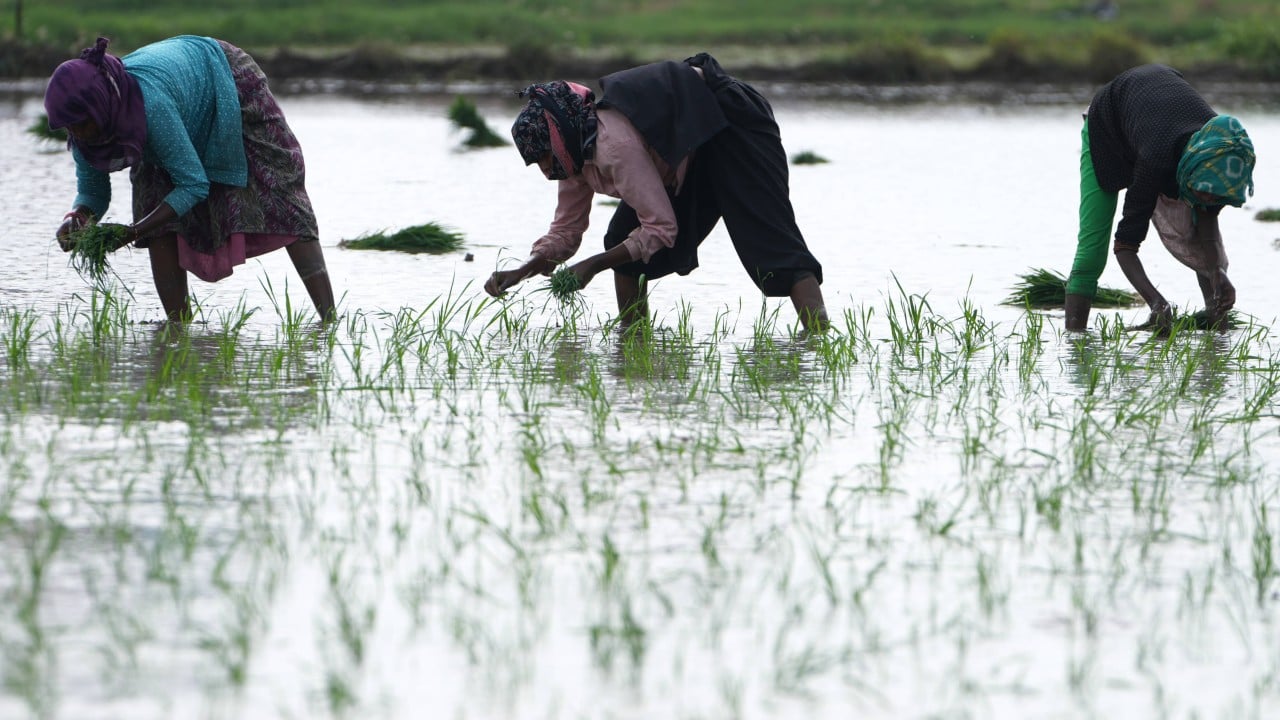
Rice cultivation requires precise water management. The nursery phase demands controlled moisture, followed by transplanting into flooded fields within a strict fifteen-to-twenty-day window.
When the early phase of the monsoon features a severe deficit, two systemic failures occur:
- Seedling Over-Maturation: Seedlings left in nurseries past their optimal transplanting window experience root hardening. When transplanted late, these crops exhibit permanently stunted tillering and a significant reduction in panicle density, capping the maximum potential yield regardless of later rainfall.
- Groundwater Depletion Acceleration: To salvage the transplanting window during dry spells, farmers rely on electric tube wells. This drive for immediate irrigation causes a rapid drop in local water tables. In states like Punjab and Haryana, this surge in energy-intensive pumping strains the rural electricity supply and increases the salinity of shallow aquifers.
The Deluge Saturated Root Failure
When an extended dry spell is broken by an extreme rain event, the hardened, uncultivated soil cannot absorb the sudden volume of water. The resulting surface runoff causes widespread waterlogging in low-lying agricultural zones.
Submergence for more than forty-eight hours induces root anoxia, halting nutrient uptake and exposing the crop to fungal pathogens. For crops like pulses and soybeans, which are highly sensitive to standing water, twenty-four hours of saturation during the flowering stage can reduce total crop yields by up to forty percent.
The Energy Grid Strain Matrix
The volatility of the modern monsoon creates a simultaneous supply-demand crisis for India's regional electricity grids. The sudden shifts between extreme heat and intense rain create unpredictable load profiles that threaten grid frequency stability.
[Extended Dry Spell / High Heat]
       │
       ├───► Surge in Agricultural Pumping Load ──────┐
       │                                               ├─► Peak System Load Coincidence
       └───► Elevated Urban Cooling Demand ────────────┘
                                                       │
[Hydroelectric Output Collapse] ◄───────────────────────┘
During a dry spell within the monsoon season, ambient temperatures rise sharply, causing a simultaneous surge in urban cooling loads and agricultural pumping demand. This peak system load coincides with a sharp decline in hydroelectric generation capacity, as reservoir levels drop below optimal operating heads.
To maintain grid frequency between the mandatory 49.9 Hz and 50.05 Hz limits, grid operators must rapidly ramp up thermal generation. This sudden reliance on coal-fired power plants exposes structural vulnerabilities in fuel supply chains. Accelerated coal consumption during dry spells quickly depletes plant stockpiles. If the dry spell is followed by a sudden deluge, the problems compound: heavy rains flood open-cast mines and disrupt rail logistics, leaving power plants with wet coal that reduces boiler efficiency just as they need to replenish their reserves.
Structural Mitigation and Infrastructure Redesign
Addressing the vulnerabilities caused by irregular monsoon patterns requires moving away from short-term relief measures and toward structural modifications in infrastructure and resource management.
Decoupling Irrigation from Real-Time Precipitation
The reliance on direct rainfall can be mitigated by constructing decentralized, solar-powered micro-irrigation networks. Integrating low-pressure drip systems with small-scale farm ponds allows agricultural regions to buffer against fifteen-to-twenty-day dry spells without drawing excessively on deep groundwater reserves.
Furthermore, shifting crop patterns away from water-intensive rice varieties in low-rainfall zones toward millets and short-duration oilseeds reduces the total water required per hectare, making the agricultural supply chain more resilient to fluctuations in rainfall.
Dynamic Reservoir Management and Grid Integration
Hydroelectric facilities must adopt dynamic reservoir operation rules that leverage short-term, ensemble-based weather forecasting rather than relying solely on historical inflow data. By accurately predicting intense rainfall events forty-eight to seventy-two hours in advance, dam operators can safely lower reservoir levels to create flood control space. This approach optimizes power generation while mitigating downstream flooding during severe storms.
On the demand side, implementing time-of-day tariff structures for agricultural consumers helps flatten peak demand periods. Shifting tube-well operations to off-peak night hours or tying them directly to daytime solar generation capacities reduces the load on thermal plants during high-demand periods, building a more resilient energy infrastructure capable of absorbing sudden climate shocks.