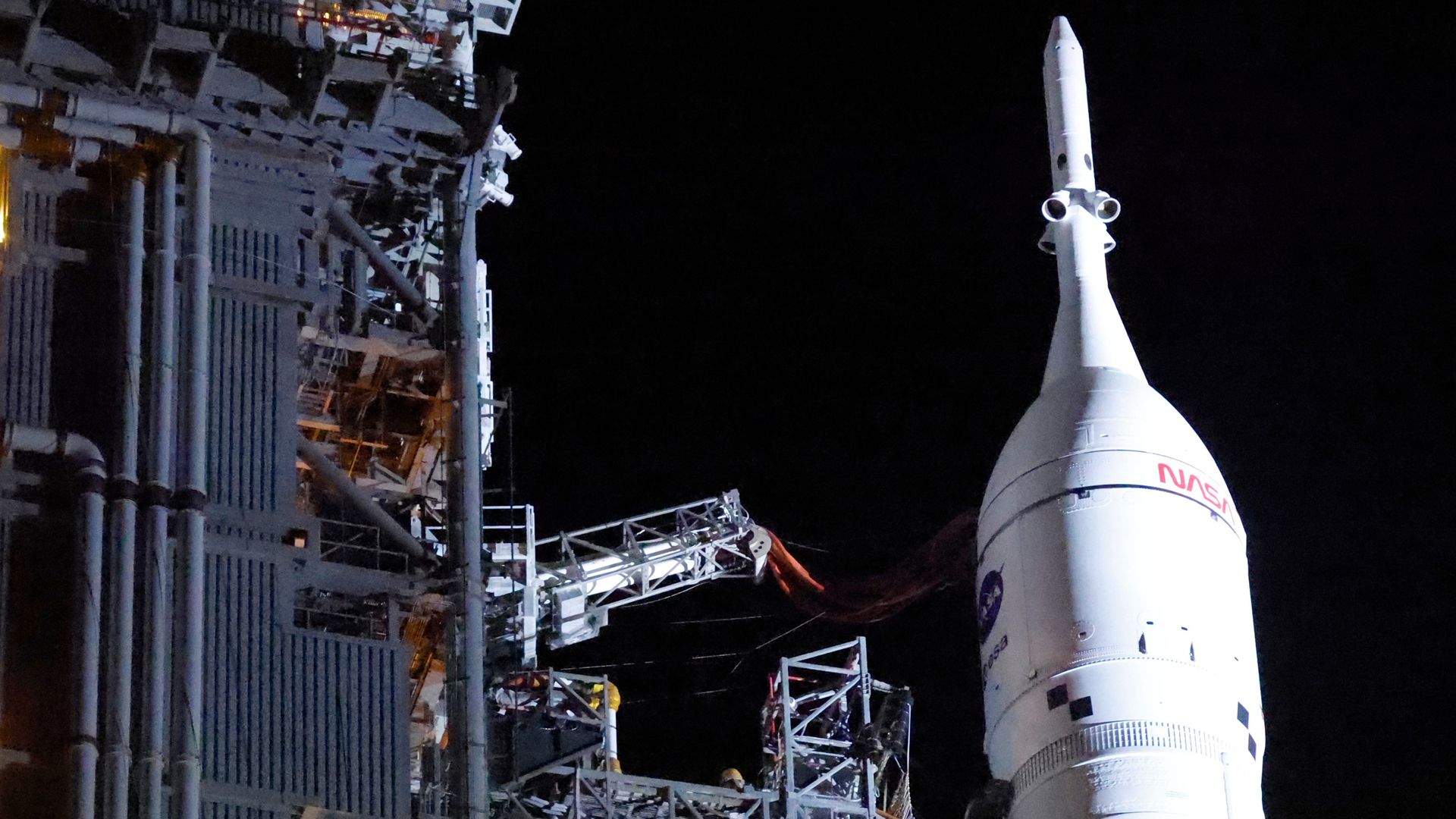
NASA just moved its massive Space Launch System (SLS) rocket back to Launch Pad 39B at Kennedy Space Center. If you've been following the Artemis program, you know this isn't just another routine roll-out. It's a high-stakes chess move. The goal is a potential launch window in April, but the hardware is the real story here. This isn't just about "going back to the Moon." It's about whether the most powerful rocket ever built can finally move past the technical gremlins that have haunted it for years.
The crawler-transporter carried the 322-foot-tall stack over the river gravel and concrete path, moving at a pace slower than a human walk. It looks majestic, sure. But for the engineers at NASA and Boeing, it’s a nerve-wracking four-mile journey. Every vibration matters. Every sensor reading is scrutinized. They're looking for signs that the repairs made in the Vehicle Assembly Building (VAB) actually held up.
The April Launch Window is a Moving Target
NASA likes to talk about "launch opportunities." For the upcoming Artemis mission, April offers several days where the Earth and Moon align just right. However, spaceflight doesn't care about our calendars. To hit an April date, everything has to go perfectly during the final wet dress rehearsal.
This rehearsal is where the team loads the rocket with super-cold liquid hydrogen and liquid oxygen. They run the countdown right up to the final seconds before ignition. They've struggled with this before. Leaks in the "umbilical" lines—the massive tubes that feed fuel into the rocket—have been the primary culprit. If they see even a tiny whiff of hydrogen during this pad stay, April is off the table.
I've watched these programs for decades. NASA is often criticized for being too slow or too cautious. But when you’re sitting on top of a controlled explosion fueled by millions of pounds of propellant, caution isn't a choice. It's a requirement. The SLS is a beast of a machine. It uses four RS-25 engines—the same ones that powered the Space Shuttle—and two massive solid rocket boosters. It’s a mix of legacy tech and new manufacturing that creates a unique set of headaches.
Why the Roll Back to the Pad is a Milestone
Most people think the "launch" is the only thing that counts. They're wrong. The roll-out itself is a massive engineering feat.
- Structural Integrity: Moving a 5.75-million-pound rocket requires the world's largest land vehicle. The stress on the rocket's "bones" during this move is significant.
- Environmental Exposure: Once it's on the pad, the SLS is at the mercy of Florida’s salt air, humidity, and lightning. NASA has a sophisticated lightning protection system, but nature always finds a way to test it.
- Final Connections: This is the moment where the rocket "talks" to the ground systems. Thousands of data points must sync up perfectly.
The sheer scale of the Artemis Moon rocket is hard to grasp until you see it next to the VAB. It’s taller than the Statue of Liberty. It generates 8.8 million pounds of thrust. That’s 15% more than the Saturn V that took the Apollo astronauts to the Moon. We aren't just repeating history. We’re trying to build a sustainable presence, and that starts with proving this rocket can actually get off the ground without shaking itself to pieces.
Fixing the Hydrogen Leak Problem
Hydrogen is the smallest molecule in the universe. It’s a nightmare to contain. During previous attempts, NASA dealt with "persistent leaks" that forced them to scrub launches and roll back to the VAB.
The engineers didn't just tighten a few bolts during this latest stint inside the hangar. They replaced seals. They re-aligned the quick-disconnect plates. They even changed how they’ll chill down the engines to reduce the thermal shock that can cause metal to warp and seals to fail. It’s a delicate dance of cryogenics and heavy machinery.
If the April window slips, it’s likely because of these seals. If you’re a taxpayer wondering why this takes so long, remember that a mid-air failure doesn't just cost billions of dollars. It sets the entire vision of human deep-space exploration back by a decade. We can't afford a repeat of the Challenger or Columbia era. The stakes are too high.
What Happens if April Fails
Space is hard. It’s a cliché because it’s true. If the SLS doesn't fly in April, the next windows open in May and June. These windows are dictated by the Moon's position, the need for the Orion spacecraft to be in sunlight for power, and the specific splashdown locations in the Pacific Ocean.
NASA isn't just looking for a clear sky. They're looking for a specific geometry in the solar system. This is orbital mechanics at its most unforgiving.
The Reality of the Artemis Mission
Artemis I is an uncrewed flight. It’s the ultimate test drive. The Orion capsule will go thousands of miles past the Moon, further than any ship built for humans has ever gone. It will then have to survive a re-entry at 25,000 miles per hour, hitting the atmosphere so hard it creates a plasma field around the craft.
The heat shield is the real hero of the later stages of this mission. It has to endure temperatures half as hot as the surface of the sun. But none of that happens if the rocket stays on the pad.
We’ve seen the rise of private space companies like SpaceX, and many wonder why NASA is still building its own "big iron." The answer is complicated. While Starship is the shiny new toy, SLS is the platform NASA has spent billions to integrate with existing deep-space ground systems. It’s the "Stage One" of a much larger plan that includes the Lunar Gateway—a space station that will orbit the Moon.
Keeping Your Eyes on the Pad
If you want to track the progress, don't just look at the news headlines. Watch the "wet dress" results. When NASA announces they’ve completed a full loading of the core stage and the interim cryogenic propulsion stage without a "leak-related hold," that’s when you should book your flight to Titusville.
The countdown isn't just a clock. It's a series of thousands of "go/no-go" decisions. The fact that the rocket is back on the pad means the "go" votes are winning for now.
You can stay updated by following the NASA Kennedy Twitter feed or watching the live pad cameras. The real action happens during the overnight shifts when they perform the most dangerous pressure tests. If the rocket is still standing and venting liquid oxygen by the end of the month, the April launch isn't just a possibility. It’s a probability.
Get ready. The rumble of 8.8 million pounds of thrust is unlike anything you’ve ever heard. It doesn't just make noise; it shakes the air in your lungs. We are closer to the Moon than we’ve been in fifty years.