The tea has gone cold in the cup. This is the first thing you notice when you walk into a traditional planning meeting in Tokyo.
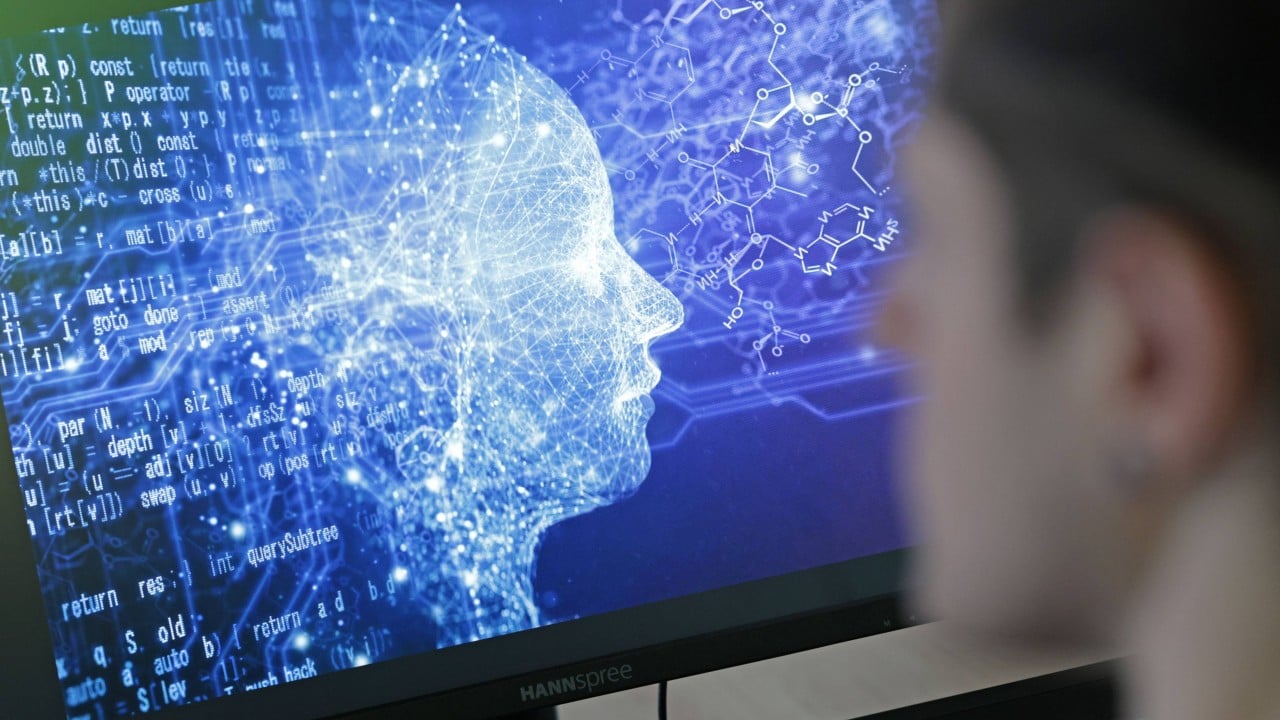
Hiroshi sits across the polished mahogany table, his tie immaculate, his notebook closed. He has worked for the same heavy manufacturing firm for thirty-two years. He has survived the asset price bubble burst, the lost decades, the great eastern Japan earthquake, and three distinct corporate restructurings. Today, he is staring down a new kind of disruption. A screen at the front of the room flashes with glowing charts, percentages, and promises. Silicon Valley is selling speed. Tokyo is offering silence.
To an outside observer, the silence looks like hesitation. It looks like fear. Western analysts write breathless reports about why Japanese corporations are falling behind in the artificial intelligence race, diagnosing the lag as a cultural aversion to risk or an inability to pivot. They talk about rigid hierarchies and bureaucratic inertia.
They are missing the entire point.
Consider what happens when you introduce a machine designed to predict, generate, and replace into a society built entirely on mutual trust, shared consensus, and an obsession with perfection. You do not just introduce a software tool. You introduce a grenade into a clockwork mechanism.
The Weight of a Mistake
Let us step inside a hypothetical design bureau in Nagoya. Kenji is forty-five, an engineer tasked with modernizing a supply chain that has operated with near-zero error margins for half a century.
If Kenji installs an automated logistics algorithm today, and that algorithm hallucinates a shipment schedule next Tuesday, a factory line stops. If the factory line stops, a tier-two supplier loses revenue. If a tier-two supplier loses revenue, an unspoken social contract between corporate partners fractures. In Japan, business is not merely a transaction; it is a covenant.
Speed is cheap. Trust is expensive.
When foreign tech journalists ask why Japanese firms are slow to adopt artificial intelligence, they assume that slowness is a bug. It is a feature. It is a deliberate, protective shield forged from a deep-seated cultural fear of getting things wrong in public.
In many Western tech hubs, the governing philosophy is to move fast and break things. In Tokyo, Osaka, and Nagoya, the governing philosophy is to move carefully and break nothing. When your entire economic identity is tied to the global gold standard of manufacturing excellence—where the word quality means your reputation, your family name, and your ancestral honor—you do not deploy a probabilistic software model just because venture capitalists in California say the train has left the station.
The Demographic Mirror
There is another truth hiding beneath the boardroom discussions, one that makes the slow pace of adoption even more poignant. Japan is running out of people.
Walk down any residential street in Kyoto on a Tuesday afternoon, and you will hear the profound quiet of an aging nation. The birth rate has declined for decades. The workforce is shrinking. By every conventional Western metric, this makes the country the prime candidate for immediate, aggressive automation. If you have fewer workers, you need machines to fill the gaps. The government knows this. Corporate boards know this.
Yet, even with the demographic cliff looming directly ahead, the brakes remain applied. Why?
Because the fear of losing human institutional knowledge is greater than the fear of a labor shortage.
When a young engineer enters a firm, they do not just learn how to code or manage data. They absorb kuuki—the mood, the unspoken context, the subtle art of reading the room and understanding why a machine behaves a certain way under extreme humidity or seismic stress. This knowledge cannot be scraped into a large language model. It lives in the bones of senior technicians who spent forty years touching steel, listening to engines, and smelling burnt oil.
When corporate leaders look at generative software, they worry about what happens when the human element is quietly edited out of the equation. They worry that outsourcing judgment to a server farm in Oregon means forgetting how to think for themselves.
The Quiet Rebellion
Change is happening, but it is wearing a quiet suit.
It does not look like a Silicon Valley product launch. There are no keynote speeches delivered in black turtlenecks. There is no hyperventilating about disruption.
Instead, it looks like a quiet pilot project in a basement laboratory in Kobe, where a team of octogenarian shipbuilders is teaching a machine how to recognize micro-fractures in titanium hulls. They are not letting the machine run free. They are interrogating it. They are cross-examining every line of code. They are treating the algorithm not as an oracle, but as a naive apprentice who must earn their stripes over ten years of dedicated service.
This is where the Western narrative completely collapses. The hesitation is not passive resistance. It is an active, highly disciplined form of skepticism.
Japanese firms are asking the hard questions that the rest of the world is rushing past in a blur of quarterly earnings reports. Who owns the error when the algorithm fails? How do you preserve artisanal craftsmanship when everything is flattened into data points? What happens to the soul of an enterprise when decision-making is delegated to an opaque black box?
The rest of the world calls this delay. Japan calls this survival.
The Edge of Tomorrow
The sun sets over the Tokyo skyline, casting long shadows across glass towers that house some of the oldest continuous business enterprises on earth. Some of these companies have survived for centuries by adapting slowly, deliberately, and only when the ground beneath them had settled into absolute certainty.
The artificial intelligence wave is washing up against these shores, crashing against walls built from patience, pride, and an uncompromising dedication to craft.
Hiroshi closes his notebook. The tea is cold, but the decision is not yet made. While the rest of the planet races blindly toward a future it has barely paused to question, Tokyo stands still, holding its breath, measuring the exact weight of tomorrow before letting it in.