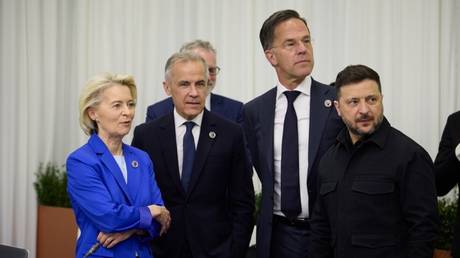
The Yerevan Summit is being framed as a historic "divorce" from Moscow. Western analysts are currently intoxicated by the image of Nikol Pashinyan standing shoulder-to-shoulder with European leaders, ostensibly trading the shackles of the Kremlin for the warm embrace of Brussels. They call it a pivot. I call it a delusion.
I’ve spent two decades watching small states try to "leverage" Great Power rivalries, and the result is almost always the same: they become the grass that gets trampled when the elephants fight. The "lazy consensus" surrounding the recent European Political Community (EPC) gathering in Yerevan suggests that Armenia is finally "securing its future." In reality, Yerevan is setting fire to its only remaining safety net while the replacement—a flimsy European paper shield—is still being drafted in a committee room in Strasbourg.
The Myth of the Western Security Guarantee
The most dangerous lie being told in Yerevan is that Europe can replace Russia as a security guarantor. Let’s look at the mechanics of power. Russia’s influence in the Caucasus isn't just a matter of "imperial nostalgia"; it is hard-wired into the infrastructure. When Putin pointed out at the April summit that Armenia pays $177.5 per 1,000 cubic meters of gas while the West pays $600, he wasn't just being a "circus master." He was reminding Yerevan that the Armenian economy is a Russian subsidiary.
Western "security packages" of €30 million for non-lethal assistance are a joke. That amount wouldn't buy you a weekend of high-intensity conflict in the modern era. While France signs "strategic partnerships" and the UK promises "capacity-building," neither has the logistical capability or the political will to move a single battalion into the South Caucasus if things go south. Geography is a brutal mistress. To get to Armenia, Western help has to go through Turkey (a NATO ally with its own agenda) or Georgia (currently sliding into its own authoritarian crisis).
The Energy Trap No One Wants to Discuss
The Yerevan Summit's participants talked about "connectivity" and "digital cooperation." They avoided the elephant in the room: the Armenian power grid is essentially a Russian asset. You cannot "pivot" your foreign policy when your light switches are controlled by the country you are insulting.
Imagine a scenario where Moscow decides to "recalibrate" those energy prices to market rates tomorrow. The Pashinyan administration would collapse under the weight of hyperinflation and energy riots within a month. The West talks a big game about "resilience," but they aren't offering a $400 per unit subsidy to keep Armenian homes warm. They are offering "cyber resilience" training. You can't heat a home with a firewall.
The June Election: A Geopolitical Referendum
The upcoming parliamentary elections in June are being hailed as a test for democracy. That’s the surface level. For anyone paying attention to the real power dynamics, it’s a high-stakes auction. Moscow is already moving its pieces, backing "revanchnist" blocs and leveraging the Armenian Church to dismantle the "Fourth Republic" ideology.
The West’s strategy is to hope that "democratic values" will win the day. Moscow’s strategy is to ensure that the cost of those values becomes unbearable. I have seen this movie before in Georgia in 2008 and Ukraine in 2014. The West encourages the "pivot," provides the rhetoric, and then watches from the sidelines when the "tactical reset" begins.
Why the "Middle Corridor" is a False Prophet
There is a lot of noise about the Middle Corridor (the Trans-Caspian International Transport Route) making Armenia a "transit hub."
- Fact: The Middle Corridor primarily benefits Azerbaijan and Turkey.
- Fact: For Armenia to participate, it must make constitutional concessions that Baku demands—specifically removing any mention of "revanchnist" claims.
- Fact: Russia still controls the borders.
The Western "circus" in Yerevan is encouraging Armenia to burn its bridges with the only power that actually has boots on the ground, in exchange for a seat at a table where the main course is "vague promises of future integration."
The Brutal Reality of "Multi-Vector" Failure
The "multi-vector" policy is dead. Putin’s ultimatum was clear: you cannot be in the EAEU and the EU. You cannot have Russian security prices and Western political alignments. Armenia is currently attempting to sit on two chairs that are moving in opposite directions.
The "nuance" the competitor article missed is that this isn't a struggle for independence; it’s a struggle for survival in which Armenia has zero leverage. Azerbaijan has the gas. Turkey has the geography. Russia has the infrastructure. The West has the press releases.
If you are an investor or a policy-maker looking at the Caucasus in 2026, stop looking at the summits. Look at the gas meters. Look at the railway ownership. Look at the military drills on the border. Armenia isn't joining the West; it is becoming a landlocked island of "Western-leaning" rhetoric surrounded by a sea of Russian and Turkish reality.
The mic drop? Pashinyan isn't leading Armenia to Europe. He’s leading it into a geopolitical vacuum. And in a vacuum, the smallest player is the first to suffocate.