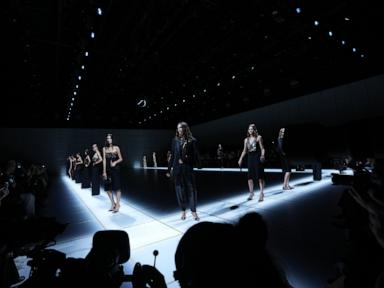
Giorgio Armani built an empire on the rigid premise of unyielding control. When the fashion press gathers in Milan to evaluate the brand one year after the founder's death, they default to a comforting, lazy consensus. They write mournful obituaries disguised as runway reviews. They fret over succession. They wonder if a multi-billion-dollar Italian powerhouse can survive without the heavy hand of its creator sketching every lapel at midnight.
They are asking the wrong questions.
The real story of post-founder Armani is not about whether a design team can mimic Giorgio’s signature taupe palette. The real story is whether a privately held colossus structured around a single octogenarian's idiosyncratic worldview can survive the brutal mechanics of modern luxury consolidation.
I have watched family-owned European houses panic-sell to conglomerates the moment the patriarch passes. Armani resisted that reflex for twelve months. But sentimentality does not pay manufacturing overhead or secure prime real estate in Ginza and Fifth Avenue. The luxury market does not care about your legacy; it cares about your operating margin.
Let us dismantle the prevailing industry narrative piece by piece.
The Succession Fallacy
The mainstream fashion media treats founder dependency as a temporary glitch rather than a structural architecture. For decades, Armani operated less like a modern corporation and more like a benevolent autocracy. Giorgio held creative direction, operational oversight, and financial equity in a vice grip.
When a structure like that loses its apex predator, conventional business theory predicts immediate chaos. Analysts reach for their stale playbooks about dilution and brand drift. They assume that splitting the creative load between longtime deputies and family members will result in a diluted dilution of the brand identity.
That theory assumes the brand identity itself is fragile. It is not.
Armani did not conquer global markets by inventing avant-garde shock value. He won by codifying a specific, utilitarian elegance—the unconstructed jacket, the rejection of bourgeois stiffness, a palette that whispers rather than screams. That DNA is baked into the supply chain, the flagship architecture, and thirty years of consumer conditioning. You do not need Giorgio in the room to buy navy wool or cut a soft shoulder. You need disciplined execution of a formula that has already won.
The risk to Armani is not that the clothes will look different. The risk is that the corporate governance will become timid. Without a titan at the top willing to say no to institutional investors or timid board members, brands tend to drift toward safe, algorithmic mediocrity.
The Conglomerate Mirage
Every time an independent house loses its founder, the vultures from LVMH and Kering start circling Milan with checkbooks. The lazy narrative suggests that Armani must eventually sell to survive the scale game.
That is absolute nonsense.
Being private is Armani's ultimate competitive moat. While publicly traded luxury groups are forced to pander to quarterly earnings calls and desperate millennial volume plays, a private foundation-backed structure can weather a multi-year downturn without blinking. Look at what happens to houses that join massive conglomerates. They get milked for cash flow, their production lines get outsourced to maximize EBITDA, and their soul gets hollowed out to fuel quarterly shareholder presentations.
Armani’s post-founder strategy must double down on independence. The moment they take public money or bend the knee to a luxury conglomerate, the Giorgio Armani name becomes just another SKU in a massive corporate portfolio.
Milan should be celebrating the fact that Armani’s estate plan explicitly protects this independence. The governance structure left behind is designed to resist short-term cash grabs. Is it messy? Absolutely. Bureaucracy born from a complex foundation model is slower than a dictator's whim. But slow and independent beats fast and absorbed every single time in the luxury tier.
Redefining Quiet Luxury for a Loud World
Another favorite trope of the Milan fashion week coverage is that Armani invented "quiet luxury" decades ago, and now the brand is just riding a wave it started.
That gives the market too much credit. What Armani actually pioneered was functional dignity. Quiet luxury today has been co-opted by tech bros wearing $2,000 cashmere hoodies and minimalists chasing TikTok aesthetics. It has become a trend.
Armani was never a trend. It was an alternative uniform for adults who did not need to scream their net worth across a boardroom.
The challenge for the current design collective is not to chase the quiet luxury TikTok trend. It is to make functional dignity relevant to a demographic that has been trained to buy hyper-branded streetwear drops. If Armani tries to appeal to twenty-two-year-old hypebeasts with logo-laden sneakers, the brand is finished. They tried dipping into youth-adjacent sub-lines years ago, and it diluted the core equity.
The playbook moving forward requires radical focus. Strip away the peripheral diffusion clutter. Elevate the Giorgio Armani mainline to haute couture pricing tiers. Make the product scarce, expensive, and unapologetically mature.
The Brutal Reality Check
Let us admit the downside of this aggressive independence.
Without Giorgio's magnetic personality driving personal relationships with Hollywood royalty, global politicians, and old-money dynasties, the brand loses its chief rainmaker. You cannot scale charisma through a committee. The new leadership must figure out how to project cultural relevance without a living legend signing autographs backstage.
Furthermore, retail real estate is undergoing a structural bloodbath. Massive, multi-story flagship stores that anchor cities like Milan, Paris, and New York are financial anchors if foot traffic shifts entirely to digital curation or localized private salons. Armani has massive physical footprints that require astronomical revenue to sustain.
If the brand fails to pivot its retail model toward high-touch, appointment-only clienteling for ultra-high-net-worth buyers, those marble palaces will become very expensive monuments to a bygone era.
The Verdict
The Milano retrospective one year after Giorgio's passing is not a funeral. It is a stress test.
The commentators mourning the loss of the man are missing the machinery underneath. Armani built an aesthetic system that outlives its creator, provided the stewards running it have the spine to protect its independence from the temptation of quick liquidity.
The empire does not need a savior. It needs execution.
Stop waiting for another Giorgio. He isn't coming back. And the brand is better off for it.