The illicit trade in high-volume contemporary art relies on a fundamental failure in the market’s verification protocols: the conflation of provenance documentation with physical object integrity. In the case of the father-daughter duo who infiltrated the New York City art market with counterfeit Andy Warhol and Banksy pieces, the exploit was not a failure of artistic mimicry, but a masterful manipulation of the Asymmetric Information Gap. By saturating the mid-tier market with works that bypassed high-level forensic scrutiny, the perpetrators leveraged the velocity of the New York trade to convert low-cost physical assets into high-yield financial instruments.
The Triad of Exploitation: Why the Art Market Collapsed
The success of a large-scale forgery operation is predicated on three structural weaknesses within the secondary art market. When these pillars align, the barrier to entry for fraudulent assets drops to near zero.
1. The High-Velocity Mid-Tier Market
While blue-chip auctions involving $50 million masterpieces trigger exhaustive chemical analysis and provenance mapping, the mid-tier market ($10,000 to $100,000) operates on volume. At this price point, the cost of a comprehensive forensic audit—carbon dating, pigment analysis, and X-ray fluorescence—often exceeds the profit margin of the dealer. The perpetrators targeted Warhol and Banksy specifically because these artists produced high volumes of prints and multiples. This "multiples" category creates a natural statistical noise where a few unauthorized additions can go unnoticed among hundreds of legitimate editions.
2. The Verification Vacuum
Since the dissolution of the Andy Warhol Art Authentication Board in 2011 and the closure of the Keith Haring authentication committee, the market has lacked a central authority. In their absence, "opinion-based" authentication from independent experts has become the standard. The father-daughter team exploited this by creating a Circular Validation Loop. They provided forged provenance documents that referenced real exhibitions or defunct galleries, betting that a time-strapped dealer would verify the document rather than the object.
3. The Social Proof Heuristic
In the New York art world, trust is a transactional currency. By establishing a persona of "inherited" collections or private "found" stashes, the duo utilized social engineering to bypass technical skepticism. If a seller appears to belong to the right social strata or possesses a convincing narrative of discovery, the buyer’s cognitive bias shifts from "Is this real?" to "How can I secure this deal before a competitor does?"
Operational Mechanics: The Production of Value
The technical execution of the fraud involved a sophisticated understanding of material science and historical context. To successfully pass a fake Warhol or Banksy, a forger must solve for three variables in the Authenticity Equation:
$$V = M(S) + P(H) + D(C)$$
Where:
- V is the perceived Value.
- M(S) is Material Similarity (substrate, ink, age).
- P(H) is Provenance History (paper trails, stamps).
- D(C) is Distribution Channel (reputable dealers vs. anonymous auctions).
Material Deception and the Aging Problem
For the Warhol counterfeits, the primary challenge was the "aging of the substrate." Modern paper reacts differently to UV light than paper produced in the 1960s or 70s. The duo sourced period-accurate materials or used chemical aging agents to mimic the oxidation of lignin in paper fibers. For Banksy, the challenge was different: reproducing the deliberate "urban grime" and stencil imperfections that characterize his street-to-gallery transitions. By focusing on screen-printing, a mechanical process, they minimized the "hand of the artist" signature that often trips up forgers of painterly works like those of Rothko or Pollock.
The Paper Trail Infrastructure
The genius of the NYC operation lay in the forgery of the history rather than just the art. They manufactured:
- Gallery Invoices: Using letterheads from galleries that had long since closed, making it impossible for a dealer to call and verify the sale.
- Estate Stamps: Physical stamps that looked identical to official authentication marks, applied with inks that had been chemically treated to appear decades old.
- Exhibition Labels: Faked labels from major museums or international art fairs, pasted on the back of frames to give the work a "pedigree."
The Economics of the Scam: Risk vs. Reward Ratios
From a consultant’s perspective, the operation was a classic high-margin business model with an aggressive risk profile.
Revenue Generation: By selling prints for $20,000 to $50,000, they stayed below the "Deep Due Diligence" threshold.
Cost of Goods Sold (COGS): The physical production of a high-quality screen print, including frame and forged documentation, likely cost less than $500.
Profit Margin: The operation yielded approximately 4,000% to 10,000% profit per unit.
The primary bottleneck for this model is Market Satiation. If a single dealer is offered ten "rare" Warhol prints in a year, suspicion arises. The duo mitigated this by diversifying their distribution. They didn't hit one big target; they bled the market through dozens of smaller incisions, using online auction houses, boutique galleries, and private collectors across different jurisdictions.
The Systemic Failure of Due Diligence
The New York art world operates on a "Buyer Beware" (Caveat Emptor) framework, but this is complicated by the legal definition of "reasonable inquiry."
A dealer’s failure to identify a fake often stems from a Conflicting Incentive Structure. Dealers earn a commission on the sale. If they find a reason to disqualify a work, they lose the commission. This creates a psychological "Blind Spot" where the dealer looks for reasons to confirm authenticity rather than reasons to refute it. The father-daughter team mastered the art of providing just enough evidence to satisfy a dealer who was already incentivized to believe them.
Data Points in the Detection Failure
- Inconsistency in Ink Density: Modern screen prints often show a uniformity that hand-pulled 1960s prints lack.
- Spectral Misalignment: Forged Banksy works often lacked the specific aerosol particulate patterns found in genuine Pest Control-certified pieces.
- Anachronistic Documentation: In some instances, the forged invoices used typefaces or digital printing methods that did not exist at the time of the purported sale.
These red flags were frequently ignored because the pieces were bundled with "strong" social proof—the father’s charismatic presentation and the daughter’s digital-savvy marketing of their "family collection."
The Regulatory Gap: The Art Market as a Dark Pool
The art market is one of the last major unregulated financial frontiers. Unlike the securities market, which is governed by the SEC, or the real estate market, which has stringent transparency requirements, the art market allows for:
- Anonymity: Both buyers and sellers can remain hidden behind "Private Collections."
- Lack of Centralized Database: There is no global registry of all legitimate Warhol prints.
- Subjective Valuation: Price is determined by what two people agree upon, not by intrinsic utility.
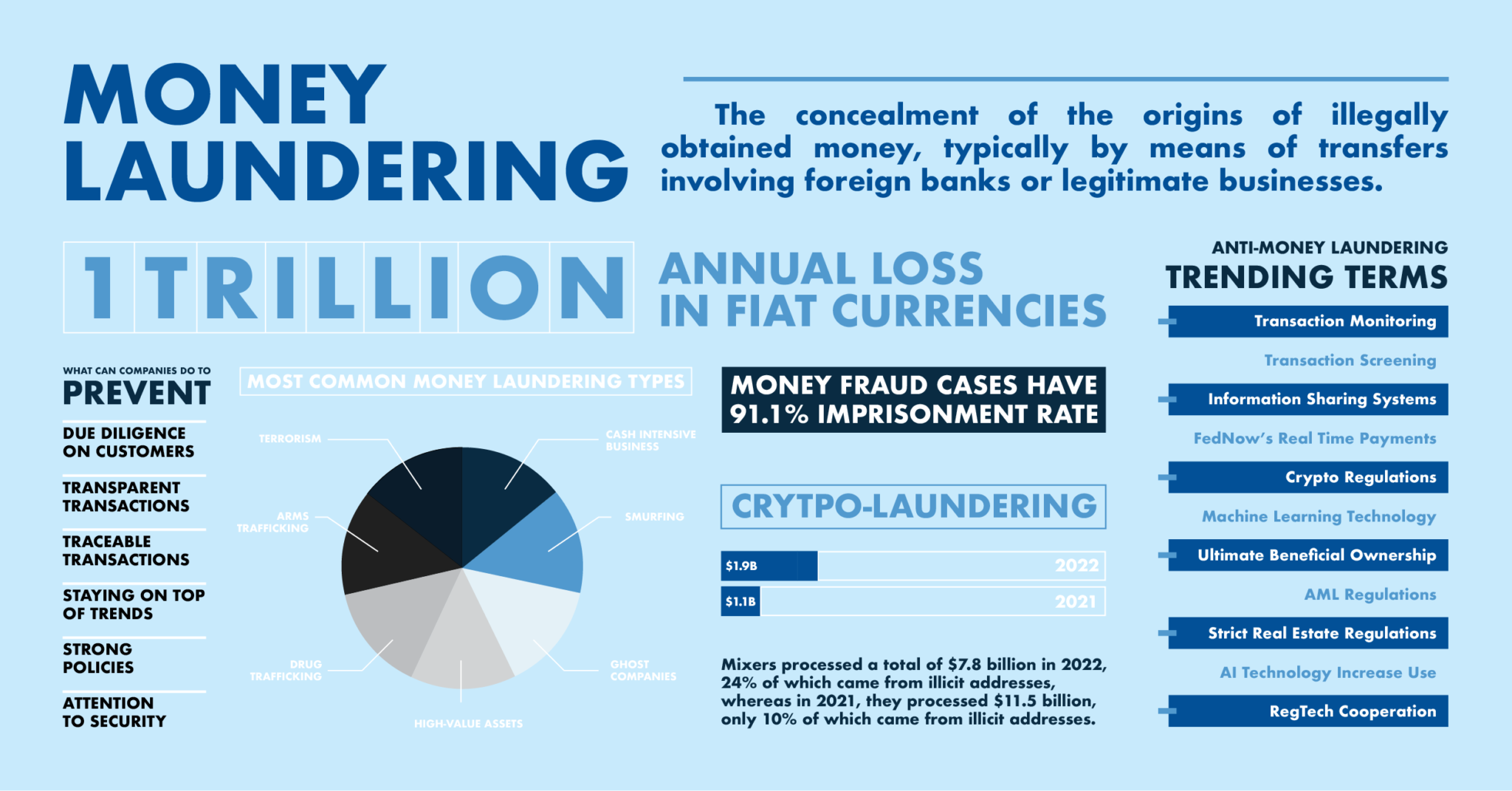
This lack of transparency is a feature, not a bug, for legitimate high-net-worth individuals seeking privacy. However, for the NYC forgers, it was the perfect "Dark Pool" in which to operate. They could move assets without triggering the anti-money laundering (AML) protocols that would accompany a $50,000 cash transaction in a bank.
Forensic Correction and Future Mitigation
To prevent a recurrence of the Warhol/Banksy exploit, the market must transition from Subjective Trust to Immutable Verification. The following structural shifts are necessary:
- Blockchain Provenance Integration: Every physical work must be tethered to a digital twin (non-fungible on a private or public ledger) that tracks its entire ownership history. A physical work without a verified digital "birth certificate" would be immediately discounted.
- Chemical Fingerprinting: Standardizing the use of Micro-X-ray Fluorescence (µ-XRF) for mid-tier works. This identifies the elemental composition of pigments without damaging the art. If a "1964 Warhol" contains Titanium White pigment with a chemical signature from a 2010s manufacturer, the fraud is instantly exposed.
- Liability Shifting: Reforming legal frameworks to hold galleries more strictly liable for the authenticity of the works they broker. If the financial penalty for selling a fake exceeds the potential commission, the "Blind Spot" incentive disappears.
The Manhattan case serves as a terminal warning for the art industry. The era of relying on a "good story" and a yellowed invoice is over. The market must now choose between adopting rigorous, data-driven authentication protocols or accepting that a significant percentage of "contemporary masterpieces" in private hands are merely expensive ink on aged paper.
The strategy for collectors is clear: prioritize the technical audit over the narrative pedigree. In an environment where the tools of forgery have caught up to the tools of production, the only defense is a forensic offense. Eliminate the "Asymmetric Information Gap" by demanding raw data over expert opinion. If the documentation cannot be verified through a third-party, independent, and still-existing entity, the asset must be treated as a zero-value liability.