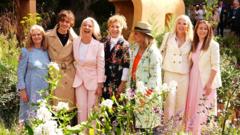
The convergence of celebrity endorsement and high-end horticulture at the RHS Chelsea Flower Show 2026 operates not as a casual cultural crossover, but as a deliberate mechanism of aesthetic capital generation. Media coverage traditionally frames the presence of high-profile attendees alongside elite garden designs through a lens of superficial lifestyle alignment. This structural analysis bypasses that surface veneer to map the underlying economic, socio-cultural, and architectural frameworks driving the event.
The event serves as an annual market calibration where luxury branding, environmental policy, and consumer desire are synthesized into physical spaces. Understanding this mechanics requires moving past chronological photo galleries and isolating the specific variables that dictate how prestige is manufactured, measured, and monetized at this intersection.
The Three Pillars of Aesthetic Convergence
The relationship between celebrity cultural capital and spatial design is governed by three distinct structural pillars. These pillars dictate how a physical landscape transforms into a high-value media asset.
+-----------------------------------------------------------------+
|               PILLARS OF AESTHETIC CONVERGENCE                  |
+----------------------------------+------------------------------+
| 1. Structural Narrative Transfer | 2. Chromatic Alignment       |
+----------------------------------+------------------------------+
| 3. Commercial Patronage Matrices                               |
+-----------------------------------------------------------------+
1. Structural Narrative Transfer
Gardens at this level do not merely display flora; they execute structural narratives. When high-profile figures associate with specific exhibits—such as David Beckham’s high-profile involvement with the productive feature garden co-designed with King Charles and Frances Tophill—the garden ceases to be assessed purely on horticultural merit. Instead, it undergoes a process of narrative transfer.
The seven-bed layout, engineered as a direct homage to Beckham’s Manchester United jersey number, translates athletic legacy and national identity into a structural footprint. The narrative mechanics function by mapping personal mythology onto spatial design, thereby converting abstract prestige into tangible, photogenic geography.
2. Chromatic Alignment and Spatial Framing
The visual consumption of the event relies on a precise interplay between personal attire and landscape palette. The 2026 grounds demonstrate a deliberate shift toward high-contrast environmental backdrops—such as Darren Hawkes’s "Silent No More" garden with its clay-coloured walls and delicate rills, or the deep purples and reds of Catherine MacDonald’s Boodles Garden.
These environments act as literal stages for curated fashion choices. The aesthetic utility functions as follows:
- Complementary Backdropping: Deep, muted earth tones and architectural masonry elevate high-saturation garments (such as the red and pink striped patterns favored by attendees like Lydia Bright) by providing a neutral plane that prevents visual clutter.
- Textural Contrast: The juxtaposition of structured luxury apparel against raw, unrefined textures—such as Sarah Eberle's use of native weeds, dandelions, and cow parsley in the Campaign to Protect Rural England garden—creates a tension that increases the photographic and editorial value of the media assets generated.
3. Commercial Patronage Matrices
Behind the aesthetic surface lies a complex financing and sponsorship architecture. Show gardens are capital-intensive installations requiring significant financial underwriting, frequently provided by entities like Project Giving Back or luxury brands like Killik & Co and Boodles.
Celebrity integration functions as the primary mechanism to optimize the Return on Investment (ROI) for these sponsors. By securing high-profile engagement during the Press Preview Day, a sponsor guarantees media impressions that traditional advertising cannot replicate. The celebrity operates as an amplification vector, ensuring that the sponsor’s spatial thesis is distributed across global media channels within an initial 24-hour window.
The Cost Function of Elite Garden Engineering
The creation of a Chelsea show garden relies on an intensive resource-allocation model where time, material scarcity, and environmental unpredictability form a complex cost function. The transition from conceptual rendering to a gold-medal-standard physical space involves overcoming severe structural bottlenecks.
The Temporal Bottleneck and Supply Chain Risk
Designers operate under rigid temporal constraints. For instance, creating a dramatic landscape inspired by an ochre mine—complete with red sandstone cliffs and mature pine trees—must be executed within tight build windows on site, often compressed into less than three weeks after months of off-site preparation.
The supply chain risk is exceptionally high: specimen trees must be held in precise climatic conditions to hit peak foliage or flowering windows exactly during the third week of May. A variance of two degrees Celsius in the preceding month can cause a premature bloom or an underdeveloped canopy, disrupting the spatial hierarchy of the design and invalidating the structural intent.
Material Economics and Environmental Compliance
The modern design framework demands strict adherence to sustainability metrics, eliminating traditional shortcuts like impermeable paving or unsustainable stone sourcing. This creates a challenging optimization problem:
$$C_{total} = f(M_{sustainable}) + f(T_{compression}) + f(E_{biodiversity})$$
Where:
- $M_{sustainable}$ represents the premium cost of sourcing authenticated reclaimed materials, such as the sliced concrete pavers used by designers to mimic terrazzo, or recycled steel and glass.
- $T_{compression}$ represents the exponential labor costs associated with round-the-clock site assembly.
- $E_{biodiversity}$ represents the ecological performance metric mandated by the Royal Horticultural Society (RHS), requiring functional habitats rather than purely ornamental arrangements.
The second limitation introduced by this cost function is the rejection of superficial perfection. Designers are forced to innovate within the constraints of circular economics, transforming discarded elements from reclamation yards into high-value design features. This structural shift moves the definition of luxury away from flawless, high-carbon materials toward intellectually complex, low-impact alternatives.
Trend Synthesis: The 2026 Macro Aesthetic Shifts
The structural themes observed across the 2026 show gardens indicate a clear departure from the manicured minimalism of previous decades. Analysis of the winning typologies reveals two dominant macro trends that are reshaping both commercial and residential garden design.
+-----------------------------------------------------------------------+
|                    2026 MACRO AESTHETIC SHIFTS                        |
+---------------------------------------------------+-------------------+
| Radically Raw Naturalism                          | Living Systems    |
+---------------------------------------------------+-------------------+
| * Elevation of ruderal species (weeds)            | * Solar pavilions |
| * Habitat integration (e.g., Bat Trust garden)    | * Water recycling |
+---------------------------------------------------+-------------------+
Radically Raw Naturalism and Ruderal Species
The deliberate elevation of plants traditionally classified as weeds—such as dandelions, milk thistle, and nettles within Sarah Eberle’s "On the Edge" garden—marks a significant shift in aesthetic value systems. This is not an endorsement of neglect, but a highly structured recontextualization.
The ecological rationale is quantifiable: nettles alone support over 40 species of invertebrates, and early-season dandelions provide vital resources for pollinators. By arranging these native species within rigorous architectural frameworks, such as drystone walls and defined structural borders, designers establish a new design language: structured wildness.
Living Systems Architecture over Static Decoration
Gardens are increasingly evaluated as functional, closed-loop ecosystems rather than static visual backdrops. Harry Holding’s design for the Eden Project exemplifies this shift, incorporating a solar-powered pavilion, shell-inspired landforms, and living rainwater recycling systems designed to withstand coastal conditions.
Similarly, Baz Grainger’s wetland-inspired structure channels rainwater directly into central retention zones. The design priority has shifted from how a garden looks to how a garden performs under climatic stress, establishing a benchmark for urban infrastructure integration.
Strategic Forecast
The intersection of celebrity culture and garden design will increasingly move away from passive attendance toward active co-authorship and equity-driven collaborations. As corporate environmental packaging faces intense scrutiny, brands will use highly visible, ecologically functional landscapes to demonstrate tangible commitments to biodiversity.
The future of elite landscape design lies in its ability to quantify its ecological impact—through measurable carbon sequestration, stormwater retention, and invertebrate support—while maintaining the high-vibrancy visual appeal required to command global media attention. Designers who fail to master this dual requirement of ecological performance and media viability will find themselves structurally excluded from the market.