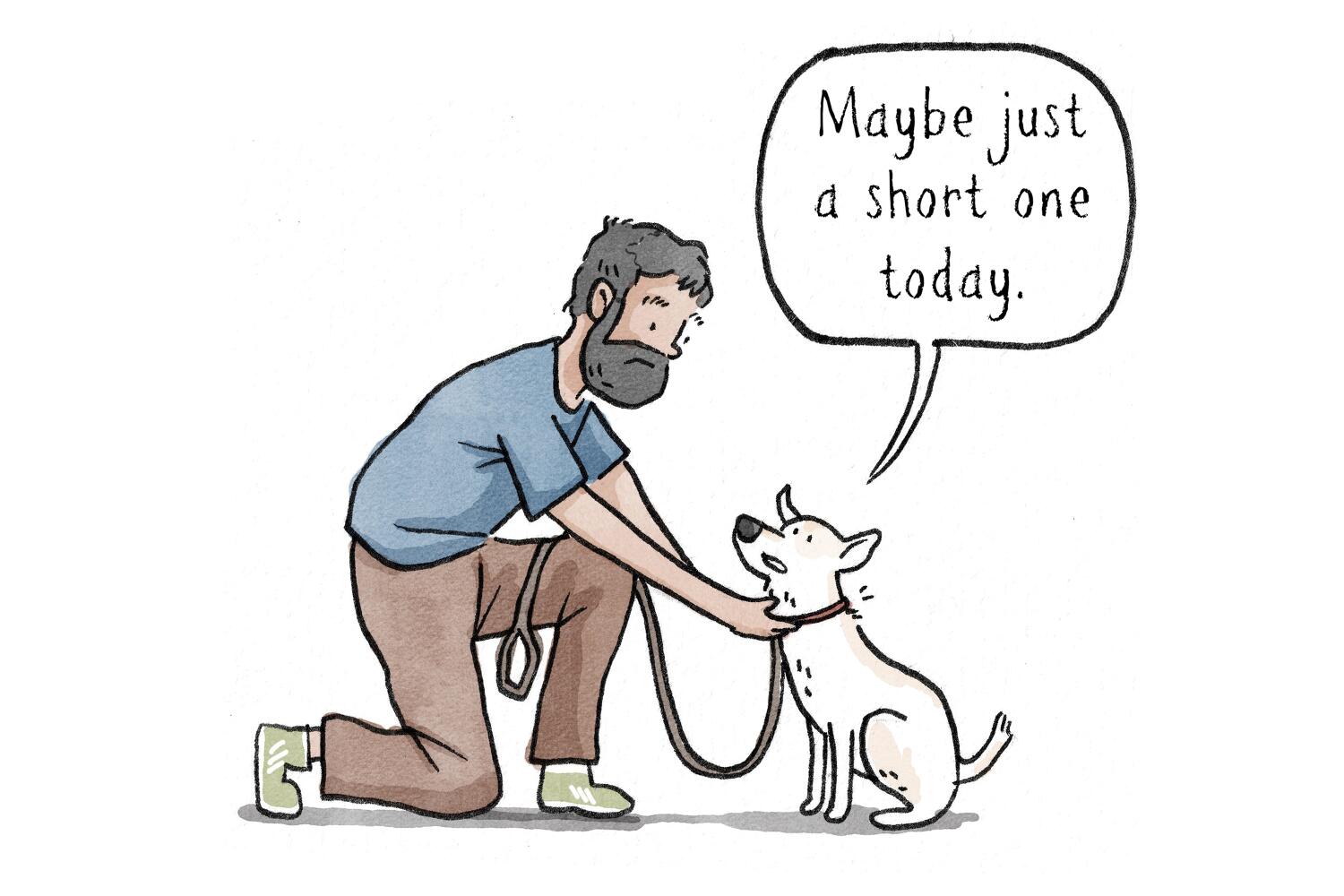
Silence has a weight to it. When you have lived sixty-one years, you learn to measure your life not by the noise of constant company, but by the quality of the quiet left behind when the front door closes.
Janet knows this silence intimately. At sixty-one, she has accumulated a lifetime of routines, domestic instincts, and quiet certainties. Into that steady architecture walked a thirty-five-year-old man named Phil.
Society has a script for this. The headlines write themselves with predictable exhaustion. Outrage. Confusion. The clumsy jokes about midlife crises or generational divides. But the public commentators staring at the twenty-six-year age gap are missing the actual machinery of how this relationship functions. They are looking for scandal where they should be looking at logistics.
They barely see each other.
Stop for a moment and consider what that actually means. In a culture obsessed with proximity—with shared leases, joint bank accounts, and the suffocating expectation of twin-sized domesticity—Janet and Phil have built their romance on an entirely different foundation. Absence.
Distance.
Space.
The Tyranny of Togetherness
Most modern relationships do not die from a lack of love. They die from suffocation.
We pile into the same apartments. We share the same Netflix queues. We negotiate over who unloaded the dishwasher while mentally cataloging every minor annoyance until the pressure cooker blows. We treat physical closeness as the ultimate metric of devotion. If you love me, you must be here. All the time. In my peripheral vision. Breathing my air.
Janet and Phil reject this premise entirely.
Think about the traditional trajectory of a relationship. It starts with a spark, accelerates into a merger, and eventually calcifies into an administrative partnership. Two separate identities slowly dissolve into a gray mush of shared chores and synchronized calendars. By year three, the mystery is gone, replaced by the heavy machinery of daily cohabitation.
Now look at Janet. At sixty-one, she has already survived the dissolution of past expectations. She knows who she is. She has her books, her coffee rituals, her idiosyncratic ways of arranging her kitchen, the specific cadence of a Tuesday afternoon spent entirely alone. She did not spend decades carving out her independence just to hand it over to a man half her age.
And Phil, at thirty-five, is navigating a high-speed career, his own distinct circle of friends, and the restless energy of a decade where professional ambition often consumes the oxygen in the room.
When they come together, they do not bring the exhausted detritus of a shared Tuesday night spent glaring at separate screens on the same sofa. They bring anticipation. They bring a story to tell because they have actually been apart long enough to experience separate lives.
The Anatomy of Modern Longevity
Psychologists have long noted that human beings are terrible at predicting what will make them happy in long-term attachments. We assume that more is always better. More time. More integration. More overlap.
Yet, historical data and modern sociological shifts tell a different story. Living Apart Together, or LAT relationships, are quietly surging across all age brackets. Couples choose to maintain separate residences, separate financial lives, and deliberate physical distance while remaining emotionally committed.
Why? Because human beings are complex organisms that crave both security and autonomy. Those two drives are inherently at war.
Janet and Phil solved this war through geography.
When reporters or curious neighbors look at their dynamic, they project their own anxieties onto the couple. They whisper about control, about power imbalances, about expiration dates. They assume Phil must be looking for a mother figure, or Janet must be clinging to youth.
How unimaginative.
How profoundly sad that our cultural imagination is so narrow that two consenting adults cannot share an affection without the world demanding an explanation that fits neatly into a tabloid column.
Consider what happens when Janet and Phil do meet. There is no domestic friction over unmade beds or forgotten grocery lists. There is no passive-aggressive sighing over whose turn it is to take out the trash. Their time is intentional. It is carved out of busy, separate schedules like an oasis in the middle of a desert.
Desire requires a gap. You cannot yearn for someone who is always standing right in front of you.
The Quiet Rebellion
There is a subtle, radical defiance in what Janet is doing.
We live in an era that worships youth as the sole currency of desirability. Women over sixty are routinely rendered invisible by popular media, slotted into the background of narratives as matriarchs, widows, or punchlines.
Janet refuses the invisibility cloak.
She is sixty-one. She owns her body, her history, and her desires. A thirty-five-year-old man does not validate her existence; he simply enjoys it. And she enjoys his. The age gap, which so easily scandalizes the casual observer, is essentially a non-issue for the two people actually living inside the equation. They met. They clicked. The calendar is just a series of numbers they choose to ignore.
What terrifies people about Janet and Phil is not the thirty-five years. It is the freedom.
It is the terrifying realization that you do not have to live the way everyone else lives. You do not have to buy the house in the suburbs, merge your closets, and spend your golden years watching television next to someone you stopped talking to twenty years ago.
You can love differently.
The Weight of the Unsaid
Walk into Janet's living room on a Thursday evening. The sun is dipping below the horizon, casting long, amber shadows across the hardwood floor.
She is reading a book. Her phone rests quietly on the side table. There is no ambient anxiety about when someone is coming home, no mental checklist of dinner ingredients to buy, no performance of domestic harmony to maintain.
Phil is across town, deep in his own world, wrestling with his own projects.
They might text later. They might not. They might see each other this weekend, or perhaps not until next week. The schedule bends to fit their lives, rather than bending their lives to fit a rigid social contract.
When they do reunite, the air changes. The distance collapses. The years between them dissolve into the simple, electric recognition of two people who chose each other not out of convenience, habit, or economic necessity, but purely because they wanted to.
That is not a headline about a bizarre demographic anomaly.
That is a blueprint for how to keep loving without losing your mind, or yourself.
The front door remains unlocked. The silence stays intact until it is ready to be broken. And somewhere out there, the world keeps spinning, entirely unaware that the secret to modern romance was hiding in plain sight all along, measured not in hours spent together, but in the grace of the space between.