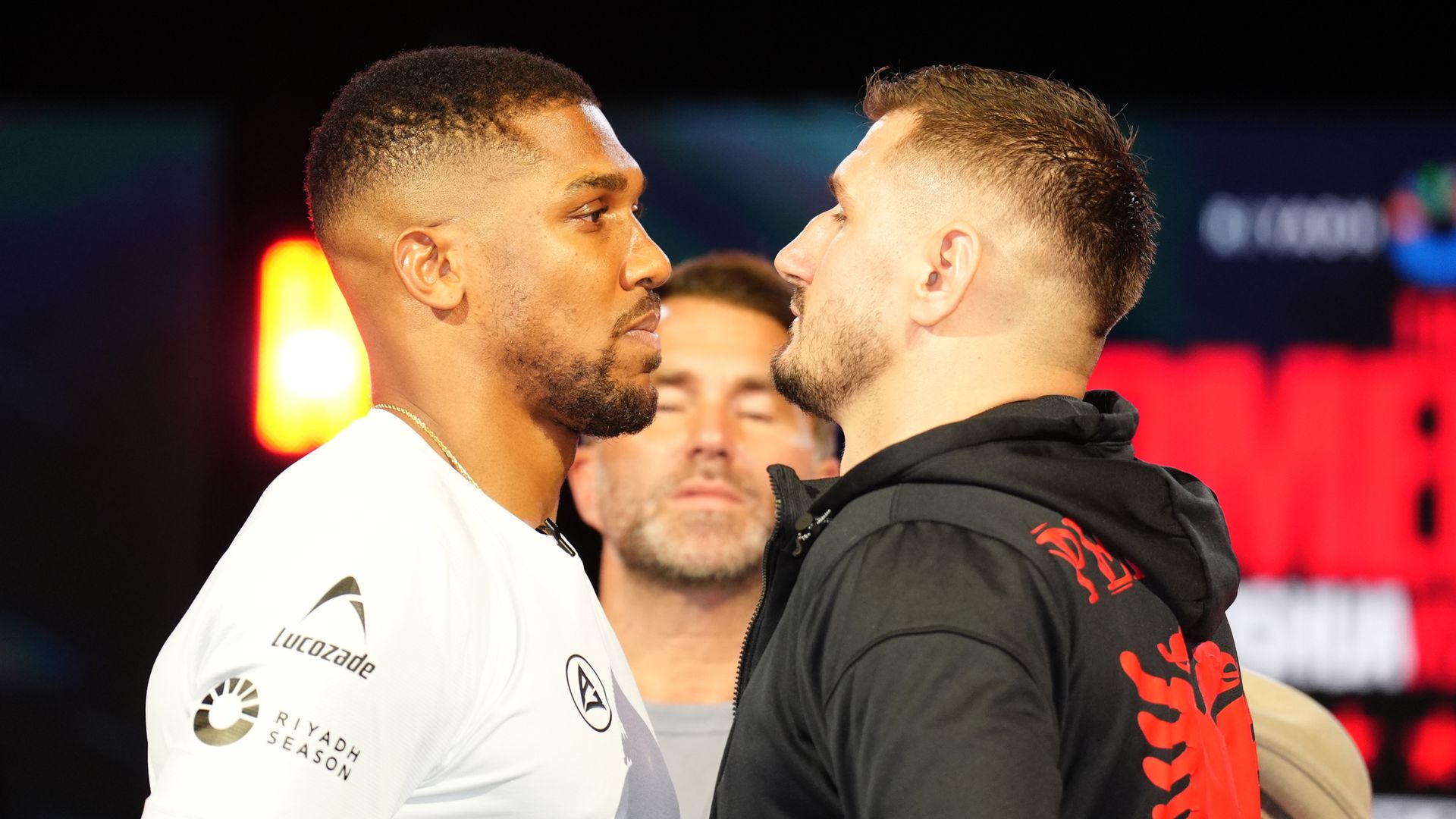
The boxing press is currently suffering from a collective failure of imagination. Every single column inch dedicated to Anthony Joshua’s next move follows the exact same tired script. The lazy consensus goes like this: Joshua takes a confidence-boosting tune-up, stays out of trouble, secures a massive domestic mega-fight against Tyson Fury, and rides off into the sunset with a bank account full of Saudi cash and a rehabilitated legacy.
It is a neat, comforting narrative. It is also entirely detached from reality. Building on this theme, you can also read: Inside the Strategic Blueprint Behind Atletico Madrid Landing Lee Kang-In.
I have spent the last decade watching promotional matchmakers sell fans a bridge. I have seen promoters build houses of cards on the assumption that aging heavyweights age like fine wine rather than milk left out in the sun. The obsession with a Fury showdown is not a masterplan. It is a desperate safety blanket for a division that has run out of genuine ideas.
Stop asking when AJ and the Gypsy King will finally share a ring. The question itself is poisoned. The real question you should be asking is why anyone thinks a fight between two fighters past their athletic peak holds any structural weight for the future of the heavyweight division. Analysts at FOX Sports have shared their thoughts on this matter.
The Myth of the Rebuilt Confidence Job
Let us look at the mechanics of the traditional comeback. When a fighter suffers a catastrophic, soul-stewing knockout—like the one Daniel Dubois delivered to Joshua at Wembley—the playbook demands a safe opponent. Bring in a journeyman. Let the bruised ego heal behind a snappy jab. Let the fans forget the sound of canvas meeting skull.
This strategy assumes that boxing is entirely physical, a math problem solved by lowering the tier of opposition until the win column looks pretty again.
It ignores psychological scar tissue.
Imagine a scenario where a fighter absorbs twenty-four minutes of pure, concussive violence, gets dismantled fundamentally in every department, and then steps back in against a hand-picked opponent designed to fall over. What does that actually prove? Nothing. It creates a false economy of skill. It masks technical leaks with inferior opposition. When AJ fought Robert Helenius after the second Oleksandr Usyk loss, it told us zero about whether he had fixed his historic vulnerability to a looping right hand or his tendency to freeze under sustained pressure.
Tune-up fights for veterans are not development camps. They are expensive pacifiers. They keep the turnstiles spinning, but they do nothing to prepare a fighter for the elite tier of a division that has evolved past static, muscle-bound punchers.
Why Tyson Fury is a Sunk Cost
The media loves the Fury-Joshua matchup because it writes itself. Two British titans, massive stadium appeal, decades of bad blood, a clash of polar-opposite personalities. Stylistically and commercially, it is the golden goose.
Economically, the ship has sailed, turned around, and sunk.
Look at the data from their recent campaigns. Fury barely scraped past Francis Ngannou and took a brutal beating from Usyk. Joshua absorbed a career-altering shellacking from Dubois. Both fighters are operating on borrowed time and depreciating athletic assets. By the time promotional red tape, network wars, and ego-driven purse demands allow them to meet in a ring, we will likely be watching two guys in their late thirties trading on name recognition rather than championship credentials.
Promoters bank on nostalgia because novelty pays the bills. But nostalgia is an awful boxing coach.
If Joshua takes the bait and waits around for Fury, he is tying his career to a moving target who has retired, un-retired, flirted with exhibition matches, and shown a profound lack of discipline outside the ring. Waiting for Tyson Fury is a career death sentence. It paralyzes a fighter. It stops them from taking dangerous, meaningful risks against younger, hungrier killers who are actually shaping the landscape of the sport right now.
The Real Heavyweight Paradigm Shift
The heavyweight division is no longer a duopoly controlled by British promotional houses. The power center has shifted completely toward Riyadh and unified undisputed logic. The alphabet belts are less important than the singular reality of who can beat the man who beat everyone.
That man is Oleksandr Usyk. Behind him stand ruthless operators like Dubois, Agit Kabayel, and a wave of super-heavyweights who do not care about British boxing folklore or pay-per-view tradition. They possess high-volume punch outputs, elite lateral movement, and zero psychological reverence for Anthony Joshua's Olympic gold medal or former championship status.
When analysts talk about Joshua's path back to the top, they treat him like a static entity—a piece on a chessboard that just needs the right square. They ignore the erosion of human cartilage, the accumulated miles on the odometer, and the simple biological truth that heavyweight boxing is a young man's game once reflexes dip by even a fraction of a millisecond.
Ben Davison and his team do not need to figure out how to get AJ past a domestic gatekeeper. They need to figure out how to stop Joshua from fighting with his feet stuck in the concrete whenever a firefight breaks out. That is not a problem solved by fighting a guy found on a regional circuit. That is a foundational mechanical flaw that has plagued him since the Andy Ruiz upset.
What AJ Should Actually Do
If Joshua wants to salvage a meaningful legacy, he needs to completely abandon the Fury sweepstakes.
First, throw out the tune-up culture. If you are elite, act elite. Take a high-risk, high-reward eliminator against a legitimate top-five contender who can actually test your chin and your conditioning. If you lose, you accept the reality of the sunset years and walk away with your faculties intact. If you win, you earn a shot at the actual throne, not a promotional vanity match.
Second, stop fighting for the British public's romantic ideals. The romance of a Wembley stadium fight against Fury is a promoter's wet dream and a competitor's trap. The sports world has moved past tribal domestic matchups that hold zero global championship relevance.
The cold truth is that Anthony Joshua is a fading superstar sitting on a goldmine of past achievements, trying to navigate a sport that has outgrown his style. Waiting for Tyson Fury will not save him. It will only keep him relevant to the casual fan while the rest of the division leaves him behind.
Stop looking for the ghost of a mega-fight that should have happened five years ago. Start looking at the mirror.