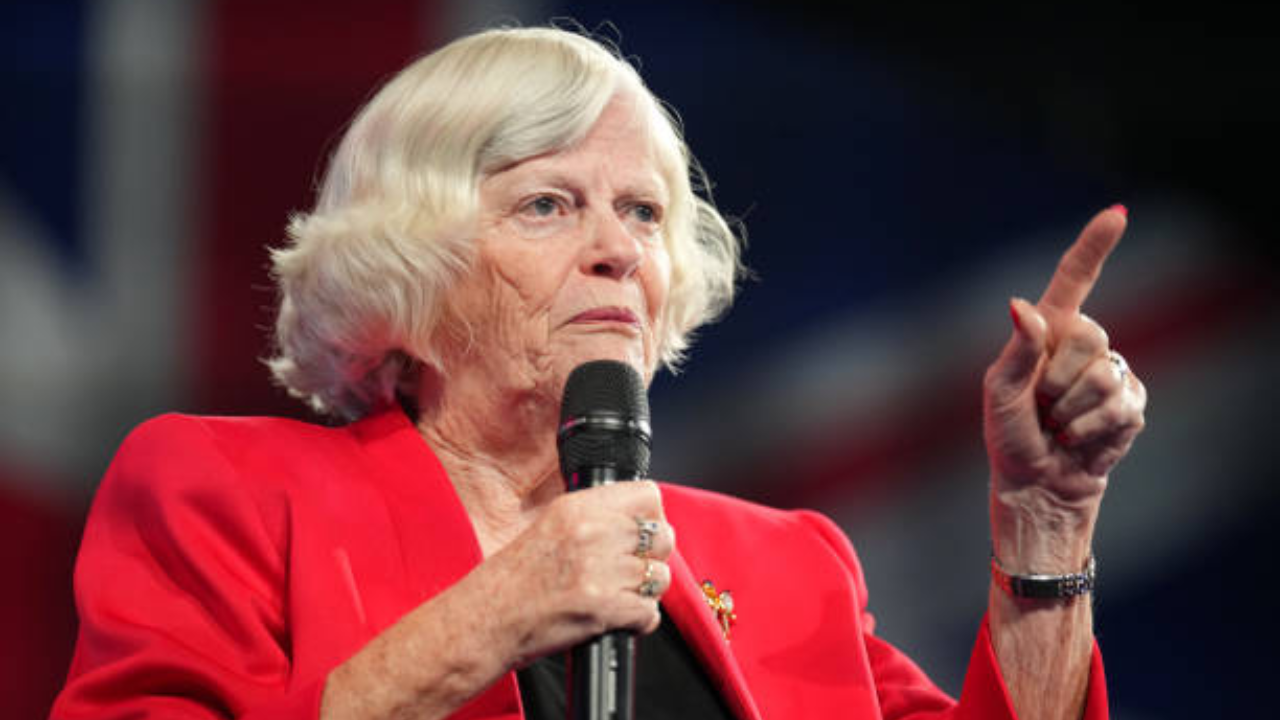
British politics just lost one of its most unapologetic contrarians. Ann Widdecombe, the formidable former Conservative minister turned Reform UK campaigner, has died at the age of 78. Her management team at Cloud 9 Management confirmed her passing, sparking a flood of tributes from across the ideological spectrum. For over four decades, she was the type of politician they simply don't make anymore: stubbornly independent, ferociously opinionated, and entirely indifferent to whether she was liked.
Most people remember her for two distinct lives. To older voters, she was the uncompromising Tory iron lady who ran prisons under John Major. To younger audiences, she was the national eccentric who got dragged across the dance floor by Anton Du Beke on Strictly Come Dancing. But reducing her to a novelty reality TV star or a rigid relic of the 1990s misses the real story. For a closer look into similar topics, we suggest: this related article.
She mattered because she perfectly mapped the shifting sands of British populism. When she cut ties with the modern Conservative Party to join Nigel Farage, first in the Brexit Party and then as an immigration spokeswoman for Reform UK, she wasn't just throwing a tantrum. She was signaling a deep, permanent fracture in the British right.
From Maidstone to Brussels
You can't understand her final years without looking at where she started. First elected as the MP for Maidstone in 1987, Widdecombe spent 23 years in the House of Commons. She wasn't a backbench spectator. She climbed into Sir John Major's government, serving as employment minister and later taking charge of prisons at the Home Office. For additional background on the matter, comprehensive coverage can also be found on USA Today.
She didn't care about playing nice with colleagues. Her legendary feud with former Home Secretary Michael Howard became Westminster folklore when she famously declared on television that he had "something of the night about him". It was a devastating, unscripted line that permanently damaged his leadership ambitions. She brought that exact same bluntness to her political resurrection in 2019.
Frustrated by the agonizing delays in executing the Brexit vote, she walked away from the Tories after five decades of membership. She ran for the European Parliament under Farage's banner, winning a seat for South West England. Nigel Farage noted that her decision to join gave the movement a massive boost because, quite simply, ordinary voters loved her authenticity. She didn't sound like a focus-grouped PR robot.
Faith over Party Fashion
Her politics weren't shaped by focus groups; they were anchored by her faith. Originally raised in an evangelical Anglican family, she famously defected to the Roman Catholic Church in 1993. The catalyst? The Church of England's decision to ordain women priests.
She openly despised institutional compromise. She argued that the Anglican Church constantly chose popular fashion over established creed, whereas Rome offered absolute certainty. That unyielding worldview dictated her strict anti-abortion stance, her opposition to assisted dying, and her fierce defense of free speech for traditional believers. She frequently complained that modern Britain made Christians feel pressured or disciplined just for speaking their minds.
Yet, she couldn't be neatly boxed into a standard right-wing template. She was an ardent animal lover who consistently broke Tory ranks to vote for the ban on fox hunting. She didn't care about ideological purity; she cared about her own moral compass.
The Strictly Phenomenon
Let's talk about the dancing. When she joined Strictly Come Dancing in 2010, the judges routinely slaughtered her performance. Craig Revel Horwood called her "worse than John Sergeant." It didn't matter. The public kept voting her back week after week because watching an elderly, serious politician get swung around like a sack of potatoes was pure entertainment gold.
She understood the power of the media better than most of her peers. Her appearances on Celebrity Big Brother and various documentaries kept her relevant long after she left Westminster. That cultural capital is exactly what she weaponized when she stepped back into active politics with Reform UK.
Tory leader Kemi Badenoch called her a "formidable politician" who was always true to herself. Even her political opponents recognized her impact. Health Secretary James Murray admitted he rarely agreed with her firm views, but acknowledged her massive footprint on public life.
If you want to understand why British politics has grown so fragmented and unpredictable, look at her trajectory. She proved that conviction, no matter how controversial, resonates far deeper with voters than polished neutrality. If you are tracking the ongoing battles within the British right, keep a close eye on Reform UK's upcoming autumn policy announcements to see how they attempt to fill the rhetorical void she leaves behind.