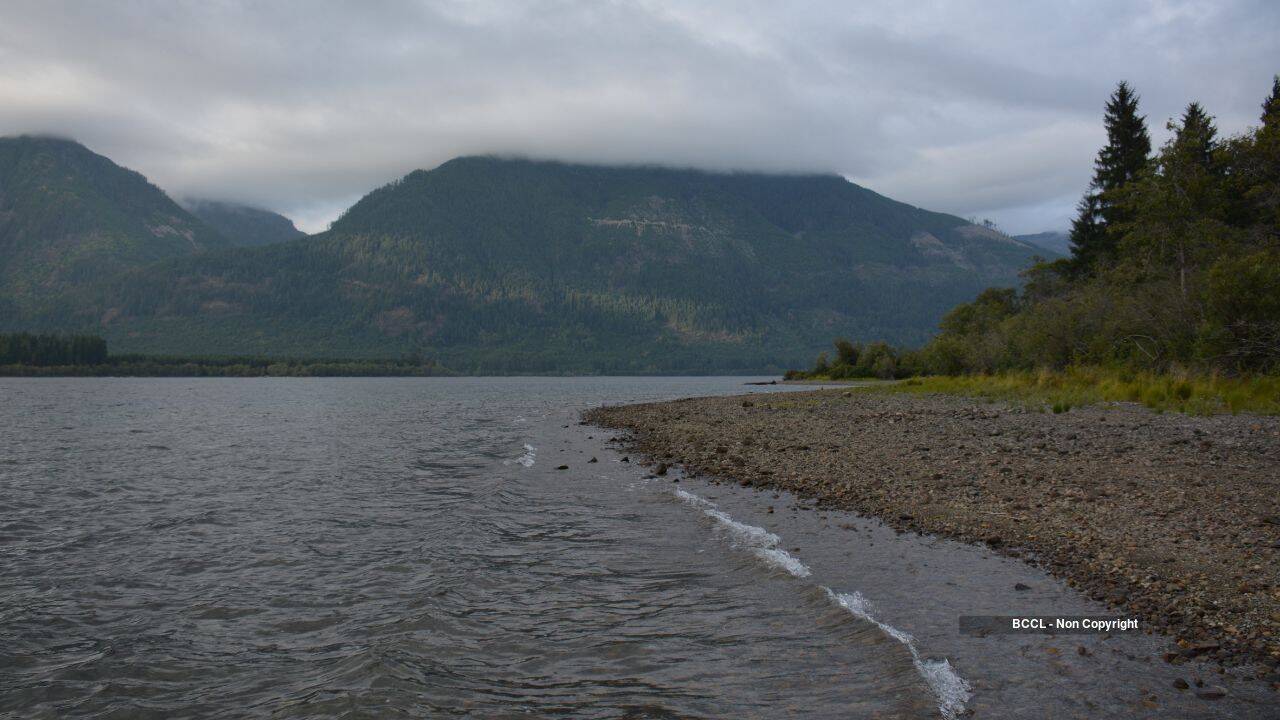
Ecological mitigation policies routinely fail because they conflate gross physical restoration output with net ecosystem service retention. When provincial authorities in British Columbia announce the physical rehabilitation of 70 hectares of wetland infrastructure, the superficial metric signals proactive conservation. Underneath this headline figure lies a structural asymmetry. While the state celebrates localized restorative inputs, regional hydrologic projections calculate a 60% degradation of the Cowichan marsh ecosystem by the year 2100. This stark divergence between incremental remediation and systemic loss exposes the core failure of contemporary environmental management: the substitution of quantitative area targets for functional ecological resilience.
Deconstructing the Cowichan watershed requires examining the underlying mechanics of loss versus recovery. To evaluate the true viability of these ecosystems, analysis must pivot from static acreage accounting to dynamic risk assessment frameworks. Three distinct variables drive the trajectory of the Cowichan marsh: climatic precipitation volatility, structural saltwater intrusion, and unmanaged upstream land-use conversion.
The Macro-Economic Failure of Static Acreage Accounting
Environmental agencies measure success through hectares restored, a metric that treats every square meter of wetland as an equivalent asset. This is an analytical error. Ecological output is a function of hydrological connectivity, vegetative maturation, and soil organic carbon accumulation rates. A newly planted 70-hectare tract cannot immediately replicate the biochemical filtration, flood attenuation, and thermal regulation capacity of a mature, centuries-old wetland matrix.
The baseline error stems from the temporal mismatch between rapid industrial and residential development and slow ecological succession. When dikes, urban expansion, and agricultural runoff alter a watershed, the degradation occurs through compounding systemic stress. Conversely, restoration happens via discrete, underfunded capital projects. Measuring 70 hectares of restored land against a projected regional loss of over half the marsh's total historical footprint is an accounting trick. It balances a ledger by ignoring depreciation.
True economic modeling of marsh degradation must incorporate the replacement cost of lost ecosystem services. When a hectare of marsh disappears, the regional municipal infrastructure absorbs immediate financial impacts through increased stormwater management costs, degraded salmon nursery habitats, and elevated flood risk to adjacent roadways and agricultural property. The mitigation strategy fails to price these externalities into the initial cost-benefit analysis of land conversion.
Hydrological Mechanics and the 2100 Horizon
The projection that the Cowichan marsh will face a 60% reduction over the next seven decades is rooted in predictable physical feedback loops. Sea-level rise combined with shifting seasonal precipitation cycles creates a hydraulic pinch point. Winter storm events deliver higher volumes of intense rainfall, overwhelming existing drainage channels, while summer droughts shrink baseline river discharge.
This dual pressure alters the salinity gradient of the estuary. As freshwater inflows drop during extended dry periods, tidal saltwater pushes further upstream, converting freshwater marshes into brackish or hypersaline mudflats. The indigenous flora, specifically species adapted to precise freshwater saturation thresholds, cannot adapt at the velocity of the hydrologic shift.
Furthermore, sediment starvation accelerates the decline. Upstream dams, river channelization, and bank stabilization projects trap the alluvial silt required to maintain marsh elevation against rising sea levels. Wetlands naturally accrete vertical mass through organic peat accumulation and trapped mineral sediment. When upstream infrastructure blocks the sediment supply, the marsh drowns. It cannot outpace the rate of relative sea-level rise, converting emergent marshland into open, unproductive water bodies.
Systemic Vulnerabilities in Provincial Mitigation Frameworks
Evaluating the efficacy of current restoration efforts requires examining the governance and funding mechanisms that drive them. Provincial environmental policies operate on project-based funding cycles that favor photogenic, short-term engineering fixes over long-term ecological maintenance.
The 70-hectare restoration project relies on active human intervention, including earthmoving, invasive species eradication, and replanting. Once the project phase concludes, funding typically terminates. Without continuous adaptive management, these sites are vulnerable to secondary invasion by non-native species such as reed canary grass, which outcompetes native sedges and simplifies the structural complexity of the habitat.
Municipalities within the Cowichan Valley Regional District face a classic collective action problem. Upstream property owners capture the economic rent of land development, while downstream ecosystems and taxpayers bear the environmental degradation costs. Regulatory frameworks fail to internalize these costs, resulting in permitting processes that treat wetlands as residual spaces rather than critical regional infrastructure.
Strategic Interventions for Watershed Resilience
Mitigating the projected 60% loss requires discarding the illusion that restoration can outpace unmanaged degradation. The focus must shift from reactive land remediation to proactive catchment protection.
First, regulatory bodies must abandon static boundary definitions. Climate change shifts the geographic boundaries of wetlands dynamically. Conservation strategies must secure upland migration corridors, ensuring that as sea levels rise and salinity increases, the marsh has unbuilt, permeable terrain to migrate into. Protecting these land corridors requires immediate acquisition or zoning encumbrances that supersede short-term municipal tax-base expansion.
Second, upstream sediment and flow management must be integrated into watershed governance. Dam operations on the Cowichan River system need explicit ecological flow releases that mimic natural seasonal hydrographs. Rather than maintaining artificially stable water levels for recreational or industrial convenience, flow regimes must recreate the pulse events necessary to scour channels, transport sediment, and flush accumulated pollutants.
Third, capital allocation for restoration must transition from upfront construction grants to perpetual performance-based endowments. Contractors and agencies should be evaluated not on hectares planted, but on measurable hydrological retention, biodiversity indices, and carbon sequestration rates sustained over a ten-to-twenty-year operational window.
The trajectory of the Cowichan marsh is not locked by immutable natural law, but by policy architecture that undervalues systemic risk. Until regional authorities price the full replacement cost of ecological infrastructure into land-use planning, localized restoration metrics will remain a palliative measure masking a terminal decline.


