The mid-April ceasefire between the United States and Iran has decoupled kinetic military operations from structural conflict resolution. While indirect negotiations via Pakistani and Qatari intermediaries continue in Tehran, the diplomatic friction is not a product of poor communication, but rather a direct consequence of incompatible strategic baseline demands. The underlying conflict has evolved from an active exchange of strikes into an economic and maritime siege, rendering the current stability inherently fragile.
To analyze why a definitive peace treaty remains elusive despite "narrowing gaps" cited by regional mediators, the situation must be evaluated through three structural pillars: the mechanics of the maritime blockade, the sovereign friction of nuclear material extraction, and the domestic cost functions governing both administrations.
The Strategic Bottleneck of the Strait of Hormuz
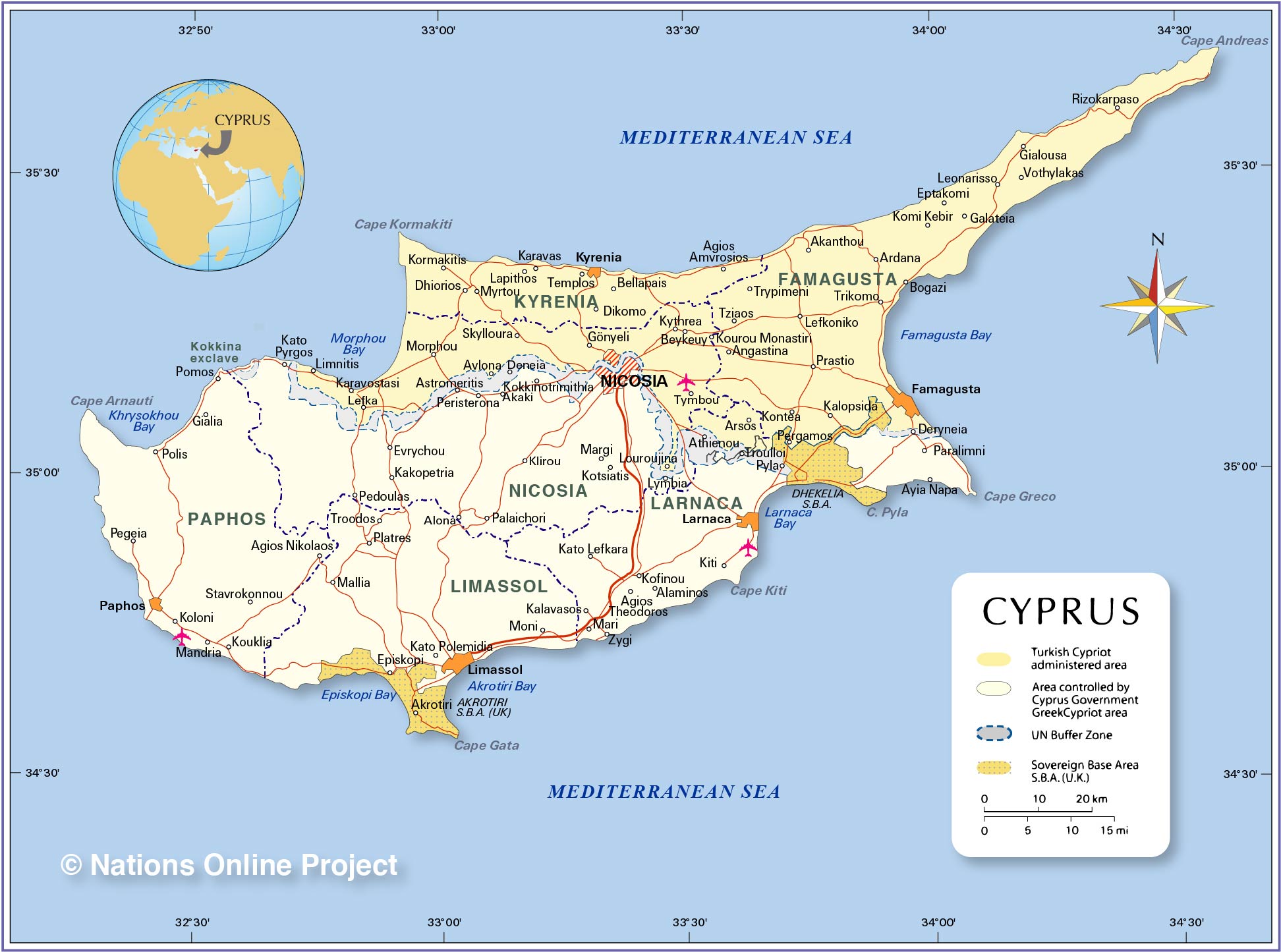
The primary operational friction point preventing war termination is the governance mechanism of the Strait of Hormuz. Following the initial outbreak of conflict, the Iranian regime implemented a regulatory and physical restriction on the waterway. The conflict has moved from open warfare to an institutionalized economic standoff defined by competing mechanisms of denial.
The Iranian Maritime Toll System
Tehran has attempted to transition its physical control of the Strait of Hormuz into a permanent, revenue-generating maritime infrastructure. By allowing limited transit—specifically 35 commercial vessels within a recent 24-hour sample—only to parties cooperating with or permitted by the Islamic Revolutionary Guard Corps (IRGC), Iran is attempting to establish an asymmetric sovereign toll system. This mechanism serves a dual purpose:
- It mitigates the fiscal damages of international sanctions by extracting rent from commercial shipping.
- It establishes a de facto veto over global energy logistics, specifically targeting operators affiliated with the Western maritime coalition's alternative transit frameworks.
The American Counter-Blockade
The United States has countered this maritime strategy by executing an enforcement mechanism aimed at neutralizing Iranian port utility. Led by U.S. Central Command, this counter-blockade has redirected 94 commercial vessels and disabled four others bound to or from Iranian territory over a multi-week period.
The structural deadlock exists because the American objective requires absolute freedom of navigation and the total dismantling of Iran’s unilateral regulatory framework over the strait. Conversely, the Iranian regime views its regulatory control over the waterway as its primary leverage asset—one that cannot be traded away without an upfront elimination of the economic siege crippling its domestic markets.
The Nuclear Cost Function and Sovereign Asymmetry
The second structural barrier to an agreement is the physical disposition of Iran’s enriched uranium stockpile. The current U.S. executive proposal demands a non-negotiable structural concession: the closure of all but one Iranian nuclear facility and the total physical extraction of Iran’s highly enriched uranium stockpile to United States custody.
This demand exposes a fundamental asymmetry in the negotiation framework:
$$C_{\text{Iran}} = V_{\text{Sovereignty}} + V_{\text{Deterrence}}$$
For Tehran, the cost ($C_{\text{Iran}}$) of handing over enriched material equals the total loss of its strategic deterrence value ($V_{\text{Deterrence}}$) combined with a critical compromise of national sovereignty ($V_{\text{Sovereignty}}$). Iranian diplomats have repeatedly invoked the Non-Proliferation Treaty (NPT) to argue that uranium enrichment is an unalienable sovereign right. From the perspective of the Iranian hardline establishment, surrendering the physical stockpile removes their only existential insurance policy against future Western regime-change initiatives, while offering no ironclad guarantee that a subsequent American administration will not unilaterally reinstate sanctions.
For the United States, allowing any highly enriched uranium to remain within Iranian territory represents an unacceptable national security risk. The administration's framework operates on the principle that verification mechanisms are insufficient; only physical elimination of the medium guarantees long-term regional stability. Because neither party has a viable alternative that secures their core requirement without forcing the absolute capitulation of the other, negotiations remain deadlocked on this specific vector.
Domestic Political Pressures and Alternative Frameworks
The calculations of both executive leaderships are further constrained by acute domestic political variables and regional alliance frictions that penalize premature concessions.
United States Domestic and Coalition Friction
The American executive faces a divided domestic and international landscape:
- The Economic Bottleneck: Domestic fuel prices have escalated significantly since the outbreak of hostiles, with Brent crude fluctuating above $100 per barrel. This inflationary pressure creates an domestic political incentive to stabilize the market.
- The Legislative and Institutional Pushback: Key legislative figures, including the Senate Armed Services Chair, have publicly advocated for the resumption of military action to completely dismantle Iran's conventional military capabilities rather than settling for a diplomatic compromise.
- Alliance Divergence: A widening strategic divergence has emerged between Washington and Jerusalem. The Israeli leadership has expressed severe dissatisfaction with the U.S. pursuit of a negotiated settlement, viewing any deal that leaves Iranian nuclear infrastructure intact as an existential failure. Conversely, regional Gulf allies have actively petitioned Washington to avoid escalating strikes due to the vulnerability of their own energy infrastructure.
Iranian Hardline Consolidation
In Tehran, the internal political cost function is dominated by a powerful conservative faction within the parliament and the security apparatus. Hardline strategists argue that diplomacy has historically yielded increased economic isolation without delivering tangible security guarantees. The prevailing narrative among these factions is that Washington has not paid a high enough kinetic or financial price during this conflict to force it to abandon its long-term maximum pressure campaign. Consequently, elements within the National Security and Foreign Policy Committee have openly threatened preemptive strikes on regional U.S. bases if they perceive operational preparations for a renewed American offensive.
The Operational Plan B
The durability of the mid-April ceasefire is deteriorating due to a fundamental mismatch between the speed of diplomacy and the reality of military logistics. The United States has already finalized operational plans for an alternate military campaign, signaling that the window for a negotiated settlement is finite.
The current state of "slight progress" reported by intermediaries cannot be sustained indefinitely. If Iran rejects the requirement for physical uranium extraction and insists on maintaining its regulatory framework over the Strait of Hormuz, the structural equilibrium will inevitably collapse back into open kinetic warfare. The regional logistics network has reached its carrying capacity under the blockade; therefore, the next phase of this crisis will not be a prolonged diplomatic stalemate, but a rapid transition toward either a highly conditional, limited security pact or a comprehensive military campaign designed to forcibly open the maritime corridor.