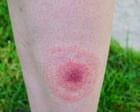
The triage of a single symptomatic traveler in an Ontario hospital reveals the operational friction between global health monitoring and domestic pathogen containment. Public health systems do not wait for diagnostic certainty; they operate on a risk-mitigation calculus where the cost of a false negative is catastrophic, while the cost of a false positive is merely operational. The assessment of this patient, arriving with a history of travel to East Africa, serves as a stress test for Canada’s border-to-bed containment pipeline during an active Public Health Emergency of International Concern.
Evaluating the systemic threat requires separating the localized medical response in Canada from the epidemiological vectors currently expanding through the Democratic Republic of Congo (DRC) and Uganda. The global risk profile has shifted due to a specific evolutionary variable: the re-emergence of the Bundibugyo ebolavirus species.
The Bundibugyo Diagnostic and Therapeutic Deficit
Standard biosecurity frameworks rely heavily on historical countermeasures deployed during Zaire ebolavirus outbreaks, such as the Ervebo vaccine and monoclonal antibody treatments like Inmazeb and Ebanga. The current outbreak in East Africa involves the Bundibugyo species ($BDBV$). This introduces a structural vulnerability into international containment strategies.
[Image of ebolavirus virion structure]
The operational differences between the Zaire and Bundibugyo strains define the current threat vector:
- Prophylactic Deficit: Existing recombinant vesicular stomatitis virus-based vaccines ($rVSV-ZEBOV$) target the glycoprotein of the Zaire strain. They provide no cross-protection against $BDBV$. There is currently no approved vaccine for the Bundibugyo species.
- Therapeutic Deficit: Monoclonal antibody therapies are highly sequence-specific. The genetic divergence between Zaire and Bundibugyo means that current stock-piled therapeutics fail to neutralize the circulating $BDBV$ pathogen.
- Virulence Profiling: Historically, $BDBV$ exhibits a lower case fatality rate (approximately 25% to 40%) compared to the Zaire strain (up to 90%). However, this lower lethality can increase transmission potential by extending the window in which an ambulatory patient can traverse international transport hubs before developing incapacitating symptoms.
The Surveillance Bottleneck: Undetected Transmission Chains
The World Health Organization reports approximately 600 suspected cases and 139 suspected deaths in the DRC’s northern provinces of Ituri and North Kivu, alongside adjacent zones in Uganda. The core epidemiological challenge is that the virus circulated for weeks undetected.
This delay stems from an institutional failure mode: local surveillance teams initially utilized diagnostic assays optimized exclusively for the more common Zaire strain. This caused false negatives that masked early transmission chains. The scale of an outbreak matches the duration of its undetected phase. The mathematical function governing the true case count is an exponential growth curve where the initial time variable ($t_0$) was miscalculated by field teams.
[Undetected Circulation Phase] ──> [Improperly Targeted Testing] ──> [Suppressed Case Counts]
                                                                             │
                                                                             ▼
[Delayed Global Alerts] <── [Undetected International Dispersal] <── [Incomplete Field Triage]
Because the virus crossed regional borders before containment protocols were initiated, the likelihood of international export events increased. Ontario's testing protocol is a direct consequence of this systemic latency.
The Architecture of Domestic Containment
Ontario’s public health infrastructure handles a suspected viral hemorrhagic fever through a tiered, negative-pressure isolation framework designed to eliminate horizontal transmission vectors. The clinical logic dictates treating every high-risk traveler exhibiting febrile symptoms as a confirmed case until polymerase chain reaction (PCR) diagnostics prove otherwise.
Phase 1: High-Consequence Pathogen Triage
The process begins at the point of clinical presentation. When a patient reports travel to an endemic zone within the 21-day incubation window, the hospital triggers immediate spatial isolation. The patient is transferred to an Airborne Infection Isolation Room (AIIR) operating under negative pressure relative to the surrounding corridors. This ensures air flows inward, preventing aerosolized or droplet-borne tracking of the pathogen during invasive procedures, even though Ebola is primarily transmitted through direct contact with infectious bodily fluids.
Phase 2: Diagnostic Differentiation
The clinical presentation of early-stage Ebola—fever, severe headache, myalgia, and gastrointestinal distress—overlaps with highly prevalent endemic diseases. The diagnostic matrix must systematically rule out alternative etiologies that possess a higher statistical probability of occurrence:
- Hyper-endemic Vector-Borne Pathogens: Plasmodium falciparum malaria remains the most statistically probable diagnosis for a febrile traveler returning from East Africa. Rapid diagnostic tests and thick/thin blood smears are processed concurrently with high-containment protocols.
- Enteric Infections: Bacterial pathogens like Salmonella enterica (Typhoid) and various viral gastroenteritides present identical early clinical markers.
- Filovirus-Specific Assays: If malaria and common bacterial infections are ruled out or fail to explain the clinical trajectory, real-time reverse transcription PCR (rRT-PCR) assays specific to the Bundibugyo filovirus glycoprotein gene are executed within a Level 3 or Level 4 biosafety laboratory environment.
Quantitative Risk Exposure of Canadians Abroad
The probability of domestic establishment remains low due to Canada’s strict institutional biosecurity layers. The primary risk profile centers on consular exposure and the logistical complexity of tracking mobile citizens.
Data from Global Affairs Canada indicates a baseline population of registered Canadians currently situated within the active transmission zones:
| Country | Registered Canadian Citizens | Localized Outbreak Risk |
|---|---|---|
| Democratic Republic of Congo | ~2,300 | High (Ituri and North Kivu provinces) |
| Uganda | ~1,300 | Moderate-High (Border regions) |
These figures represent a lower bound, as registration via the Registration of Canadians Abroad (ROCA) system is voluntary. The federal government's advisory level for eastern DRC stands at "Avoid All Travel." The vulnerability lies in the lag time between a citizen crossing an administrative border and the updating of their epidemiological risk tier within border security databases.
Strategic Enforcement Protocols
To mitigate the risk of importing unmapped transmission chains without disrupting international transit networks, public health agencies must shift from reactive clinical management to predictive, barrier-based border screens.
A passive warning system is insufficient when dealing with a vaccine-evasive filovirus species. The Public Health Agency of Canada, in coordination with international partners, must execute a three-part protocol:
First, implement mandatory exit screening at regional hubs departing East Africa, utilizing targeted thermal tracking paired with updated digital health declarations that explicitly flag transit through Ituri and North Kivu.
Second, update domestic diagnostic multiplex panels across all major Canadian tertiary care centers to ensure that standard viral hemorrhagic fever assays include primers specific to the Bundibugyo lineage, removing the diagnostic blind spot that hampered initial field containment in Africa.
Third, establish pre-arranged logistics pipelines with international clinical trial networks to secure rapid, compassionate-use access to experimental pan-ebolavirus small-molecule therapeutics, such as remdesivir or novel broad-spectrum viral polymerases, ensuring therapeutic options are available if a domestic diagnostic test returns a positive result.