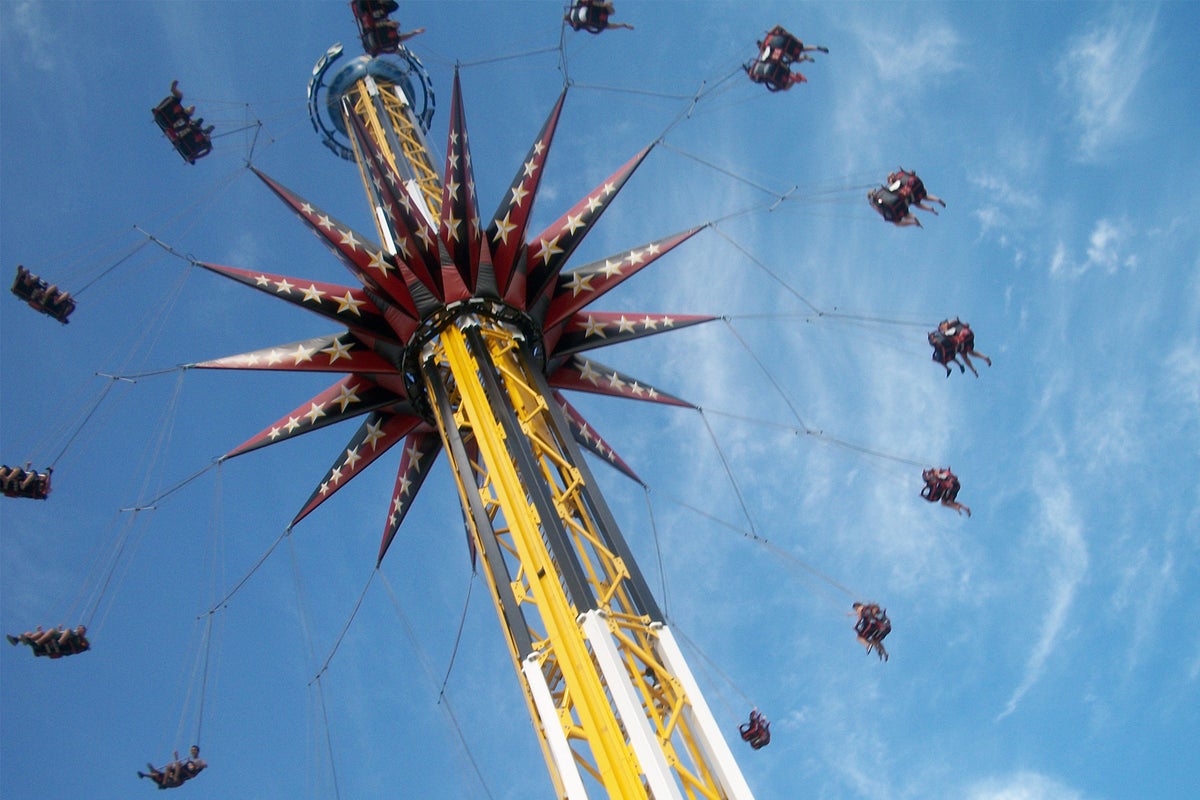
Amusement park rides operate within narrow mechanical tolerances, relying on a complex interplay of programmable logic controllers, hydraulic pressure, and physical counterweights to guarantee rider safety. When a high-altitude attraction fails to execute its standard descent sequencing, the event shifts instantly from a routine operational issue to an expensive, high-stakes engineering problem. The mid-air stall of the Sky Screamer attraction at Six Flags St. Louis—suspending four riders at an altitude of 120 feet for nearly three hours—exposes the structural limitations of standard park-level backup systems and underscores the necessity of specialized high-angle technical rescues.
To fully understand why an attraction can remain stuck despite extensive redundancy systems, it is necessary to examine the engineering mechanics of tower rides and the operational protocols that govern emergency responses.
The Fail-Safe Paradox in Vertical Attractions
Amusement park safety systems are designed around a fundamental engineering axiom: if an anomaly occurs, the system must default to a zero-energy state that prevents movement. On a extreme vertical swing ride like the 236-foot Sky Screamer, sensors monitor critical parameters, including wind velocity, cable tension, carriage alignment, and motor temperature.
When a variable crosses an acceptable threshold, the automated control system initiates an emergency stop sequence. This immediate engagement of mechanical brakes stops the carriage in place. The core paradox of this design is that the very system that prevents a catastrophic fall also creates an intentional, highly secure mechanical lock that can be difficult to override if the primary drive systems fail.
Amusement park maintenance teams use a specific hierarchy of recovery protocols when a ride stalls:
- Level 1: Software Override and Reset. Technicians attempt to clear the sensor fault or bypass the non-critical error through the main control interface to resume normal operations.
- Level 2: Auxiliary Mechanical Descent. If the main drive motors are unresponsive or lack utility power, maintenance personnel engage secondary manual descent mechanisms, such as gravity-fed hydraulic release valves or auxiliary combustion backup engines.
- Level 3: Technical Extrication. When physical blockages, twisted cables, or severe mechanical binding render Level 1 and Level 2 options useless, the park must transition control to external agencies for manual passenger removal.
During the St. Louis incident, park personnel exhausted Level 1 and Level 2 protocols. The mechanical binding or electrical failure on the tower was severe enough that manual lowering mechanisms could not overcome the physical resistance of the carriage assembly. At this point, the park triggered Level 3, shifting responsibility to the local fire department's technical rescue unit.
High-Angle Rescue Tactics and Microclimate Hazards
The transition to an external technical rescue introduces complex logistical and structural challenges. High-angle extrication from an open-air swing carriage requires specialized equipment and precise rigging due to the unique design of tower attractions. Standard aerial ladder trucks are ineffective at altitudes exceeding 100 feet, which requires rescuers to deploy a heavy-duty crane outfitted with a specialized rescue platform, or to use industrial rope access techniques.
The rescue operation in St. Louis was split into two separate aerial ascents. Rescuers faced significant challenges due to microclimate variables, specifically sudden shifts in local weather patterns. High-altitude operations are highly vulnerable to aerodynamic drag and wind shear, which are magnified by the latticework structure of the ride's central tower.
[Mechanical Failure occurs at 5:30 PM]
       │
       ▼
[Level 1 & 2 Internal Overrides Fail]
       │
       ▼
[External High-Angle Rescue Unit Dispatched]
       │
       ▼
[Ascent 1: Technicians & Rescuers Reach Carriage via Crane] ──► (Wind velocity limits crane stability)
       │
       ▼
[Ascent 2: Rigid Harnessing & Controlled Lowering of Riders]
       │
       ▼
[System Cleared at 8:24 PM] ──► (Completed 26 minutes prior to severe thunderstorm onset)
The operation concluded at 8:24 PM, narrow beating a severe thunderstorm that hit the area at 8:50 PM. Had the rescue window extended by an additional thirty minutes, high winds and lightning risks would have forced rescuers to pause operations. This delay would have left the riders exposed to severe weather while suspended 120 feet in the air, creating a high risk of hypothermia and panic.
The True Cost of High-Altitude Operational Failures
For an amusement park operator, the financial and reputational fallout from an extended mechanical stall is calculated across several key areas:
Total Loss = C_direct + C_reputational + C_regulatory
Where:
- $C_{direct}$ represents the direct costs, including the expense of specialized emergency response teams, crane rentals, and immediate maintenance labor.
- $C_{reputational}$ represents the quantifiable dip in ticket sales and season pass renewals following negative media coverage.
- $C_{regulatory}$ represents fines levied by state industrial safety boards and increased insurance premiums.
The primary limitation of standard park risk assessments is the tendency to classify asset stalls as minor issues since the fail-safe braking systems prevent injuries. However, this perspective ignores the compounding operational liabilities. Long-duration stalls strain local emergency resources and generate highly visible negative press coverage, damaging consumer trust far more than a typical, short-term mechanical delay.
Strategic Infrastructure Upgrades for Park Operators
To minimize the operational and reputational damage of high-altitude ride failures, regional amusement parks should update their asset management and emergency readiness strategies.
First, parks must invest in advanced predictive maintenance infrastructure. Relying solely on daily pre-opening inspections is insufficient for identifying internal component fatigue or intermittent sensor degradation. Implementing continuous vibration analysis and thermal monitoring systems along main lift spindles allows maintenance teams to identify and replace failing components before they cause a system-wide shutdown.
Second, facility operators should mandate bi-monthly joint training exercises between internal engineering teams and local municipal high-angle rescue units. During the St. Louis incident, the rescue team had completed a simulated training exercise on that specific tower attraction exactly one year prior. This familiarity with the ride's structural anchoring points and harness configurations allowed rescuers to complete the extrication quickly and safely before the storm arrived. Regular, specialized training transforms an unexpected emergency into a practiced, efficient mechanical operation.