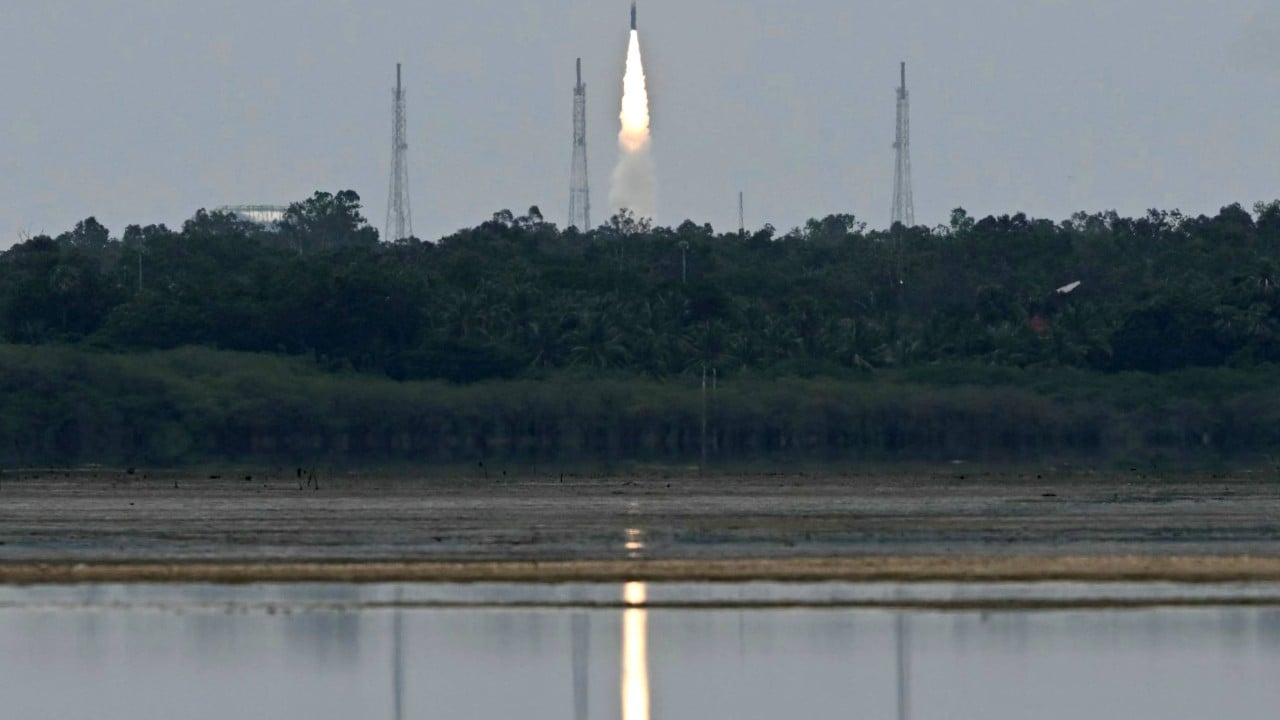
The ground-based leg of the United States strategic nuclear triad is undergoing its first systemic structural overhaul in more than 50 years. While media coverage frequently focuses on superficial programmatic updates or the publication of singular testing photographs, an engineering and macroeconomic analysis reveals a complex optimization problem. The LGM-35A Sentinel program, managed by prime contractor Northrop Grumman, is not merely a replacement of the aging LGM-30G Minuteman III missile body. Instead, it is an integrated infrastructure project designed to balance severe acoustic launch dynamics against a legacy footprint that has reached the limits of its operational life cycle.
Understanding the true trajectory of the program requires analyzing the physical bottlenecks of silo-launched ballistic flight, the economic drivers behind recent design overhauls, and the precise mechanical variables that dictate strategic readiness through 2075.
The Tri-Axiomatic Engineering Constraints of Silo Launches
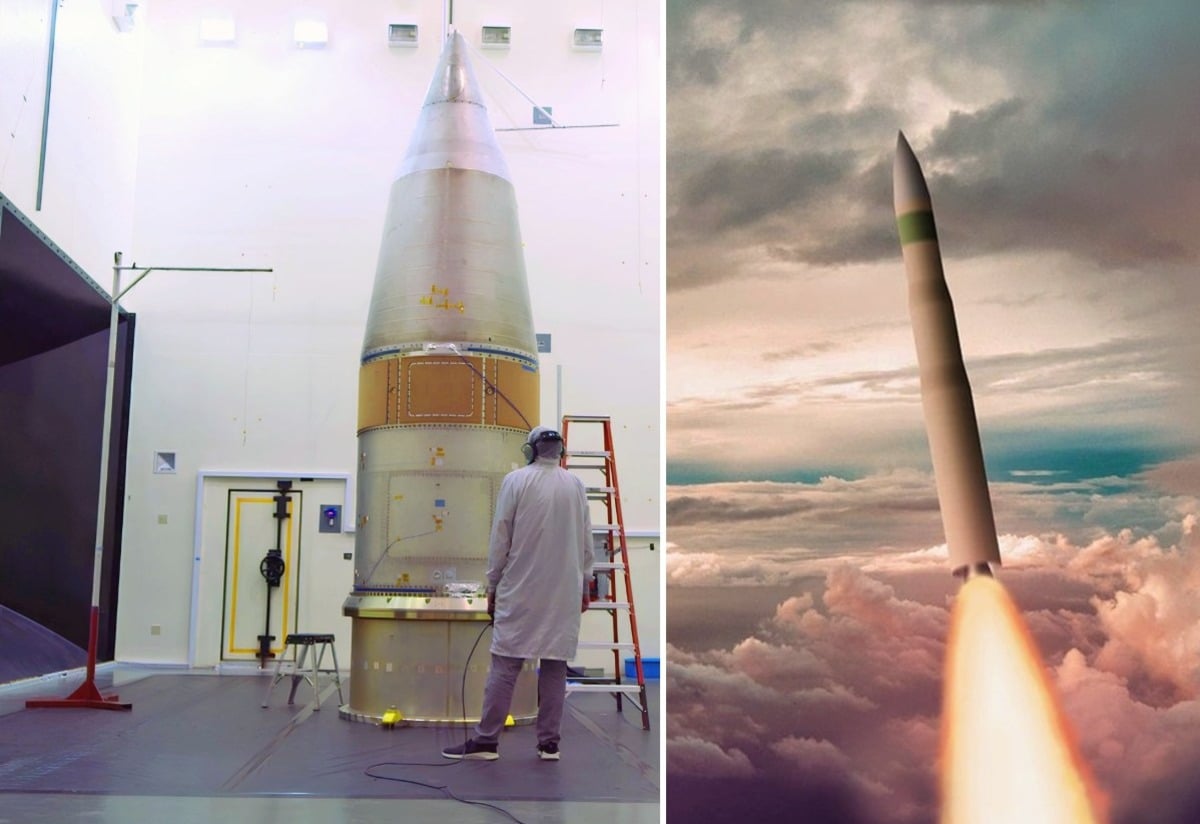
Public relations imagery documenting hardware testing at the Large Acoustic Test Facility in Redondo Beach, California, highlights the "front end" of the missile. To understand the structural necessity of these tests, one must map the exact acoustic and mechanical cost functions that occur within the first three seconds of an ICBM ignition sequence.
A silo launch introduces a violent feedback loop governed by three primary physics-based constraints:
Acoustic Wave Reflection and Structural Fatigue
When a large solid-fuel rocket motor ignites within a confined underground concrete vault, the acoustic energy generated by the nozzle exhaust cannot dissipate freely into the atmosphere. Instead, high-decibel sound waves reflect off the silo walls and floor, traveling back up the length of the missile airframe. These sound waves manifest as severe high-frequency vibrations that stress the integrated front end. If the structural dampening of the missile is insufficient, these acoustic frequencies can cause physical delamination of composite components or circuit failures within the navigation payload.
The Post-Boost Attitude Control Bottleneck
The front end contains what engineers designate as the "brains" of the platform: the guidance and navigation systems, alongside the post-boost attitude control module (PBACM). Unlike the main booster stages, which provide raw upward thrust, the PBACM is responsible for executing highly precise spatial maneuvers in the exo-atmosphere before payload deployment.
The guidance unit utilizes an astro-inertial navigation matrix that operates independently of commercial or military GPS networks, protecting the system from electronic jamming. However, this high-precision machinery is highly sensitive to the initial acoustic shock of launch. Validating the front-end components via digital acoustic simulation and physical multi-microphone arrays ensures that the inertial sensors do not lose calibration during the high-vibration exit phase.
Payload Integration Boundaries
The Sentinel front end is engineered to house the Mk21A reentry vehicle vehicle assembly, which carries the W87-1 thermonuclear warhead. The interface between the missile's post-boost module and the reentry vehicle demands rigid tolerances. Deflections of even fractions of a millimeter caused by structural resonance during launch can alter the deployment vector, directly degrading the circular error probable (CEP)—the primary metric defining missile accuracy.
The Economics of Infrastructure Overhaul
The Sentinel program triggered a Nunn-McCurdy review due to projected cost overruns, forcing a comprehensive programmatic restructure. Media narratives frequently misattributed these cost spikes to the development of the three-stage solid-fuel missile itself. Empirical program data demonstrates that the missile body met major engineering benchmarks on schedule, including static fires of its stage-one, stage-two, and stage-three motors.
The true source of the cost escalation resides in the civil engineering and infrastructure domain, leading to a fundamental shift in the program's deployment strategy.
Legacy Plan (Refurbishment) -> High Variable Costs + High Alert Disruption
Modernized Plan (Modular Silos) -> Higher Initial Capital Expenditure + Predictable Life Cycle Maintenance
The original program architecture called for refurbishing the existing 60-year-old Minuteman III silos scattered across North Dakota, Montana, Wyoming, Colorado, and Nebraska. A rigorous civil engineering evaluation exposed a fatal flaw in this assumption: by the time the Sentinel completes its projected 70-year service life, a refurbished silo would be nearly 150 years old. The compounding structural fatigue of concrete degradation, moisture ingress, and obsolete analog wiring routing made refurbishment cost-prohibitive.
The revised execution strategy relies on building entirely new, modular launch facilities adjacent to existing footprints rather than retrofitting old ones. This strategic pivot operates on two distinct economic mechanisms:
- The Maintenance of Alert Continuity: The United States Air Force maintains 400 ICBMs on continuous operational alert. Attempting to pull active silos offline for extensive, deep-structural concrete and digital overhauls would shrink the active deterrent footprint below statutory requirements. Building new silos on government-controlled "swing space" preserves continuous alert capabilities.
- The Modular Standardization Function: Legacy silos were constructed using mid-20th-century manual techniques, resulting in unique physical variances across launch sites. The new strategy utilizes pre-cast, modular construction blocks engineered for rapid assembly by commercial partners like Bechtel. This lowers site-specific engineering costs and establishes a standardized digital baseline across all 450 projected launch facilities.
Digital Ecosystem vs. Legacy Production Functions
Sentinel is distinct from legacy aerospace platforms as it is designed within an end-to-end digital engineering ecosystem. This methodology alters the traditional defense procurement model by replacing iterative physical prototyping with high-fidelity digital twins.
In traditional development, physical testing reveals flaws that force expensive tooling redesigns late in the acquisition cycle. The digital ecosystem utilizes integrated software models where a change in the alloy composition of a stage-two thrust vector control system automatically updates the acoustic stress models of the front-end shroud.
This model-centric approach explains why the program maintains a flight-test target of 2027 despite structural delays in infrastructure layout. The individual sub-components—such as the vacuum-chamber tested stage-two motor—are qualified against digital models prior to full system integration.
However, the primary limitation of this digital paradigm is the risk of environmental modeling gaps. While a digital twin can simulate known variables like atmospheric density, thermal gradients, and nominal acoustic resonance, it cannot fully account for stochastic, real-world phenomena. Physical milestones, such as the groundbreaking at the Promontory, Utah test silo and subsequent full-scale flight tests, remain the ultimate validation mechanism for the digital architecture.
Operational Milestones and Capability Projections
To assess the operational validity of the program, analysts must decouple corporate milestones from verified military timelines. The transition from the LGM-30G to the LGM-35A is characterized by precise performance shifts:
| Parameter | LGM-30G Minuteman III | LGM-35A Sentinel |
|---|---|---|
| Propulsion Architecture | Three-stage solid fuel (aging propellant) | Next-generation three-stage solid composite |
| Guidance System | NS50 Astro-Inertial (analog elements) | Modernized Digital Astro-Inertial (radiation-hardened) |
| Payload Capacity | Single/Multiple Reentry Vehicles (Mk12A/Mk21) | Optimized for Mk21A / W87-1 warhead configurations |
| Targeting Accuracy | Baseline CEP | Substantially reduced CEP via active shroud propulsion |
| Life Cycle Threshold | Obsolete support infrastructure | Extensible digital bus architecture through 2075 |
The integration of a dedicated propulsion system within the nose shroud represents a significant departure from Minuteman III design. This addition provides a dedicated correction mechanism during the post-boost phase, allowing the missile to compensate for upper-atmosphere wind shear and micro-variations in booster burn cut-offs. The result is a highly deterministic trajectory that maximizes target precision without relying on external satellite constellations.
Immediate Strategic Directives
The Department of Defense and its primary industrial contractors must prioritize realigning the capital expenditure mismatch between missile production and civil works. The missile components are currently maturing at an accelerated pace compared to the physical deployment sites. To prevent a bottleneck where completed booster stacks sit in storage awaiting silo completion, execution teams must deploy a parallel industrial pathway.
First, the modular silo prototype in Utah must be utilized to finalize the repeatable manufacturing process for civil works by the end of the calendar year. Any delay in verifying the structural integrity of the modular concrete panels will cascade directly into the 2027 flight test schedule.
Second, the procurement team must leverage the open-architecture design of the guidance system to ensure that hardware components remain decoupled from rapidly evolving software frameworks. By locking in the physical dimensions and structural dampening specifications of the front end now, Northrop Grumman can insulate the manufacturing line from late-stage software additions, ensuring the first operational assets achieve deployment readiness in the early 2030s.