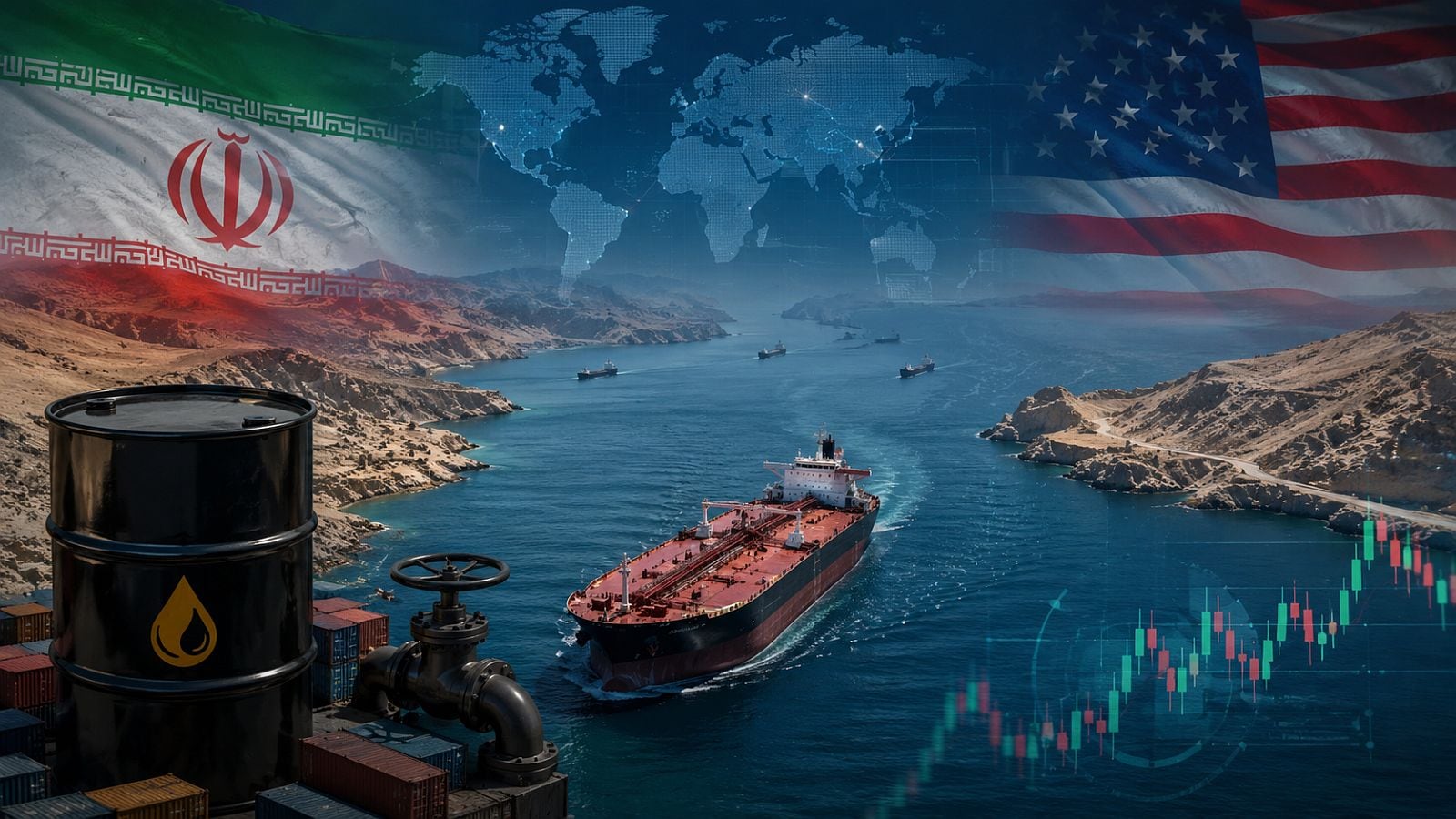
Diplomatic frameworks that treat the Strait of Hormuz as a standard regulatory or state-to-state maritime dispute are fundamentally flawed. When international bodies attempt to negotiate over transit rights, cargo clearances, and toll structures in the Persian Gulf, they operate under the assumption that the Islamic Republic of Iran acts as a monolithic Westphalian state. This assumption collapses under empirical analysis. The strategic leverage point in the region is not the sovereign government in Tehran, but rather the institutional autonomy of the Islamic Revolutionary Guard Corps (IRGC). Failing to decouple the IRGC from conventional trade negotiations dooms any memorandum of understanding to strategic irrelevance.
Understanding the breakdown of maritime stability requires evaluating the asymmetric incentives that govern the IRGC. While the conventional Iranian state seeks structural relief from international sanctions to stabilize its macroeconomic indicators, the IRGC thrives on an entirely different economic model: the monetization of friction.
The Tri-Border Economic Function of the IRGC
To analyze why conventional negotiations yield no behavioral changes on the water, the IRGC must be viewed through its economic incentives rather than its ideological rhetoric. The organization operates a highly sophisticated parallel economy that relies on three distinct revenue streams:
- Sanctions Evasion Rents: The IRGC controls a vast network of front companies, illicit jetties, and black-market bunkering operations. When international sanctions tighten, the premium for smuggling petroleum products and consumer goods escalates. The IRGC captures this premium, making enforcement gaps highly profitable.
- The Escrow Premium: Maritime disruption directly increases shipping insurance premiums, specifically War Risk Additonal Premiums (WRAP). By driving up the risk profile of the Strait of Hormuz, the IRGC validates its role as an internal security guarantor, ensuring a continuous allocation of national defense resources to its naval branch ($IRGC-N$) rather than the regular Artesh navy.
- Arbitrary Compliance Enforcement: As demonstrated by recent multi-cargo interdictions near the Omani coast, the IRGC enforces arbitrary parallel routing clearances outside of the recognized Transit Passage rules established under the United Nations Convention on the Law of the Sea (UNCLOS). Shippers are forced to navigate unwritten regulatory hurdles, creating a corruption bottleneck where safety is commodified.
This economic reality exposes the core logical error of standard diplomacy: offering macro-level sanctions relief to Iran's central government does not diminish the IRGC’s cash flow. In fact, it often achieves the opposite by freeing up state capital that can be funneled back into paramilitary procurement.
The Asymmetric Friction Matrix
The physical domain of the Strait of Hormuz creates a natural geostrategic bottleneck. At its narrowest point, the shipping lanes consist of two-mile-wide inbound and outbound channels separated by a two-mile buffer zone. The cost function of enforcing security in this corridor is highly asymmetric.
$$\text{Friction Cost} = f(\text{Insurance Premiums} \times \text{Transit Delay}) \div \text{Escort Capability}$$
For global commerce, the cost of friction is measured in billions of dollars. For the IRGC, the cost of generating that friction is nominal. The deployment of fast attack craft (FACs), low-cost loitering munitions, and anti-ship cruise missiles hidden in the mountainous terrain of Qeshm Island requires minimal capital expenditure.
[Global Commerce: High Value/Low Agility] ──> Enters Shipping Lane
                                                     │
                                           (Asymmetric Bottleneck)
                                                     │
[IRGC-N Assets: Low Cost/High Mobility]    ──> Imposes Friction (FACs/Drones)
                                                     │
                                           [Result: WRAP Escalation]
The first limitation of the current maritime protection framework is its reliance on defensive naval escorts. Deploying billion-dollar destroyers to escort commercial tankers creates an unsustainable economic ratio. The adversary can alter global energy markets simply by threatening an action, forcing the international coalition to spend millions in interceptor missiles to down a drone worth thousands.
This structural imbalance is compounded by the depletion of western energy buffers. Commercial shipping disruptions have historically been mitigated by the strategic releases of oil reserves. However, consecutive drawdowns of the U.S. Strategic Petroleum Reserve (SPR) to historic lows have eroded the Western buffer capacity. Without a liquid, short-term supply buffer to counteract supply-shock narratives, any tactical escalation by the IRGC in the Strait immediately translates into extreme crude oil volatility.
Mechanisms of Decoupled Diplomacy
A rigorous analytical strategy requires moving past broad diplomatic declarations. Negotiations must be re-engineered around targeted mechanisms that disrupt the IRGC’s specific operational framework:
- Direct Attribute Sanctioning: Financial penalties must target the logistical infrastructure belonging exclusively to the IRGC's economic conglomerates, such as Khatam al-Anbiya. Broad state-level sanctions offer too many vectors for evasion; microscopic targeting of the IRGC’s maritime supply chains creates immediate asset liability.
- Autonomous Verification Corridors: Diplomatic terms should mandate the installation of real-time, tamper-proof blockchain ledger tracking for commercial vessels transiting the strait. By removing human-mediated compliance checks from the Iranian coast guard, the pretext for "regulatory stops" is invalidated.
- Proportional Kinetic Cost Functions: De-escalation is only achieved when the cost of imposing friction exceeds the political or financial benefit. Diplomatic tracks must be paired with an explicit, public posture that holds IRGC shore facilities—not regular state infrastructure—directly liable for commercial interference.
The second limitation of traditional diplomacy is the belief that signed treaties ensure compliance. For a decentralized, ideologically driven entity like the IRGC, a treaty signed by a diplomat in Geneva holds no operational authority over a field commander in Bandar Abbas.
Rather than aiming for an all-encompassing grand bargain that attempts to reshape Middle Eastern alignment, planners must focus on altering the transactional calculus of the actors on the water. Stability in the global energy trade will not return through paper concessions; it requires the systemic, economic, and tactical isolation of the entities that profit from chaos.
The optimal strategic move is to decouple maritime safety from broader nuclear or regional proxy discussions. Isolating the Strait of Hormuz as a purely technical, highly policed commercial zone—backed by explicit cost-imposition mechanisms focused solely on IRGC assets—remains the only viable path to suppressing the volatility premium currently embedded in global energy markets.