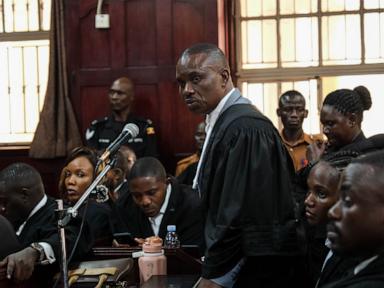
The arrest and charging of human rights attorney and opposition politician Erias Lukwago on charges of concealing treason marks a structural shift in Uganda's judicial landscape. By shifting the target from the political dissident to the legal counsel, the state alters the structural dynamics of political opposition. This intervention demonstrates a systematic application of lawfare—the use of legal systems as instruments of political and military utility.
The strategy expands the scope of judicial prosecution beyond the primary actor, establishing a legal mechanism that criminalizes the professional boundaries of defense counsel. The state effectively raises the operational costs of legal representation for high-profile political dissidents, introducing a structural constraint that threatens the sustainability of opposition defense networks.
The Tri-Component Mechanism of Institutional Attrition
The prosecution of a defense attorney under the premise of misprision of treason—the failure to report treasonous knowledge to state authorities—operates across three structural vectors. Each vector targets an essential pillar of a functioning adversarial legal defense.
1. The Subversion of Attorney-Client Privilege
The charging of Erias Lukwago relies on a fundamental legal paradox. Under standard statutory frameworks, an attorney is legally bound to absolute confidentiality regarding a client's disclosures. By imposing an overriding criminal liability for failing to report alleged treasonous plots, the state establishes a statutory contradiction.
[Legal Paradox of Client Disclosure]
       │
       ├─► Ethical Obligation: Absolute Confidentiality
       │
       └─► State Statutory Mandate: Immediate Disclosure of Treason
This creates an operational bottleneck where an attorney cannot fulfill their professional duty of confidentiality without simultaneously incurring personal exposure to capital offenses. The long-term structural effect is the systemic erosion of client trust, effectively undermining the integrity of legal consulting within the constitutional domain.
2. Escalation of Defense Sunk Costs
Legal defense in politically sensitive cases requires highly specialized expertise and significant time allocations. When the state expands the scope of criminal targeting to include the legal team, it introduces an asymmetric risk calculation for the defense.
The potential personal cost to the attorney scales from standard professional friction to prolonged detention, physical assets seizure, and capital indictments. This risk-reward imbalance creates a powerful economic and personal disincentive, reducing the available supply of top-tier legal talent willing to represent opposition leaders like Kizza Besigye or Bobi Wine.
3. Asymmetric Information Asymmetry
By detaining and prosecuting lead counsel during an ongoing trial, the state breaks the continuity of the defense's strategy. This yields an immediate informational and tactical advantage to the state prosecution.
The defense is forced to divert its finite analytical and financial resources away from the primary case to manage the immediate legal crises of its own personnel. This structural disruption effectively halts the momentum of the defense's core litigation strategy.
The Strategic Sequence of Judicial Intervention
The timing of Lukwago's arrest indicates a deliberate tactical sequence designed to counter civil litigation and administrative challenges brought by the opposition against military leaders.
                     [CHRONOLOGICAL STRATEGIC TIMELINE]
                                     │
   ┌─────────────────────────────────┴─────────────────────────────────┐
   ▼                                                                   ▼
Stage 1: Military Overreach                                         Stage 2: Civil Counter-Litigation
Incendiary public statements by                                     Opposition files formal lawsuits
UPDF Chief Muhoozi Kainerugaba                                      and prepares to serve judicial
targeting opposition figures.                                       summonses to military leadership.
                                                                       │
                                 ┌─────────────────────────────────────┘
                                 ▼
                              Stage 3: Executive Neutralization
                              State deploys counter-charges of
                              treason concealment, arresting
                              counsel before service of process.
This structural loop serves a dual purpose. It protects high-ranking military officials from judicial scrutiny while shifting the public narrative from state overreach to national security preservation.
The Constitutional Overrides and Procedural Bottlenecks
The systemic execution of this strategy relies on precise procedural levers within the Ugandan judicial system. These levers manipulate timing and witness access to guarantee a structural advantage for the prosecution.
- Witness Concealment Applications: The state's systematic utilization of witness protection mechanisms to hide the identities of key prosecution witnesses prevents the defense from conducting background checks, tracking biases, or performing effective cross-examination. This shifts the trial dynamics from an open, adversarial model to a closed, state-managed process.
- Administrative Access Restrictions: Prison authorities impose deliberate delays and logistical barriers to legal visitation. This limits the defense's ability to review disclosed state evidence with clients, rendering the constitutional guarantee of "adequate time and facilities for defense preparation" practically impossible to meet.
- Constitutional Reference Dismissals: Lower courts systematically reject applications to refer key procedural questions to the Constitutional Court. This locks the trial into a fast-tracked timeline, preventing external oversight of potential human rights violations.
Structural Constraints and Strategic Outlook
This lawfare model has built-in structural limitations. The systemic weaponization of capital charges against officers of the court risks degrading the international legitimacy of the state's judicial system. This can lead to increased scrutiny from foreign investors, multilateral lending institutions, and international human rights bodies.
Furthermore, aggressively targeting prominent legal and political figures risks transforming legal proceedings into focal points for broader political mobilization, potentially increasing domestic political instability.
The immediate strategic path for independent legal actors and civil society requires a transition from localized defense tactics to regional and international legal mechanisms. Because domestic courts face deep structural constraints, defense strategies must leverage the East African Court of Justice (EACJ) and international legal frameworks. This approach can help check state overreach, enforce regional treaty compliance, and re-establish a baseline of procedural integrity that domestic institutions are currently unable to sustain.
The systemic framework underlying these judicial maneuvers is further detailed in the report Uganda Treason Case Update, which outlines the specific operational blockades and procedural delays currently stalling the High Court proceedings in Kampala.