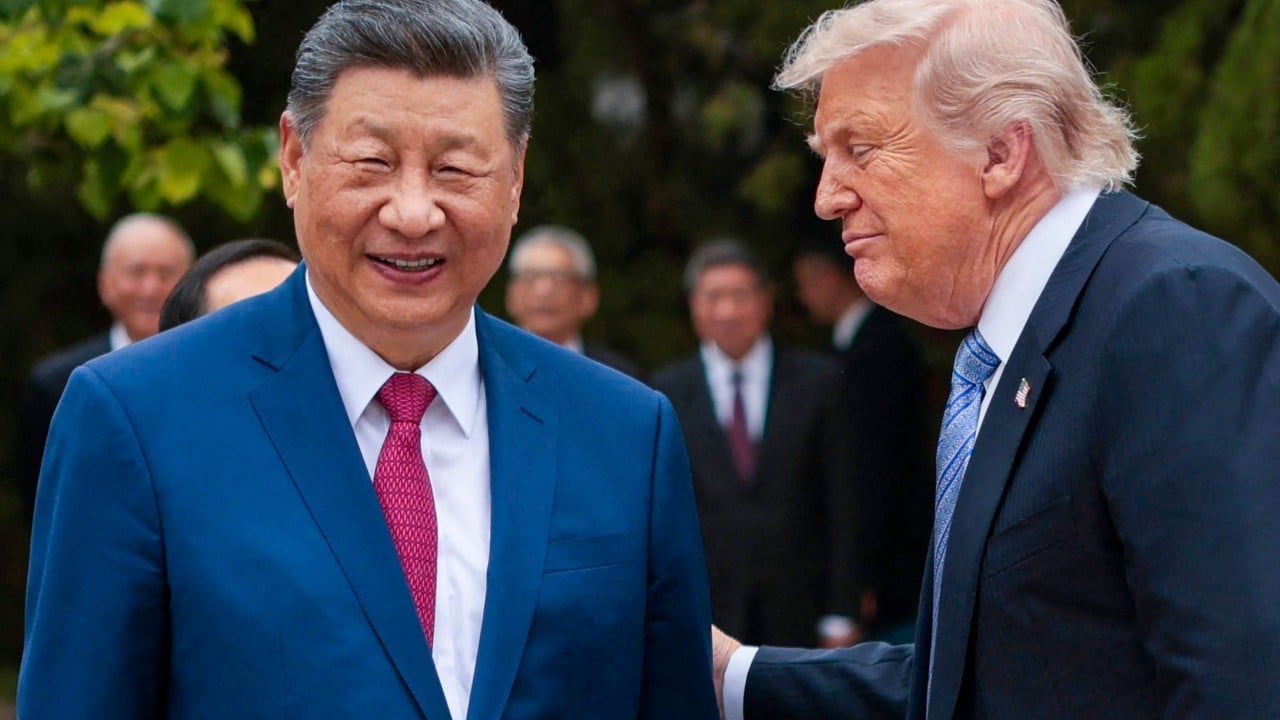
The systemic friction between the United States and the People's Republic of China has broken out of the traditional boundaries of tariff-driven trade wars. Beijing’s formal objections to Washington’s expansion of the Pentagon’s Chinese Military Companies List—which added over 180 corporate entities—expose a structural miscalculation in Chinese economic diplomacy. By framing the actions of the U.S. national security apparatus as a violation of personal agreements between President Donald Trump and President Xi Jinping, Beijing relies on a framework of personalist diplomacy that fails to recognize the institutionalized mechanics of modern geoeconomics.
The expanding blacklist and China's subsequent activation of its legal "blocking statute" framework reveal that bilateral economic relations are no longer dictated by top-down executive bargains. Instead, they are governed by a complex interplay of industrial policy, supply chain defensive maneuvers, and conflicting legal jurisdictions. Multinational corporations are forced to navigate an operational environment where compliance with the laws of one market constitutes an automatic violation of the laws of another. If you liked this post, you might want to look at: this related article.
The Structural Inadequacy of Personalist Diplomacy
Beijing’s diplomatic rhetoric frequently positions executive rapport as the primary mechanism for stabilizing bilateral trade. This approach assumes that top-level summits can generate broad, informal understandings capable of overriding domestic regulatory actions. This logic misinterprets the structural drivers of U.S. economic policy, which operates through decentralized, statutory mandates across the Department of Commerce, the Department of Defense, and the Department of the Treasury.
The expansion of the Chinese Military Companies List by the Pentagon is not an arbitrary political gesture; it is the execution of a statutory mandate designed to isolate foreign defense-linked entities from capital markets and dual-use supply chains. When the U.S. administration expands these restrictions, it is responding to long-term institutional pressure to protect critical supply chains, particularly in advanced manufacturing, critical minerals, and semiconductors. For another look on this development, check out the recent update from MarketWatch.
[U.S. Statutory Mandate] -> [Blacklist Expansion (180+ Firms)] -> [Supply Chain Disruption]
                                                                          |
[China "Blocking Statute"] -> [Legal Penalties for Compliance] <----------+
This structural shift renders personal executive agreements highly fragile. While personalist diplomacy can secure short-term tactical thaws or purchase commitments, it cannot alter the underlying national security doctrines that classify integrated supply chains as macroeconomic vulnerabilities. The assumption that personal alignment can supersede institutional policy creates a strategic blind spot, leaving firms exposed when statutory enforcement mechanisms inevitably engage.
The Escalation to Jurisdictional Warfare
The conflict has evolved from a tariff-centric trade dispute into a direct clash of legal jurisdictions. China’s response to the expanded U.S. blacklist marks a transition toward a defensive regulatory framework designed to actively deter Western supply chain diversification. By utilizing its expanded blocking statute regime, Beijing is transforming corporate compliance from a legal checklist into a high-stakes calculation of market exposure.
The Mechanics of the Blocking Statute Framework
The blocking statute functions as an extraterritorial counter-weight. When the U.S. imposes a sanctions regime or an export ban on Chinese entities, the blocking statute allows Chinese authorities to issue a formal declaration stating that the foreign measure has no legal effect domestically. The operational consequences for multinational corporations are direct and severe:
- Compulsory Non-Compliance: Chinese entities and multinational corporations operating within Chinese jurisdiction are legally prohibited from complying with the specified U.S. restrictions.
- Civil Liability: If an international firm complies with U.S. sanctions and consequently terminates a contract or halts shipments to a blacklisted Chinese entity, that firm can be sued for damages in Chinese courts.
- Administrative Penalties: Regulatory authorities can impose direct fines, asset freezes, or operational restrictions on firms that prioritize compliance with foreign law over Chinese domestic law.
This legal architecture changes the cost-benefit analysis of supply chain diversification. Historically, implementing a "China-plus-one" strategy carried only operational and capital expenditures. Under the active implementation of the blocking statute, diversification triggers immediate legal exposure, forcing a corporate choice between access to the Chinese industrial ecosystem and compliance with Western national security directives.
The Corporate Trilemma of Contested Supply Chains
For multinational enterprises operating at the intersection of both economies, this regulatory friction creates a trilemma where it is structurally impossible to maintain full compliance across all jurisdictions. This friction operates as a cost function that degrades corporate efficiency, increases legal risk, and fragments global operating models.
                   [The Corporate Trilemma]

                     /-----------------\
                    /                   \
                   /                     \
                  /                       \
  [U.S. Regulatory Compliance] ---- [China Market Access]
                  \                       /
                   \                     /
                    \                   /
                     \-----------------/
                 [Global Supply Chain Unity]
The Inherent Friction of Bifurcated Operations
When a country expands its entity lists, the affected firms are cut off from critical dual-use inputs, software licenses, and Western financial infrastructure. For an international business, replacing these components requires substantial engineering and legal overhead. If that same firm attempts to comply with these restrictions within Chinese borders, it faces retaliatory litigation and potential asset seizure under the blocking statute.
This reality breaks the concept of a single, unified global supply chain. To survive this environment, enterprises are forced to adopt a strategy of operational bifurcation. This involves establishing completely separate legal, technological, and logistical entities for the Chinese domestic market and the rest of the world.
The limitations of this strategy are structural. Splitting operations duplicates capital expenditures, dilutes economies of scale, and creates internal compliance firewalls that prevent the cross-border transfer of data and intellectual property. The resulting entities operate with reduced efficiency, eroding the cost advantages that drove globalized production models in the first place.
Strategic Realignment for Multinational Operations
As structural decoupling accelerates, reliance on top-level political negotiations to restore regulatory predictability is an unviable strategy. Corporate leaders must plan for an environment characterized by systemic legal fragmentation and persistent jurisdictional friction.
The optimal operational response requires a rigorous audit of cross-border dependencies. Organizations must categorize their product lines by their exposure to dual-use regulations and export control regimes. For highly exposed segments, the only path forward is the creation of decoupled, self-contained regional ecosystems. In contrast, less sensitive consumer-facing operations can continue to leverage shared infrastructure, provided they maintain robust internal legal firewalls capable of isolating domestic subsidiaries from foreign enforcement actions.
Ultimately, the friction between U.S. national security mandates and China’s blocking statutes signals a permanent shift in international business. The core challenge for modern enterprise management is no longer the optimization of global logistics for speed and cost, but the engineering of corporate architectures capable of withstanding the legal and regulatory cross-currents of an era defined by great power competition.