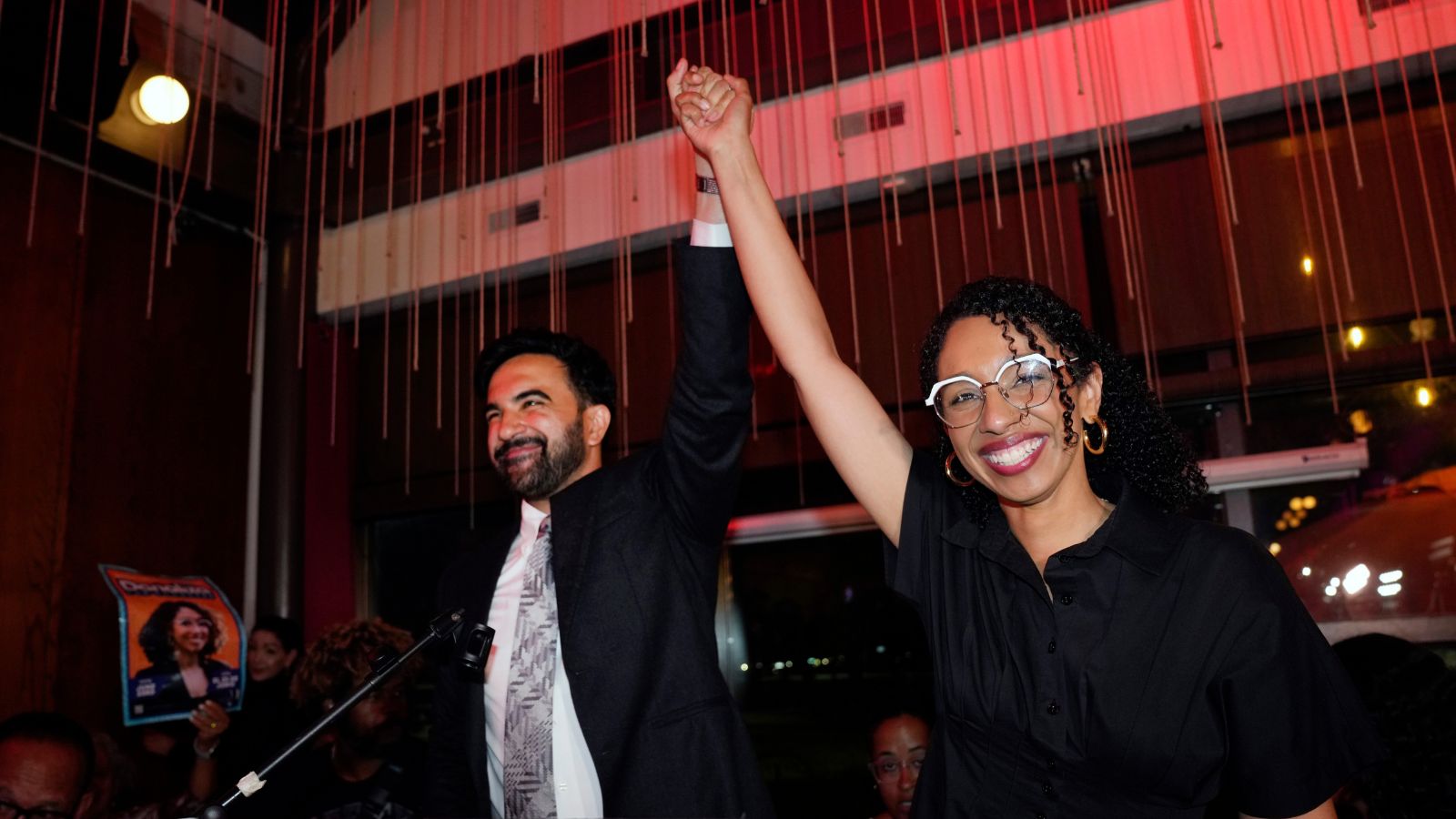
The June 2026 New York congressional primaries have established a new operational model for urban political power. By funding, structuring, and executing a coordinated slate strategy across Manhattan, Brooklyn, and the Bronx, New York City Mayor Zohran Mamdani successfully overthrew two entrenched multi-term incumbents and secured an open congressional seat. This outcome demonstrates that traditional municipal party machinery can be systematically dismantled when challenged by an optimized, ideologically unified turnout engine.
To evaluate this electoral shift accurately, analysts must discard superficial narratives of personal momentum and examine the exact mechanisms of structural leverage, resource allocation, and demography that converted a high-risk political gamble into an unprecedented sweep.
The Coordinated Slate Framework: Maximizing Returns on Consolidated Messaging
The core operational error of establishment campaigns is treating concurrent primary races as isolated, localized events. The insurgent strategy inverted this principle by deploying a unified message across three distinct geographic markets, treating distinct congressional districts as parts of a singular media and volunteer ecosystem.
[Unified Insurgent Slate Model]
      |
      +---> NY-10 (Manhattan/Brooklyn): Brad Lander (Unseated Dan Goldman)
      |
      +---> NY-13 (Upper Manhattan/Bronx): Darializa Avila Chevalier (Unseated Adriano Espaillat)
      |
      +---> NY-7 (Brooklyn/Queens): Claire Valdez (Won Open Seat)
This structural centralization achieved clear efficiencies:
- Volunteer Liquidity: Instead of silos, volunteer networks were treated as a single pool, allowing rapid reallocation to high-priority field operations across borough lines.
- Message Standardization: By aligning all three candidates on a stark three-pronged platform—foreign policy realignment regarding Gaza, an aggressive "tax the rich" fiscal model, and the abolition of ICE—the campaign achieved continuous brand reinforcement.
- Co-Branding Efficiencies: Every public appearance, digital ad, and piece of literature featuring Mamdani alongside the candidates lowered the customer acquisition cost (the financial and operational cost to secure a reliable voter) by transferring the mayor's high approval capital directly to low-awareness insurgent candidates.
The empirical proof of this model lies in the specific races won. In New York's 10th Congressional District, former City Comptroller Brad Lander unseated two-term representative Dan Goldman. In the 13th District, community organizer Darializa Avila Chevalier engineered a massive upset by unseating five-term incumbent Adriano Espaillat, the chair of the Congressional Hispanic Caucus. Simultaneously, in the 7th District, Claire Valdez secured the nomination to succeed retiring Representative Nydia Velázquez, defeating establishment-backed alternatives like Brooklyn Borough President Antonio Reynoso.
The Economics of In-District Displacement
To measure how these upsets occurred, we must isolate the specific vulnerabilities of incumbents Goldman and Espaillat. The defeat of both members reveals a structural breakdown in traditional incumbent defense mechanisms, which historically relied on outspending challengers and leveraging senior committee assignments.
The Cash-to-Conversion Bottleneck (NY-10)
In the Lander-Goldman contest, the traditional relationship between capital and vote acquisition broke down. Goldman, possessing significant personal wealth and access to institutional donor networks, outspent Lander by a substantial margin. However, the marginal return on ad spend diminishes rapidly in dense urban media markets like New York.
Lander’s campaign bypassed this bottleneck by leveraging pre-existing organizational infrastructure. As a former citywide elected official, Lander already possessed high name recognition and deep ties to organized labor and the Working Families Party. When combined with Mamdani's base of highly motivated young voters—the same demographic that drove a historic 43% turnout in the 2025 mayoral election—the campaign achieved a superior voter conversion rate per dollar spent.
The Demographic Asymmetry Flaw (NY-13)
The defeat of Espaillat in the 13th District highlights a distinct structural failure: misjudging demographic evolution and turnout composition. Espaillat’s long-standing dominance relied on high-density mobilization within the Dominican-American electorate in Washington Heights and the Bronx.
Avila Chevalier’s campaign exposed a vulnerability in this model by engineering an asymmetric turnout strategy. Her campaign focused on the rapidly shifting demographics of Harlem and parts of the Bronx, activating younger, progressive voters who felt disconnected from old-guard machine politics. By utilizing high-reach alternative media channels—exemplified by targeted, last-minute street campaigning with high-audience progressive digital broadcasters—the campaign circumvented traditional local media channels entirely.
The incumbent relied on endorsements from national figures like House Minority Leader Hakeem Jeffries, assuming top-down authority would guarantee base retention. The data proves this was an incorrect calculation: elite endorsements do not insulate an incumbent from aggressive grassroots field operations during low-turnout June primaries.
The Turnout Function: Why the Machine Broke
Electoral outcomes are a direct function of voter turnout maximization, expressed logically as:
$$V_T = (B \times M) + (R \times O)$$
Where:
- $V_T$ is Total Effective Turnout
- $B$ is the Core Demographic Base
- $M$ is the Motivation Multiplier (driven by polarizing, high-stakes issues)
- $R$ is Available Operational Resources
- $O$ is Organizational Efficiency
In a low-turnout June primary, the traditional party machine relies almost entirely on $R \times O$—using paid mailers, street operations, and institutional phone banks to turn out reliable, older party regulars. However, the insurgent strategy dramatically increased $M$ (the Motivation Multiplier) by injecting high-salience international and economic issues into local congressional races.
By transforming the primary into an explicit referendum on the federal government’s foreign policy in the Middle East and its failure to pass aggressive corporate tax reforms, the Mamdani slate galvanized a younger, hyper-focused demographic tier. This cohort does not respond to traditional machine outreach but is highly responsive to decentralized digital organizing.
The establishment failed to adjust its defensive model to match this intensity. While figures like Hakeem Jeffries dismissed the primary sweep as an isolated anomaly that will not reshape the 215-member House Democratic caucus, this perspective ignores the structural threat. When an insurgent network can systematically target and remove senior committee chairs and well-funded moderates in a single cycle, the party's institutional stability is fundamentally altered.
Operational Limitations of the Insurgent Governance Model
Despite this clean sweep, execution risks exist within this political model. The strategies required to capture power in a closed primary are frequently at odds with the demands of long-term civic governance and economic stability.
- Revenue Base Fragility: The core economic proposal of the Mamdani-backed slate relies on aggressive wealth taxation, building upon the mayor’s signature proposal of a flat 2% tax on New York residents earning over $1 million. The risk of this strategy is capital flight. Unlike nation-states, sub-national jurisdictions face severe tax elasticity constraints; high-net-worth individuals and corporate entities can relocate capital and legal residences across state lines with minimal friction. A sudden contraction of the luxury real estate and financial services tax base would create immediate structural deficits for the municipal budget.
- Coalitional Fracturing: The primary victories were achieved by running against the local institutional infrastructure. While effective for winning elections, it complicates legislative execution. To deliver on complex infrastructure, housing, and transit goals, the mayor and his newly elected congressional allies must negotiate with moderate state legislators, federal agency heads, and suburban representatives who are actively hostile to democratic socialist platforms.
- The General Election Transition: While these districts are safely Democratic, ensuring that general election victories in November are virtually guaranteed, the ideological purism required to win these primaries creates severe branding liabilities for the broader party outside of major urban centers. The explicit call to abolish ICE and implement sweeping corporate tax mandates provides opposition strategists with highly effective messaging tools in competitive suburban swing districts.
Immediate Strategic Directives for Corporate and Institutional Stakeholders
The primary sweep necessitates an immediate reassessment of political risk and engagement strategies for corporate executives, real estate developers, and institutional asset managers operating within the metropolitan area.
- Pivot Asset Allocation Models Away from Direct Municipal Vulnerabilities: With an expanded socialist delegation heading to Washington and an emboldened mayoral administration, policy proposals regarding strict rent freezes on stabilized units and municipal real estate tax hikes will accelerate. Capital deployment should favor jurisdictions with predictable regulatory frameworks rather than markets prone to abrupt legislative interventions.
- Deconstruct and Rebuild Government Relations Frameworks: Institutional government relations teams must abandon the assumption that senior party leaders or borough party chairs hold veto power over legislation or can protect corporate interests. Engagement strategies must be decentralized, shifting focus away from top-down lobbying toward direct negotiation with the expanding network of ideologically driven committee staff and grassroots-aligned lawmakers.
- Anticipate Localized Fiscal Volatility: As the city administration attempts to balance ambitious public transit programs and universal social benefits against a potentially volatile tax base, expect aggressive enforcement of local regulatory compliance, increased corporate penalties, and creative fee structures. Corporate legal and compliance frameworks must be reinforced to mitigate the risk of targeted municipal enforcement actions.
The traditional New York political machine is no longer an effective shield for institutional status quo interests. Power has migrated to a disciplined, digitally integrated turnout apparatus that values ideological compliance over institutional longevity. Stakeholders who fail to adapt to this new regulatory reality will find themselves holding depreciating political assets in a rapidly re-engineered market.