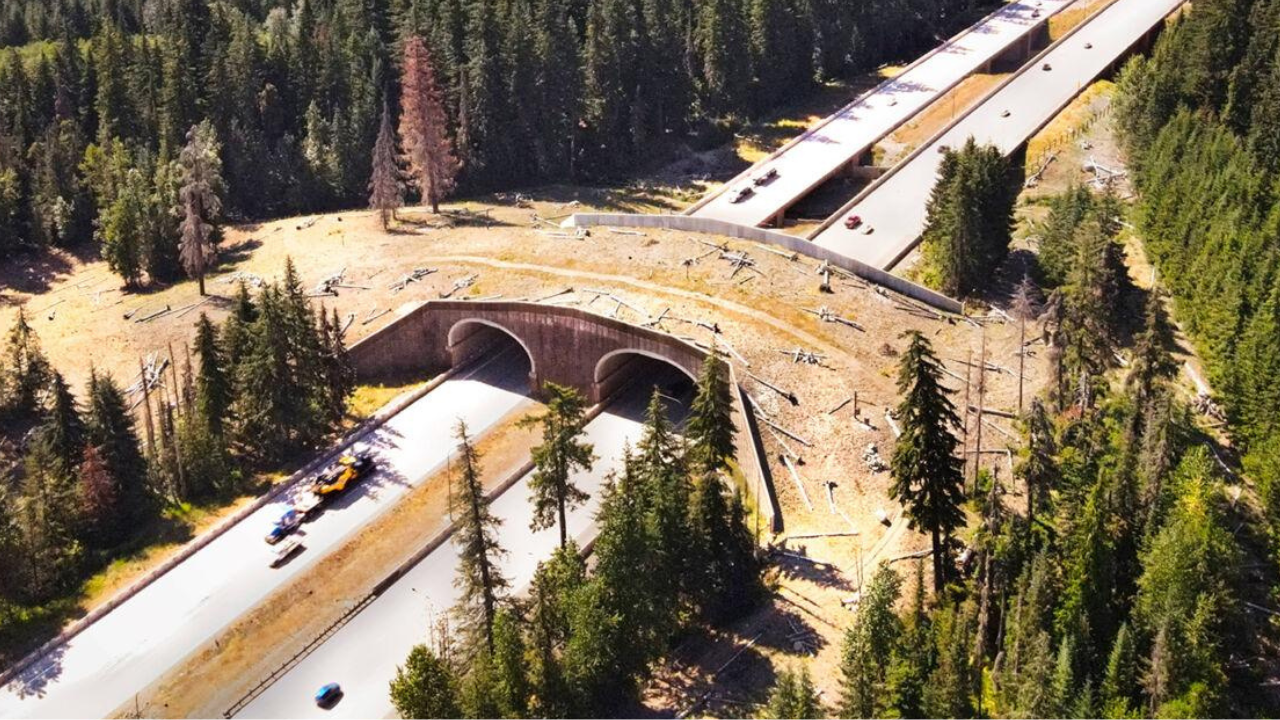
Infrastructure development fundamentally alters natural ecosystems by creating physical barriers that disrupt animal migration corridors. To mitigate the dual vectors of human mortality and biodiversity loss, agencies in states like Oregon and Utah have deployed more than 130 specialized structural interventions, combining highway overpasses, underpasses, and culverts with directional fencing systems. Evaluating the utility of these networks requires examining the precise mechanics of landscape permeability, cost-benefit functions, and the systemic variables governing structural efficiency.
The Economic and Kinetic Cost Function
The necessity of engineered wildlife crossings stems from an escalating economic and public safety crisis. Unmitigated wildlife-vehicle collisions across the United States exceed one million incidents annually. These events generate a predictable cascade of negative outcomes:
- Direct human capital costs, measured through approximately 26,000 injuries and over 200 fatalities each year.
- Aggregate financial losses exceeding $10 billion annually, encompassing vehicle repair expenditures, emergency medical response, and insurance claim payouts.
- Ecological fragmentation, which divides continuous populations into isolated genetic pockets, reducing long-term species resilience.
Large ungulates, specifically mule deer, elk, and moose, represent the highest-risk variable in this equation. Because of their mass, impacts with these species frequently result in passenger cabin intrusion, transforming standard traffic accidents into fatal encounters.
Structural Typologies and Functional Mechanics
Mitigation infrastructure relies on a binary operational principle: physical exclusion paired with designated inclusion zones. Fencing serves as the primary exclusion mechanism, guiding moving animals away from high-speed driving lanes and funneling them toward engineered crossing points.
The structural typologies deployed across Western state networks vary based on topography, target species, and capital expenditure thresholds:
- Wildlife Overpasses: Broad, vegetated bridges spanning multiple highway lanes. These structures are engineered primarily for wide-ranging ungulates like mule deer and elk that exhibit behavioral hesitation when entering confined subterranean spaces.
- Wildlife Underpasses: Subsurface tunnels or large-span bridges. These are optimized for species that prefer low-profile movement corridors, including predators such as black bears, mountain lions, and bobcats, as well as smaller mammals.
- Hydrological Culverts: Adapted drainage structures modified with natural substrates and dry ledges to facilitate amphibious and small mammal passage without increasing flood risk.
Quantitative Performance Metrics
Empirical evaluations conducted by transportation authorities and conservation groups indicate that pairing fencing with dedicated crossing structures reduces collisions involving large mammals by 80% to over 90%, depending on site-specific geometry and local traffic density. Longitudinal models estimate that a single well-placed crossing structure can prevent roughly 1,400 wildlife-vehicle crashes over its operational lifecycle.
The economic justification relies on offsetting accident costs against capital investment. When total lifetime collision savings exceed the initial construction and maintenance expenditures, the infrastructure achieves positive net present value. Recognizing this return on investment, states are institutionalizing dedicated funding streams, such as Utah's recurring annual wildlife crossing fund and Oregon's targeted conservation tax allocations.
Implementation Bottlenecks and Strategic Limitations
Despite high efficacy rates, structural deployment faces significant constraints. Capital costs remain high, requiring multi-agency coordination between departments of transportation and state wildlife divisions. Furthermore, structural placement cannot rely on arbitrary selection. Effective implementation depends on rigorous spatial modeling of historical migration corridors, telemetry tracking data, and traffic mortality hotspot mapping. Without precise placement, animals will bypass underutilized structures, rendering the capital investment functionally obsolete.
Strategic Forecast
Future expansion of ecological infrastructure will depend on programmatic funding models rather than ad-hoc allocations. Bipartisan legislative frameworks established across Western states serve as an operational template for scaling regional connectivity. Success relies on integrating predictive migration mapping directly into long-term state highway capital improvement plans, ensuring that infrastructure maintenance budgets account for ecological continuity alongside traditional asphalt preservation.