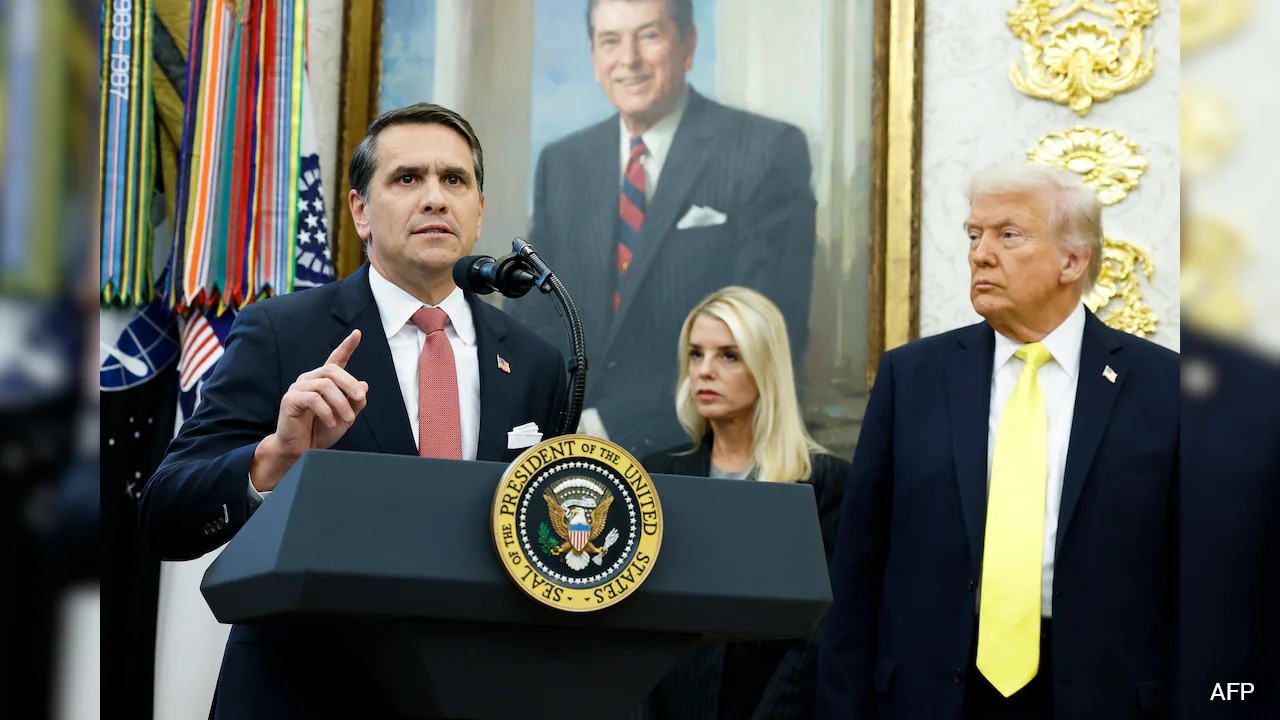
The confirmation of Todd Blanche as the eighty-eighth United States Attorney General marks a structural shift in the operational autonomy of the Department of Justice. Moving past the superficial media narratives focusing on personal loyalty to Donald Trump, a rigorous institutional analysis reveals how a former defense attorney assumes control of the nation's premier law enforcement apparatus. This transition reconfigures the traditional separation between executive power and prosecutorial discretion, establishing a new baseline for how the executive branch interacts with federal enforcement mechanisms.
The confirmation sequence operated through a compressed political timeline, passing the upper chamber by a razor-thin 50-49 margin. The structural friction points during this process offer a blueprint for understanding executive overreach and legislative pushback.
The Legislative Bottleneck and Institutional Leverage
The confirmation vector nearly stalled due to structural disagreements over two distinct executive-branch concessions:
- The proposed establishment of a $1.8 billion compensatory fund aimed at individuals claiming federal overreach.
- Comprehensive audit immunity provisions designed to protect the executive family and associated enterprise structures from retroactive tax investigations.
Legislative resistance materialized not purely along partisan lines, but through a calculated use of procedural leverage by moderate and retiring senators. The mechanism of restraint relied on withholding committee votes until written concessions were extracted. Blanche ultimately rescinded the controversial funding vehicle and narrowed the scope of tax protections. This sequence demonstrates the limits of institutional containment: legislative actors can stall administrative expansion through procedural vetoes, but their structural power diminishes once the candidate secures confirmation.
The Mechanics of Structural Integration
Placing a former personal defense counsel at the helm of the Department of Justice alters the institutional cost function of federal prosecutions. Traditional bureaucracy relies on institutional insulation to maintain public trust. By installing an attorney who represented the executive through multiple high-stakes criminal proceedings, the administration collapses the distance between political intent and prosecutorial execution.
The primary vectors of this operational shift include:
- Direct alignment of enforcement priorities with executive grievance frameworks.
- The employment of seasoned defense litigators in high-profile appellate and solicitor roles, ensuring unified legal defense of executive prerogatives.
- The systemic normalization of policy shifts through rapid administrative turnover, exemplified by Blanche stepping into the role following the removal of his predecessor.
The Erosion of Normative Insulation
The transition of power within the Justice Department highlights a structural vulnerability in democratic institutions: the reliance on unwritten norms over hard statutory boundaries. When norms of prosecutorial independence are replaced by explicit alignment with executive strategy, the internal feedback loops that normally check overreach are neutralized.
The structural outcome is a centralized command hierarchy where investigative decisions filter through administrative loyalists rather than career civil servants insulated from political pressure. This configuration reduces internal friction for the executive agenda while exponentially increasing the systemic risk of political entanglements within federal courts.
To project the trajectory of this administration, observers must monitor how district-level prosecutors respond to top-down directives regarding priority cases and civil settlements. The institutional test will not manifest in public rhetoric, but in the measurable velocity of case dismissals, indictments, and settlement agreements handled by the newly aligned leadership cohort.