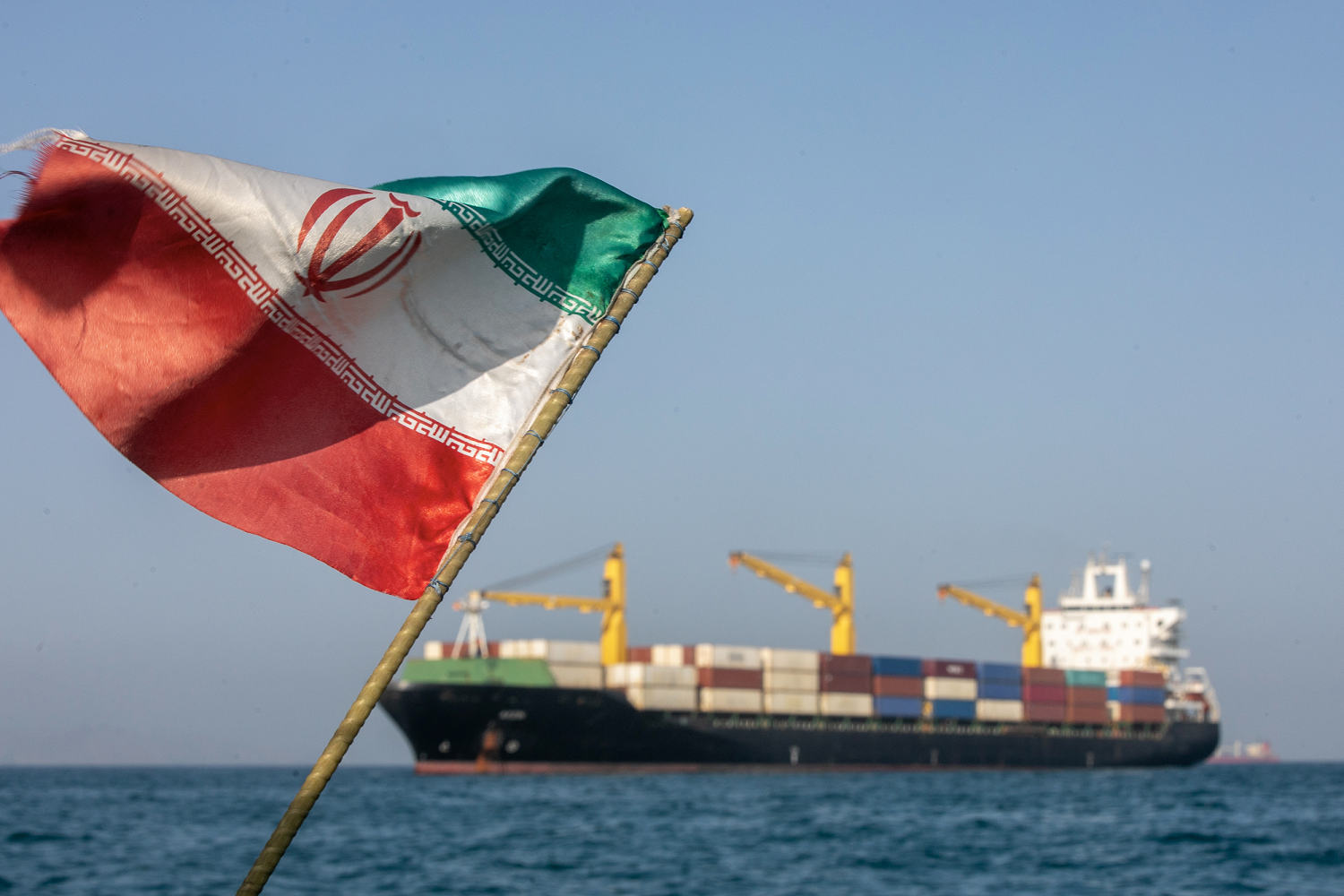
Commercial shipping across the Strait of Hormuz operates not on the absolute assurance of security, but on the mathematical calculation of risk premiums against freight rates. The drone strike on the Singapore-flagged container vessel Ever Lovely demonstrates that tactical kinetic interventions are no longer designed merely to halt maritime traffic. Instead, they function as market signals and coercive mechanisms to institutionalize regulatory control over global energy arteries. This transition from total interdiction to selective enforcement alters the economic cost function of maritime transit through strategic chokepoints.
The Asymmetric Cost Function of Chokepoint Interdiction
A primary structural misconception is that maritime security is binary—either a waterway is open or it is closed. Modern state-backed asymmetric strategies treat chokepoint vulnerability as a variable scale. The attack on the Ever Lovely illustrates a deliberate equilibrium calculated by regional actors to balance economic coercion against the threshold of international military intervention.
The economic impact of this operational model relies on three primary variables:
- The War Risk Insurance Premium Escalation: Insurance underwriters calculate hull and machinery premiums based on the frequency and predictability of kinetic events. A single targeted strike immediately disrupts the underwriting equilibrium, causing premiums to spike for vessels lack explicit state-backed safety guarantees.
- The Demurrage and Detention Factor: Following the disruption, the International Maritime Organization paused its evacuation framework, leaving thousands of seafarers and hundreds of vessels idle. The daily cash-burn rate of a Very Large Crude Carrier (VLCC) or large container vessel stranded in the Persian Gulf creates an immediate capital drain for operators, shifting the financial burden onto the cargo owners.
- The Corridor Diversion Penalty: When operators choose to halt transit or execute U-turns—as observed with multiple supertankers following radio warnings from the Islamic Revolutionary Guard Corps—the alternative is prolonged anchorage or expensive logistical restructuring. This creates an artificial supply contraction in available tonnage, driving up global spot freight rates.
Institutionalized Rent-Seeking and Regulatory Capture
The emergence of the newly formed Persian Gulf Seaways Management Organization signals a shift from tactical naval harassment to bureaucratic institutionalization. By establishing an administrative apparatus to dictate transit corridors, Tehran attempts to formalize legal and financial precedents within international waters.
This strategy uses administrative friction as a weapon through specific mechanisms.
First, the enforcement of a mandatory pre-authorization protocol directly challenges the right of transit passage codified under the United Nations Convention on the Law of the Sea (UNCLOS). By requiring vessels to submit formal transit requests, a state transforms a universally recognized international transit corridor into a de facto internal waterway subject to sovereign approval.
Second, the creation of a bifurcated safety regime builds an artificial risk environment. The official declaration that transit outside designated corridors removes any guarantee of safe passage establishes a framework where safety is treated as a premium service rather than a baseline legal requirement. This framework lays the groundwork for future rent-seeking through maritime service fees, administrative tolls, or mandatory state-provided escort charges.
Third, the division between Omani-managed southern corridors and Iranian-dominated northern corridors splits international consensus. This fragmentation forces commercial operators to choose between the political protections of a Western-coordinated path and the immediate physical compliance demanded by proximity to coastal missile batteries and fast-attack craft.
The Bifurcated Corridor Model and Operational Risk Distribution
The operational reality of the Strait involves navigating a geographically constrained corridor where the legal status of waters intersects with the physical reality of anti-ship systems. The international shipping lanes pass through the territorial waters of Iran and Oman, meaning true freedom of navigation relies entirely on strict adherence to international transit passage rules.
[Persian Gulf] ---> [Strait of Hormuz Corridor] ---> [Gulf of Oman]
                         |
        +----------------+----------------+
        |                                 |
[Northern Corridor: Iran]       [Southern Corridor: Oman/US]
 - Direct IRGC oversight         - Higher Western naval presence
 - Mandatory pre-clearance       - Vulnerable to asymmetric drone
   and compliance checks           and electronic warfare strikes
The division of traffic flow across these paths creates distinct operational trade-offs for fleet managers:
The Northern Route
Vessels opting for this lane choose administrative compliance over physical risk. By submitting to local authority clearance protocols and utilizing lanes close to the Iranian coast, operators lower the immediate probability of kinetic strikes. However, this choice legitimizes the regulatory claims of the coastal state, exposing the vessel to sudden administrative detentions, arbitrary inspections, and long-term legal exposure regarding international sanctions compliance.
The Southern Route
This lane hugs the Omani coastline and operates under Western naval coordination. While legally compliant with standard international frameworks, it carries elevated physical risk. As demonstrated by the strike on the Ever Lovely within the Omani corridor, proximity to international naval protection does not guarantee immunity from low-signature drone systems or asymmetric projectiles. It shifts the primary danger from legal seizure to structural hull damage.
Strategic Calculus for Global Maritime Operators
The post-strike environment requires commercial operators to abandon short-term tactical adjustments in favor of long-term risk mitigation frameworks. Relying on temporary diplomatic agreements or interim peace deals introduces unacceptable volatility into supply chain planning.
The immediate optimization strategy requires cargo routing models to treat chokepoint transit fees and elevated war-risk premiums as permanent structural inputs rather than temporary variables. Fleet deployment must factor in the reality that average daily tanker crossings will fluctuate violently based on real-time maritime statements rather than international treaties. For global logistics firms, diversifying transit options and reassessing spot-market exposure in the Persian Gulf is the only viable path to protecting capital stability.