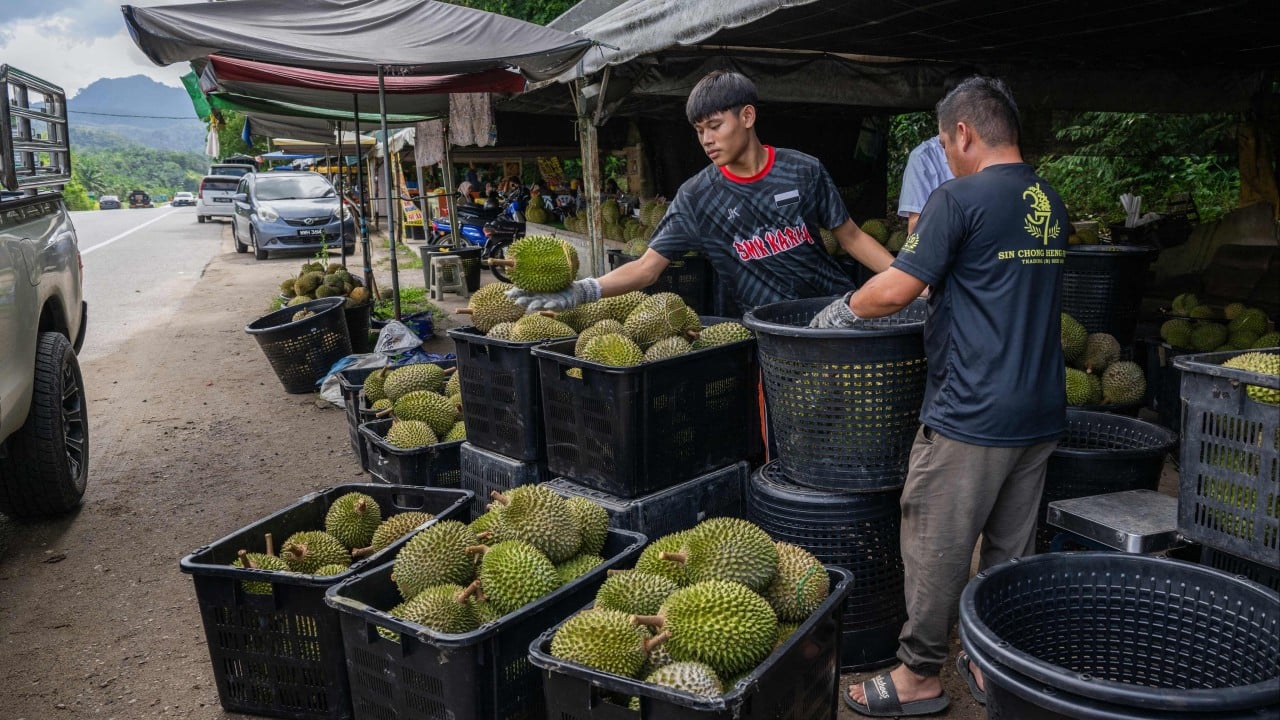
The current "durian tsunami" reshaping the Malaysian agricultural sector provides a stark demonstration of how conventional pricing economics fail when applied to high-tier black-market illicit trade. A macro-level production surge across key cultivating states—primarily Perak, Penang, and Johor—has driven farm-gate valuations of premium cultivars like Musang King and Black Thorn (Or Chi) down significantly, in some cases depressing retail prices from peak historical metrics of RM90 per kilogram down to ranges spanning RM5 to RM50 per kilogram. Yet, this sharp contraction in retail valuation has failed to generate a proportional reduction in orchard trespass and distribution-point theft.
This anomaly challenges the fundamental assumption that illicit acquisition acts as a direct function of spot-market consumer pricing. In high-value agriculture, criminal asset appropriation operates under a distinct cost-benefit framework. Evaluating this phenomenon requires an examination of the systemic structural blind spots, security vulnerabilities, and arbitrage dynamics that insulate agrarian theft from shifting commodity prices.
The Economic Arbitrage of Zero Acquisition Costs
The persistent targeting of premium agricultural yields during a market glut can be mathematically explained by evaluating the criminal margin structure. For a legitimate producer, a 50% to 90% reduction in market price compresses margins toward or below the cost of production, which includes labor, specialized fertilizers, land management, and logistics. For an illicit actor, the cost function of acquisition remains effectively zero.
The operational reality of this asymmetric margin structure is dictated by three primary variables:
- The Insensitivity of Net Margin to Spot Collapses: Because the thief does not incur capital expenditures or operational overhead during the cultivation cycle, any positive liquidation value above zero constitutes a pure net return on time and physical effort. A asset basket valued at RM500 during a peak market remains highly lucrative even when compressed to a liquidation value of RM100.
- The Velocity of Liquidation: Unlike heavily regulated industrial assets or traceable electronics, agricultural produce lacks serial tracking, unique identification markers, or digital registries. Once a premium fruit is removed from an orchard or stall, it integrates into the informal, cash-based secondary market within hours, converting instantly into liquid capital.
- Asset Density Over Weight Ratios: Premium cultivars offer high caloric and monetary density per unit of physical volume compared to standard agricultural products. A multi-person team carrying sacks containing 10 kilograms to 50 kilograms of freshly fallen fruit can easily extract several hundred ringgit of value within a single high-velocity breach.
This reality explains why retail price compression does not act as a deterrent. The absolute return on investment for the criminal actor scales not with the retail spot price, but with the efficiency of the physical extraction process relative to the local cost of living and alternative informal wage options.
The Structural Vulnerabilities of the Harvest Cycle
The biological nature of premium durian cultivation creates specific operational vulnerabilities that malicious actors exploit with precision. Unlike other fruit varieties that are harvested directly from the branch before maturity, premium Malaysian cultivars are left to ripen naturally and drop from the tree. This structural reality establishes a perpetual, distributed asset-deposition model across expansive geographic areas.
The breakdown of orchard security protocols typically follows a clear operational sequence:
[Natural Fruit Drop (01:00 - 05:00)] ---> [Security Gap: Uncollected Assets on Floor] ---> [Illicit Extraction via Jungle Perimeters]
This sequence highlights a fundamental operational bottleneck: the temporal gap between natural drop and scheduled collection. Standard agricultural workflows dictate that workers begin systematic sweeps using headlamps between 05:00 and 06:00. This leaves a high-vulnerability window between midnight and dawn, where premium assets sit exposed across acres of land.
Criminal actors exploit this window by operating in small, agile teams of two or three. They enter orchards from unmonitored back perimeters bordering dense jungle terrain, utilizing the darkness to locate and bag fallen fruit before standard labor shifts commence. The use of headlamps by legitimate workers further assists thieves, serving as a visual indicator of where security or collection teams are currently positioned, allowing intruders to navigate away from active patrols.
Retail Distribution Nodes as High-Velocity Targets
The vulnerability of the supply chain is not confined to the cultivation phase; it extends directly to roadside distribution stalls and temporary retail points. These nodes represent high concentrations of pre-sorted, high-grade inventory positioned close to primary transportation infrastructure, making them ideal targets for high-impact theft and armed robbery.
Recent data indicates a division in criminal methodology, splitting into two distinct operational profiles:
Nighttime Point-of-Sale Breaches
These operations target physical structures during non-business hours. Small syndicates utilize vehicles to transport multiple baskets of pre-sorted inventory rapidly. Surveillance data reveals that these operations prioritize speed and bulk handling. Intruders bypass basic locking mechanisms, load high-value baskets into waiting transport vehicles, and depart within a tight window, occasionally leaving behind low-grade or spoiled inventory if interrupted.
Armed Exploitation and Asset Robbery
A more severe escalatory trend involves daytime or evening confrontational robberies. Small groups armed with tactical weapons, such as machetes, target isolated distribution points or vulnerable orchard outposts managed by minimal personnel or teenage caretakers. These incidents bypass stealth entirely, leveraging intimidation to secure bulk volumes of premium grades rapidly. The immediate availability of nearby transportation networks allows these actors to disappear into regional transit systems before local law enforcement can coordinate a response.
The Failure of Asymmetric Security Measures
Faced with ongoing asset depletion, producers and distributors frequently implement tactical security measures that fail to address the core vulnerabilities of agricultural operations. The implementation of technological and physical defenses often introduces new operational bottlenecks without providing comprehensive protection.
- Drone Surveillance Limitations: While orchard owners have integrated aerial drone platforms to monitor fence lines and detect heat signatures, the practical utility of these tools is limited by dense canopy cover and rapid exit routes. In highly fractured jungle terrain, intruders can retreat into thick growth within seconds of detection, rendering aerial tracking ineffective without ground intercept capabilities.
- Static CCTV Subversion: Fixed camera installations at retail stalls or orchard entry points offer retrospective forensic data rather than active prevention. Criminal actors counter these systems by using facial coverings and working during optimal blind spots, minimizing the utility of recorded footage for identification or legal prosecution.
- Guard Dog Saturation: Increasing the density of guard dogs around stalls and perimeter fences provides a localized acoustic warning system, but its effectiveness depends heavily on human response times. If the guard assets are isolated or if response teams are delayed, professional intruders often navigate past or neutralize the threat using physical barriers or deterrents.
The fundamental limitation of these security strategies is their reactive nature. They increase the complexity of the theft without changing the underlying economic reality: as long as the asset can be liquidated immediately for cash in an unmonitored secondary market, the criminal actor will accept higher levels of operational risk.
Strategic Playbook for Long-Term Asset Protection
To mitigate asset loss during sustained periods of high supply and low market pricing, agricultural enterprises must shift from tactical, reactive defenses to a structural security framework focused on asset devaluation and access control.
First, producers must eliminate the temporal vulnerability window by altering collection intervals. Implementing automated, low-light mechanical collection systems or deploying rolling night shifts to clear fallen fruit between 23:00 and 03:00 removes the inventory from the orchard floor before illicit teams can enter the perimeter.
Second, the industry must move toward regional supply chain verification. By establishing a cooperative chain-of-custody protocol among legitimate buyers and regional distributors, the industry can suppress the unverified secondary market. If major wholesalers require geolocated digital harvest receipts for every batch purchased, the financial liquidation velocity for stolen fruit drops significantly, destroying the economic viability of illicit harvesting.
Finally, physical orchard boundaries bordering wilderness regions must be reinforced with multi-layered defensive infrastructure. Replacing simple wire fences with high-tensile, vibration-sensitive fencing tied to automated localized lighting arrays transforms passive boundaries into active denial zones. This forces intruders to face a high probability of immediate physical interception, shifting the risk-reward equation back in favor of legitimate commercial operations.