The November 2026 United States midterm elections produced the largest single-cycle legislative swing in half a century, stripping the Republican Party of its congressional trifecta and shattering Donald Trump’s decade-long immunity to electoral gravity. While standard live-blog coverage frames the outcome as an unexpected "blue wave" or a localized rejection of specific candidates, structural data reveals a systemic failure across three interlocking mechanisms: macroeconomic pass-through costs, primary-to-general candidate selection inefficiencies, and the collapse of executive endorsement equity.
In the House of Representatives, Democrats flipped 50 seats to secure a commanding 258-seat majority against the Republicans' 173, with four contests remaining uncalled weeks after election day. In the Senate, where the structural map initially favored the GOP, Democrats achieved a net gain of nine seats to establish a 56–44 majority, capturing historically entrenched conservative strongholds including Texas, Alaska, South Carolina, and Mississippi. Outgoing Florida Governor Ron DeSantis characterized the national environment as the political equivalent of a meteor strike. Understanding why this collapse occurred—and how it alters governance through 2028—requires isolating the economic, institutional, and behavioral variables that drove independent and low-propensity voters away from the incumbent party. Discover more on a connected subject: this related article.
The Macroeconomic Pass-Through Mechanism
Electoral models consistently demonstrate that incumbent parties are penalized when household purchasing power contracts, regardless of partisan messaging. Entering November 2026, the Republican coalition relied on cultural and border enforcement themes that proved effective in 2024. However, exit polling and post-election surveys indicate that voters subordinated culture-war issues to immediate balance-sheet pressures, specifically linking inflation and energy prices directly to White House policy.
This voter attribution operated through three distinct economic transmission channels: More analysis by Reuters delves into similar perspectives on this issue.
- Tariff-Induced Supply Friction: Aggressive, multi-front tariff implementations throughout 2025 and 2026 introduced sustained trade uncertainty and direct input-cost inflation across consumer goods and manufacturing sectors. Rather than absorbing these costs, domestic importers passed them to consumers, neutralizing nominal wage gains.
- Geopolitical Energy Shocks: Military escalation involving Iran disrupted global energy markets, driving domestic gasoline and diesel prices upward in the months immediately preceding the vote. Unlike standard cyclical inflation, fuel price spikes act as a daily, visible tax on commuting and logistics, depressing consumer sentiment across suburban and rural districts alike.
- Credit and Housing Lock-In: Persistent inflation forced interest rates to remain elevated, pushing average mortgage rates to three-year highs. This created an affordability bottleneck for younger and first-time homebuyers, eroding Republican gains made among working-class and non-college-educated demographics two years prior.
According to Associated Press voter surveys, roughly six in ten respondents attributed higher-than-usual consumer prices directly to Trump’s policies rather than external macroeconomic forces. When an administration centralizes economic authority through executive tariffs and unilateral foreign intervention, it eliminates its ability to deflect blame onto the Federal Reserve or global markets. The electorate treated the 2026 midterms as a direct referendum on executive economic management.
The Endorsement Inversion and Selection Bottleneck
A primary driver of the GOP's underperformance in winnable races was the degradation of Trump’s endorsement as a general-election asset. In the 2024 cycle, a presidential endorsement functioned as both a primary kingmaker and a general-election turnout engine, yielding an 86 percent win rate among Trump-backed House candidates and a 65 percent success rate in Senate contests. By November 2026, that conversion rate inverted.
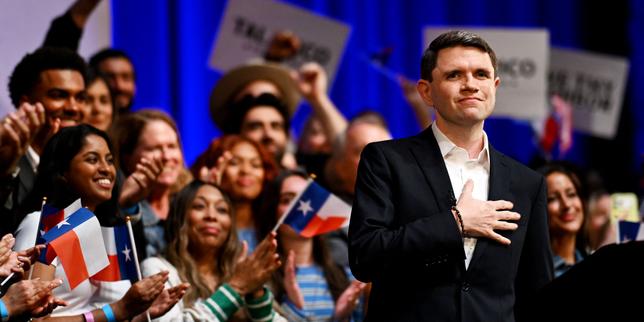
- Senate Attrition: Exactly 50 percent of Trump-endorsed Senate candidates lost their general elections. In Texas, the nomination of polarizing hardliner Ken Paxton over a more conventional general-election contender allowed Democrat James Talarico to capture the state's first Democratic Senate seat since 1988.
- House Toss-Up Collapse: Every single Trump-endorsed House candidate competing in a district rated as a "toss-up" by the Cook Political Report was defeated.
- Lean-Republican Erosion: Even in the 18 House districts rated "lean Republican"—seats designed through partisan gerrymandering to insulate incumbents—Trump-endorsed candidates lost nine races and won only eight, with one trailing in late counts.
This represents a classic principal-agent problem in political party management. Trump’s primary endorsements optimized for personal loyalty and ideological purity, traits that correlate negatively with median-voter appeal in swing districts. By intervening in contentious primaries to install loyalists, the White House systematically filtered out moderate, regionally tailored Republicans who could have survived a hostile national environment.
Furthermore, the endorsement itself became a mobilization tool for the opposition. Among voters who reported casting their ballots with the president in mind, roughly twice as many voted to express opposition to him as voted to register support. Trump’s brand ceased to be an asymmetric turnout advantage for the GOP and instead functioned as a negative-partisanship catalyst that unified Democratic and independent turnout.
Institutional Legitimacy and the Corruption Penalty
Conventional political wisdom holds that ethics controversies rarely move
Anatomy of the 2026 Republican Midterm Collapse and Its Structural Aftermath
news
The 2026 United States midterm elections produced a definitive legislative realignment, stripping the Republican Party of its governing majority and imposing immediate operational constraints on the executive branch. Rather than an isolated polling anomaly or a simple messaging failure, the electoral outcome reflects a systemic breakdown in coalition maintenance, candidate quality control, and turnout engineering during a non-presidential cycle. To understand the post-election environment, analysts must replace partisan post-mortems with an examination of the underlying structural mechanics: the thermostatic backlash model of midterm voting, the financial and organizational asymmetries of candidate selection, and the immediate legislative bottlenecks facing the White House for the remainder of the presidential term.
The Structural Mechanics of a Midterm Realignment
Electoral defeats of this magnitude rarely stem from a single policy error; they are the product of compounding structural liabilities. Political science offers a clear baseline for midterm performance through the thermostatic public opinion model. When a single party holds executive power, the electorate consistently adjusts its preferences in the opposite direction to moderate perceived ideological overreach. In 2026, this baseline thermostatic effect was amplified by three specific failure points within the Republican electoral apparatus.
The first failure point was coalition fragmentation. Winning a presidential election requires assembling a broad, often contradictory alliance of core ideological partisans, economically populist swing voters, and low-propensity irregular participants. Retaining power in a midterm requires keeping those distinct blocs synchronized without the unifying gravity of a presidential ticket at the top of the ballot. Data from the 2026 cycle demonstrates that while core partisan turnout remained stable, the peripheral coalition—specifically suburban moderates and economically sensitive independents—defected at rates sufficient to flip competitive districts. When an incumbent administration governs primarily to satisfy its most vocal base, the resulting policy output alienates the marginal voter required to hold median districts.
The second limitation involved primary-induced candidate distortion. The structural design of partisan primaries rewards ideological purity and media visibility over general election viability. Across multiple battleground states and competitive House districts in 2026, primary electorates selected nominees whose platforms were calibrated for closed partisan ecosystems rather than median district demographics. Once these candidates entered the general election phase, they faced an insurmountable positioning trap: pivoting toward the center alienated their primary base and depressed volunteer enthusiasm, while maintaining their primary posture guaranteed rejection by independent voters. General election campaigns cannot easily re-engineer a candidate's established ideological profile within a compressed ten-week autumn sprint.
The third breakdown occurred in field operations and turnout infrastructure. Modern congressional campaigns rely on micro-targeted voter contact, early-vote banking, and data-driven resource allocation. A strategic reliance on high-propensity rhetoric rather than granular precinct-level logistics created an operational deficit. When a party's messaging discourages early and mail-in voting mechanisms while simultaneously failing to build a superior same-day turnout machine, it surrenders a mathematical advantage before election day begins. Opposing campaigns that systematically bank votes over a forty-five-day window can concentrate their remaining financial capital on a shrinking pool of undecided voters during the final week, creating an efficiency gap that late-stage television advertising cannot close.
Resource Allocation and the Financial Asymmetry
Campaign finance is not merely a measure of popularity; it is an indicator of institutional confidence and operational capacity. In the 2026 cycle, the distribution of capital revealed severe inefficiencies in how Republican committees and aligned super PACs deployed resources.
- Late-Stage Defensive Triage: Because primary contests produced vulnerable nominees in historically safe or leaning districts, national committees were forced to divert millions of dollars into defensive stabilization. Capital spent defending incumbent-held territory is capital unavailable for offensive expansion. By October, defensive triage consumed the majority of available liquidity, leaving viable challengers in Democratic-held districts starved of late-cycle media buys.
- The Small-Dollar Versus Institutional Divide: While grassroots small-dollar fundraising generated impressive top-line revenue for high-profile personalities, that capital rarely transferred efficiently to down-ballot institutional committees. High-profile figures retained funds for their own political action committees, creating a liquidity mismatch where celebrity politicians held massive cash reserves while state parties and congressional campaign committees struggled to fund basic voter-registration and data-analytics infrastructure.
- Media Saturation and Diminishing Returns: Heavy spending on traditional broadcast television in saturated media markets yielded diminishing marginal returns. As media consumption continues to fragment across streaming platforms, podcasts, and niche digital channels, campaigns that relied on legacy media-buying formulas paid premium rates to reach shrinking audiences, while failing to establish durable narratives in decentralized information ecosystems.
Legislative Paralysis and Executive Constraints
The immediate consequence of the 2026 electoral outcome is the transition from unified party governance to divided government. This shift fundamentally alters the operational environment of Washington, moving the executive branch from a legislative offense to an administrative defense.
With the opposition party controlling the legislative agenda, the White House loses its ability to pass major statutory reforms, tax restructuring, or partisan budget reconciliations. Every piece of must-pass legislation—including annual appropriations bills, debt ceiling adjustments, and defense authorizations—becomes a bilateral negotiation point. The opposition majority now holds agenda-setting power, allowing committee chairs to determine which bills reach the floor and which executive priorities die in committee.
This legislative blockade forces the executive branch to rely heavily on unilateral administrative actions, executive orders, and regulatory reinterpretation through federal agencies. However, governance by executive action carries severe structural vulnerabilities:
- Judicial Vulnerability: Administrative rules promulgated without explicit statutory backing face immediate injunctions in federal courts, particularly under stricter judicial standards governing agency deference.
- Durability Deficit: Policies enacted via executive order lack permanence; they can be dismantled on the first day of a subsequent administration without congressional approval.
- Appropriations Chokepoints: Even when an agency possesses the legal authority to implement a policy, an opposition-controlled House can use the appropriations process to defund specific enforcement mechanisms, effectively neutralizing the executive directive through fiscal starvation.
Furthermore, the shift in congressional control triggers an immediate surge in oversight and investigative risk. Committee subpoena power transfers to the opposition, enabling sustained inquiries into executive branch operations, cabinet appointments, and administrative decision-making. For the White House, managing congressional investigations consumes immense legal, communications, and political bandwidth, pulling senior staff away from policy execution and forcing the administration into a continuous reactive posture.
Factional Friction and the Succession Vacuum
A major midterm defeat acts as an accelerant for intra-party conflict. When a governing coalition loses power, the unifying discipline imposed by proximity to legislative victory evaporates, exposing underlying ideological and strategic fractures.
Within the Republican conference, the post-election environment immediately splits the party into two competing diagnostic camps:
- The Institutional Pragmatists: This faction argues that the 2026 defeat proves the electorate rejects stylistic volatility and ideological maximalism. Their prescription involves moderating rhetoric, prioritizing candidate electability in primary contests, and focusing legislative messaging on kitchen-table economic metrics such as inflation, housing affordability, and healthcare costs.
- The Populist Purists: This bloc contends that the loss resulted from insufficient ideological commitment and a failure to fully mobilize the core base. They attribute the defeat to institutional betrayal by party leadership and advocate for purging moderate voices, intensifying cultural grievances, and refusing legislative compromise with the opposition.
This internal friction is compounded by the lame-duck dynamic inherent to a second-term presidency. Because the incumbent president cannot run for re-election, political gravity begins shifting away from the White House toward prospective 2028 presidential contenders. Senators, governors, and cabinet officials harboring national ambitions must now navigate a delicate strategic balance: distancing themselves from the unpopular elements of the 2026 midterm collapse without triggering a destructive confrontation with the incumbent president and his loyalist base.
This creates a leadership vacuum. Congressional leaders face razor-thin margins or fractious minority caucuses where small groups of hardliners can paralyze floor strategy. Without a consensus leader capable of enforcing caucus discipline, the party risks spending the next two years engaged in public internecine warfare—staging leadership challenges, leaking internal strategy memos, and undermining its own messaging ahead of the next presidential cycle.
Limitations of Post-Election Restructuring
Political parties routinely respond to midterm losses by commissioning autopsy reports, overhauling national committee leadership, and promising data-driven modernization. However, historical analysis demonstrates strict limits to what structural reforms can achieve before the next general election cycle.
First, national party committees cannot easily override the will of primary voters. Even if party leadership recruits moderate, well-funded candidates for future cycles, closed primary electorates remain dominated by the most ideologically committed voters. Unless primary participation expands or nomination rules are altered at the state level—a slow and politically contentious process—the candidate-quality bottleneck will persist.
Second, demographic and geographic sorting continues to harden the electoral map. Urban centers and inner-ring suburbs have trended consistently away from the Republican coalition, while rural areas have reached near-maximum turnout saturation. A political strategy cannot rely indefinitely on squeezing marginal percentage gains out of declining rural populations if it remains non-competitive in high-growth metropolitan regions. Rebuilding competitiveness in suburban counties requires sustained policy shifts that often alienate the rural base, presenting a zero-sum trade-off with no easy messaging fix.
Third, external macroeconomic variables remain largely outside the control of party strategists. Voter sentiment regarding interest rates, employment stability, and consumer purchasing power acts as an independent variable that routinely overrides sophisticated campaign tactics. If macroeconomic conditions deteriorate during the second half of the presidential term, the incumbent party will bear the electoral cost regardless of how efficiently it restructures its field operations.
Strategic Imperatives for the Post-2026 Cycle
To prevent the 2026 midterm defeat from hardening into a multi-cycle structural disadvantage, the Republican leadership must execute a disciplined recalibration across three operational fronts over the next twenty-four months.
1. Re-engineer Candidate Recruitment and Primary Intervention
National committees and aligned super PACs must abandon their policy of primary neutrality in competitive districts. Capital and institutional endorsements must be deployed early in the primary calendar to clear the field for candidates with demonstrated appeal among independent and suburban voters. Waiting until after the primary to fund general election campaigns is a losing strategy when the primary process produces non-viable nominees.
2. Pivot Legislative Strategy to High-Contrast Fiscal Issues
Operating from a position of divided government, congressional Republicans must resist the temptation to engage in protracted government shutdowns, which historically damage the party perceived as obstructing basic governance. Instead, leadership should force repeated, targeted floor votes on specific economic issues—such as tax expiration cliffs, energy permitting reform, and regulatory relief—forcing opposition members in swing districts to cast recorded votes that can be weaponized in the 2028 cycle.
3. Build Permanent, Cycle-Agnostic Voter Infrastructure
Campaign spending must shift from late-cycle television advertising to year-round field operations in key battleground states. This requires establishing permanent regional offices, integrating voter registration drives with local community networks, and fully embracing early-vote and mail-in ballot harvesting mechanisms wherever permitted by state law. Parity in ballot-collection logistics is a baseline requirement for competitiveness; refusing to utilize legal voting mechanisms out of ideological principle is an act of unilateral electoral disarmament that the party can no longer afford.