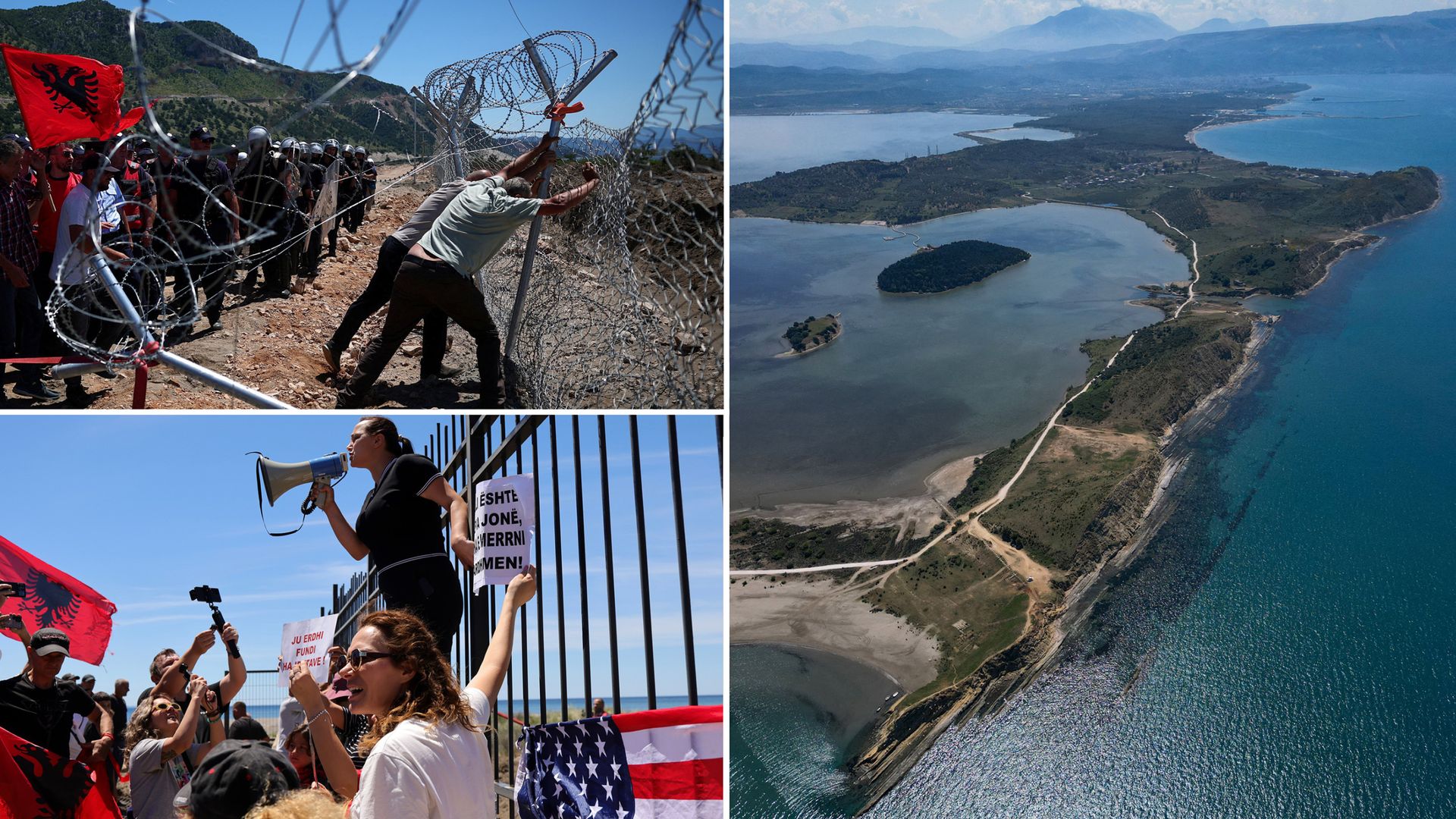
The international media is having a collective meltdown over Jared Kushner’s planned luxury real estate developments in Albania.
Activists are weeping over concrete. Journalists are penning elegies for pristine coastlines. The prevailing narrative is beautifully simple, utterly predictable, and completely wrong: greedy foreign capitalists are swooping in to destroy Europe's last untouched paradise, backed by a complicit government.
It is a comforting, cinematic story. It is also an economic fantasy.
Let’s dismantle the lazy consensus. The outrage surrounding the projects in Sazan Island and the Zvërnec peninsula relies on a fundamental misunderstanding of conservation economics, Balkan geopolitics, and how emerging markets actually climb the value chain. Western commentators sitting in London and Washington are demanding that Albania remain a living museum of poverty just so they can have a cheap, rugged backdrop for their next backpacking trip.
The Myth of the Untouched Wilderness
The core of the argument against these luxury resorts is that they threaten ecologically sensitive areas. Critics point to the Vjosa-Narta lagoon near Zvërnec, a critical habitat for flamingos and migratory birds, claiming a high-end resort will spell immediate doom for the ecosystem.
This argument assumes that doing nothing equals preservation. It doesn't.
Unmanaged, underfunded ecosystems in developing nations do not stay pristine. They degrade. Without significant capital, Mediterranean coastal areas face unchecked illegal dumping, poaching, uncontrolled local waste runoff, and a total lack of environmental enforcement.
The Reality Check: Nature is expensive to protect.
I have watched dozens of emerging destinations try the "pure conservation" route without capital. It fails every time. Local municipalities, starved of tax revenue, cannot afford park rangers, advanced waste treatment plants, or marine protection vessels.
By bringing in top-tier global hospitality brands, you inject massive private capital that is contractually obligated to maintain environmental standards. Why? Because a luxury resort’s entire value proposition relies on the beauty of its surroundings. Aman Resorts or similar ultra-luxury operators do not build $2,000-a-night villas next to a toxic mud pit. They spend millions on baseline environmental restoration because the view is the product.
Why Mass Tourism is the Real Ecological Killer
The critics are screaming about luxury villas while ignoring the real monster at the gates: low-cost, high-volume mass tourism.
Albania is currently experiencing a massive tourism boom. In recent years, arrivals have skyrocketed, hitting over 10 million visitors annually. The current model relies heavily on budget travelers, backpackers, and short-term rentals.
If you want to see an environmental apocalypse, do not look at a hyper-exclusive luxury eco-resort that hosts 300 wealthy guests. Look at a beach overrun by 30,000 budget tourists demanding cheap beer, plastic water bottles, and endless concrete apartments built by localized, unregulated developers.
Let’s break down the mechanics of tourism footprints:
- The Low-Yield Model: High volume, low spend. Requires massive infrastructure (roads, mega-airports, enormous sewage capacity) to handle millions of people who spend $40 a day. The economic return per capita is miserable, but the ecological wear and tear is catastrophic.
- The High-Yield Model: Low volume, high spend. A fraction of the human footprint, but equal or greater economic injection. Ten wealthy tourists staying at a luxury eco-lodge contribute more to the local tax base and employment roll than five hundred cruise shippers or backpackers, with a fraction of the carbon footprint and sewage output.
By opposing luxury development on Sazan Island—a former military base currently littered with decaying bunkers and left-over army debris—activists are inadvertently voting for the democratization of ecological destruction. They want the entire coast to look like the unregulated, chaotic concrete jungles of Sarandë or Ksamil.
The Sovereign Right to Capital Accumulation
There is a distinct whiff of eco-colonialism in the Western condemnation of Albania’s development strategy. Wealthy nations that built their fortunes on industrialization and environmental exploitation are now telling a post-communist Balkan state that it shouldn't commercialize its assets.
Albania spent decades under one of the most brutal, isolationist communist dictatorships on earth. It started the 1990s with its economy in absolute ruins. For the past thirty years, the country has fought tooth and nail to modernize, stabilize its institutions, and integrate with Europe.
To tell Albanians they cannot develop their coastline because foreign birdwatchers want total silence is insulting.
Prime Minister Edi Rama isn't selling out the country; he is executing a textbook sovereign wealth strategy. When you lack deep domestic capital markets, you must leverage your unique geopolitical and geographical assets to attract Foreign Direct Investment (FDI).
[Attract High-Profile FDI] ──> [De-risk the Jurisdiction] ──> [Upgrade National Infrastructure] ──> [Broaden Institutional Tax Base]
When a mega-project linked to high-profile international investors moves forward, it serves as a massive billboard to the global financial community. It signals that Albania is safe for institutional capital. It lowers the country's risk premium, making it cheaper for the government to borrow money for hospitals, schools, and national infrastructure.
The Political Reality vs. The Headlines
Yes, the project involves Jared Kushner’s Affinity Partners. Yes, that makes it a lightning rod for hyper-partisan political coverage in the United States.
But sophisticated market participants do not care about American domestic political theater. They care about deal flow, execution, and local alignment.
The criticism that these deals bypass traditional open-tender processes ignores how sovereign-backed, mega-scale luxury hospitality actually works. You do not put a highly bespoke, ultra-luxury master plan for a sensitive military island out to a generic public auction where the highest bidding local oligarch wins and builds a tacky 20-story casino. You negotiate directly with global funds that have the network to bring in world-class architects, sustainable engineers, and elite hospitality brands.
Are there risks? Of course.
The downside of this contrarian approach is the ever-present threat of institutional capture. If the Albanian government fails to enforce strict zoning laws, or if the tax revenues generated from these luxury enclaves are mismanaged by local authorities rather than reinvested into the public sector, the strategy stumbles. Transparency in the final concessions is vital.
But the solution to potential mismanagement isn't a total ban on development. It is rigorous, institutional oversight of that development.
Stop Asking if the Coast Should Change
The premise of the entire debate is flawed. The public is asking: "Should we keep Albania's coast exactly as it is, or should we let luxury developers change it?"
That is a false choice. The coast is changing regardless.
The real question is: "Will the coast be developed by localized, low-margin, unregulated concrete pourers catering to unsustainable mass tourism, or will it be shaped by world-class architectural firms backed by institutional capital that treats environmental integration as a core asset value?"
If you choose the former, you get the slow, painful degradation of the entire coastline under the weight of unmanaged crowds. If you choose the latter, you sacrifice a tiny, specific footprint of land to secure the billions of dollars required to protect the rest of the nation's natural heritage.
The outrage isn't about protecting nature. It’s about a wealthy elite wanting the rest of the world to stay poor so their travel photos stay authentic. Albania is choosing growth. It’s about time the rest of the world grew up too.