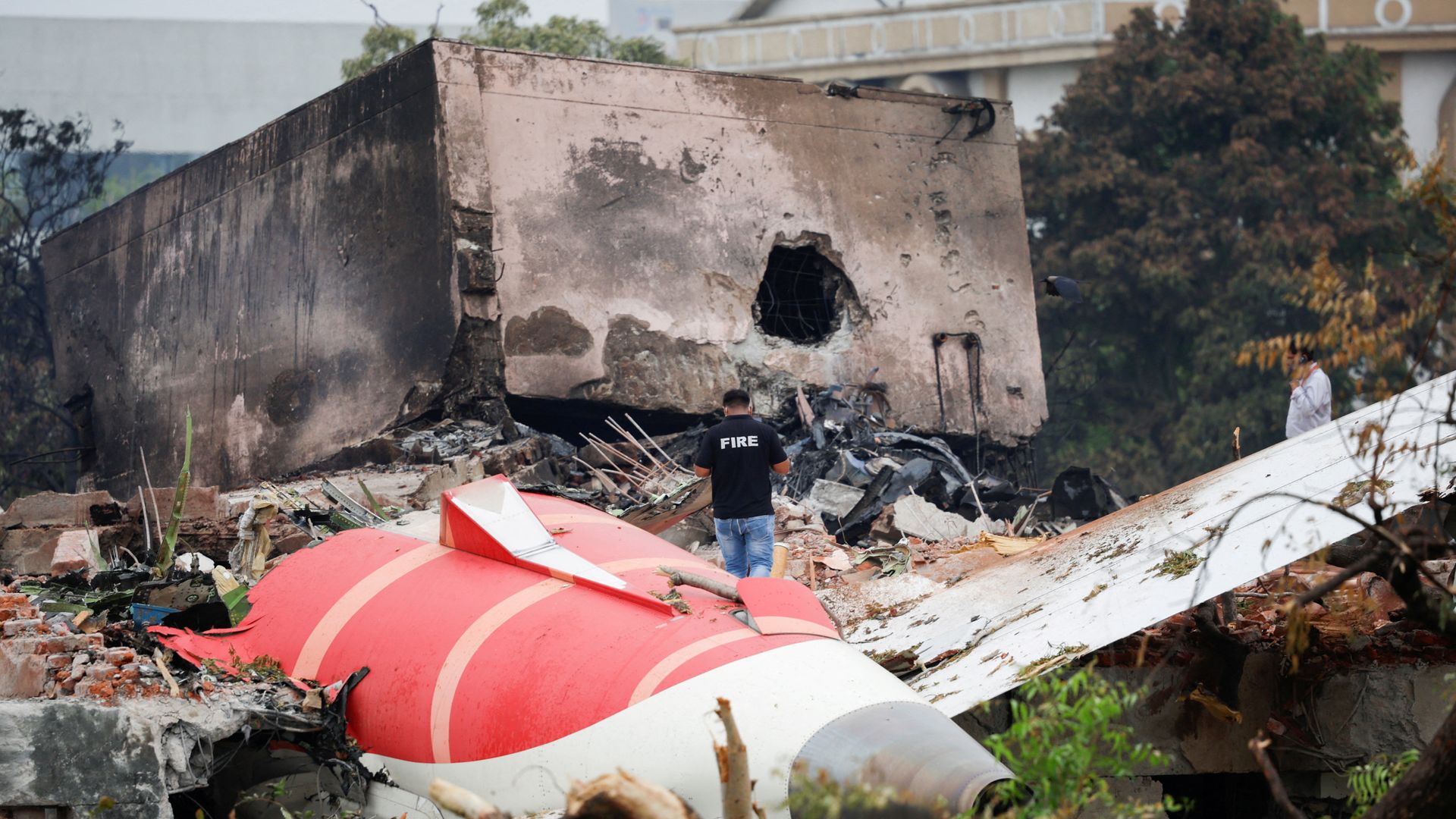
Aviation investigators love a good engine teardown. It is clean. It is measurable. It happens in a sterile laboratory under bright lights, miles away from the messy reality of human panic, corporate cost-cutting, and systemic regulatory failure.
Right now, the media is dutifully repeating the company line: the final report on the Air India crash is facing delays because the metallurgical analysis of the engines remains unfinished. We are told to wait. We are told that complex engineering takes time. We are told that until we understand the exact microscopic stress fractures on a turbine blade, we cannot possibly understand why a hull ended up in pieces.
This is a convenient lie.
The aviation industry has developed a toxic dependency on hardware forensics to stall public accountability. By narrowing the focus of a crash investigation down to the molecular structure of a titanium component, investigators throw a blanket of technical complexity over structural organizational rot.
The Obsession with the Smoking Bolt
I have spent years analyzing operational risk and watching regulatory bodies dance around the uncomfortable truths of major accidents. When a plane goes down, the immediate corporate instinct is to pray for a mechanical failure. A mechanical failure means a vendor liability. It means a specific part number can be recalled. It means insurance companies can litigate behind closed doors.
What a mechanical failure does not do is force an airline to look at its scheduling software, its training budgets, or its cultural attitude toward pilot fatigue.
Let us be completely clear about how modern engine analysis works. Companies like General Electric, Rolls-Royce, and Pratt & Whitney possess sophisticated telemetry data. Modern commercial engines stream real-time performance metrics via Aircraft Communications Addressing and Reporting Systems (ACARS) directly to ground stations. If an engine suffered a catastrophic thermal runaway or an uncontained blade shedding event, the data signature is often visible before the aircraft even hits the ground.
Waiting months or years for a physical metallurgical report to tell us if an engine failed is an archival exercise, not an investigative necessity. It is the bureaucratic equivalent of refusing to declare a house burned down until you have identified the exact brand of match used to light the fire.
What the "Engine Delay" Narrative Covers Up
When an investigation spends half a year waiting on a laboratory in another continent to slice up a compressor disc, the clock works in favor of the airline.
- Memory Decay: Witness statements lose their sharpness. Air traffic controllers move on. The initial urgency that drives institutional reform evaporates.
- Media Fatigue: The public loses interest. By the time the report drops on a quiet Friday afternoon two years later, the headline is "Minor Component Failure Deemed Contributory," and the world has moved on.
- Status Quo Preservation: Fleet groundings are incredibly expensive. If the narrative focuses on a hyper-specific, localized engine anomaly, the rest of the fleet keeps flying, and the cash flow remains uninterrupted.
Dismantling the Premise of Investigative Patience
The standard defense of these delays is that aviation safety relies on absolute certainty. "We must be thorough," the bureaucrats say. "We owe it to the victims to get it right."
This sounds noble. It is actually deeply dangerous.
Aviation safety does not operate in a vacuum. While investigators are spending twenty-four months debating whether a crack was caused by fatigue or impact, sister aircraft are flying the exact same routes under the exact same operational pressures. If there is a systemic risk—say, an inadequate pilot training curriculum regarding asymmetric thrust management—every single day of delay is a day spent gambling with passenger lives.
The International Civil Aviation Organization (ICAO) Annex 13 explicitly states that the sole objective of an accident investigation is the prevention of future accidents, not to apportion blame or liability.
Yet, by allowing physical component analysis to dictate the timeline of the entire report, safety boards allow liability concerns to hijack the preventative timeline. If investigators have already ruled out catastrophic structural failure from the flight data recorder (FDR) and cockpit voice recorder (CVR) data, holding up the entire narrative for a metallurgical sign-off is an abdication of duty.
The Economics of the Slow Walk
Let us look at the financial realities. Air India is currently undergoing a massive, highly publicized transformation. It is buying hundreds of new aircraft. It is trying to position itself as a premium global carrier capable of competing with Gulf titans.
A rapid, aggressive investigation that points out flaws in pilot training pipelines, cockpit resource management (CRM), or rapid fleet expansion stresses would be a devastating blow to investor confidence.
Conversely, a prolonged, highly technical dispute over engine components shifts the blame away from the carrier and onto the global supply chain. It turns a localized operational failure into a global engineering debate. It allows the airline to claim status as a victim of mechanical misfortune rather than an architect of operational risk.
I have seen this playbook executed across multiple industries. When a petrochemical plant explodes, management does not want to talk about the fact that operators were working 14-hour shifts. They want to talk about the unexpected failure of a specific pressure valve. Valves do not have unions, and valves cannot testify in court.
Changing the Wrong Question
The public and the media are currently asking: When will the engine analysis be done?
This is completely the wrong question. The question we should be shouting from the rooftops is: What critical operational safety findings are being withheld right now while we wait for an engine report that likely changes nothing about the root cause?
Look at historical precedents. The crash of Atlas Air Flight 3591 in 2019 showed that while there were initial questions about aircraft behavior, the real failure lay in the pilot hiring and tracking systems. The FAA and NTSB did not need to wait for a perfect metallurgical breakdown of the airframe to realize that a pilot with a history of spatial disorientation should not have been in that cockpit.
If an aircraft enters an aerodynamic stall because the crew mismanaged their airspeed, the fact that the engines were running at 98% or 92% efficiency at the time of impact is a statistical footnote. If a crew flies a perfectly functional airplane into the ground due to poor visibility and lack of situational awareness—a Controlled Flight Into Terrain (CFIT) event—the engine condition is completely irrelevant.
By centering the conversation on the uncompleted engine analysis, the current discourse is actively participating in a diversionary tactic.
The Ugly Truth of Aviation Safety
The contrarian truth that nobody within the regulatory bodies wants to admit is that we already know why most planes crash long before the final report is published.
Between the FDR, the CVR, radar tracking, and satellite telemetry, the sequence of events is usually established within seventy-two hours of recovering the black boxes. The remaining twenty-three months of an investigation are spent negotiating the language of the report. It is a legal and political wrestling match between the airline, the airframe manufacturer, the engine manufacturer, the pilots' union, and the national regulatory body.
Every word is scrutinized for its liability implications. Every "should" or "could" is fought over by teams of lawyers. The "unfinished engine analysis" is the perfect excuse to keep the file open and the draft report locked away in a secure server while these negotiations take place.
Stop accepting the lazy consensus that slow investigations equal thorough investigations. Slow investigations equal compromised investigations. They equal stale data, protected liabilities, and deferred reforms.
If the aviation industry wants to prove its commitment to safety over corporate self-preservation, it needs to decouple operational safety recommendations from final engineering sign-offs. Publish the factual human and operational findings immediately. Stop using the laboratory as a shield.
The next time an official spokesperson steps up to a microphone to blame a delayed report on an unfinished engine analysis, do not nod your head. Demand to know what they are hiding behind that turbine blade.