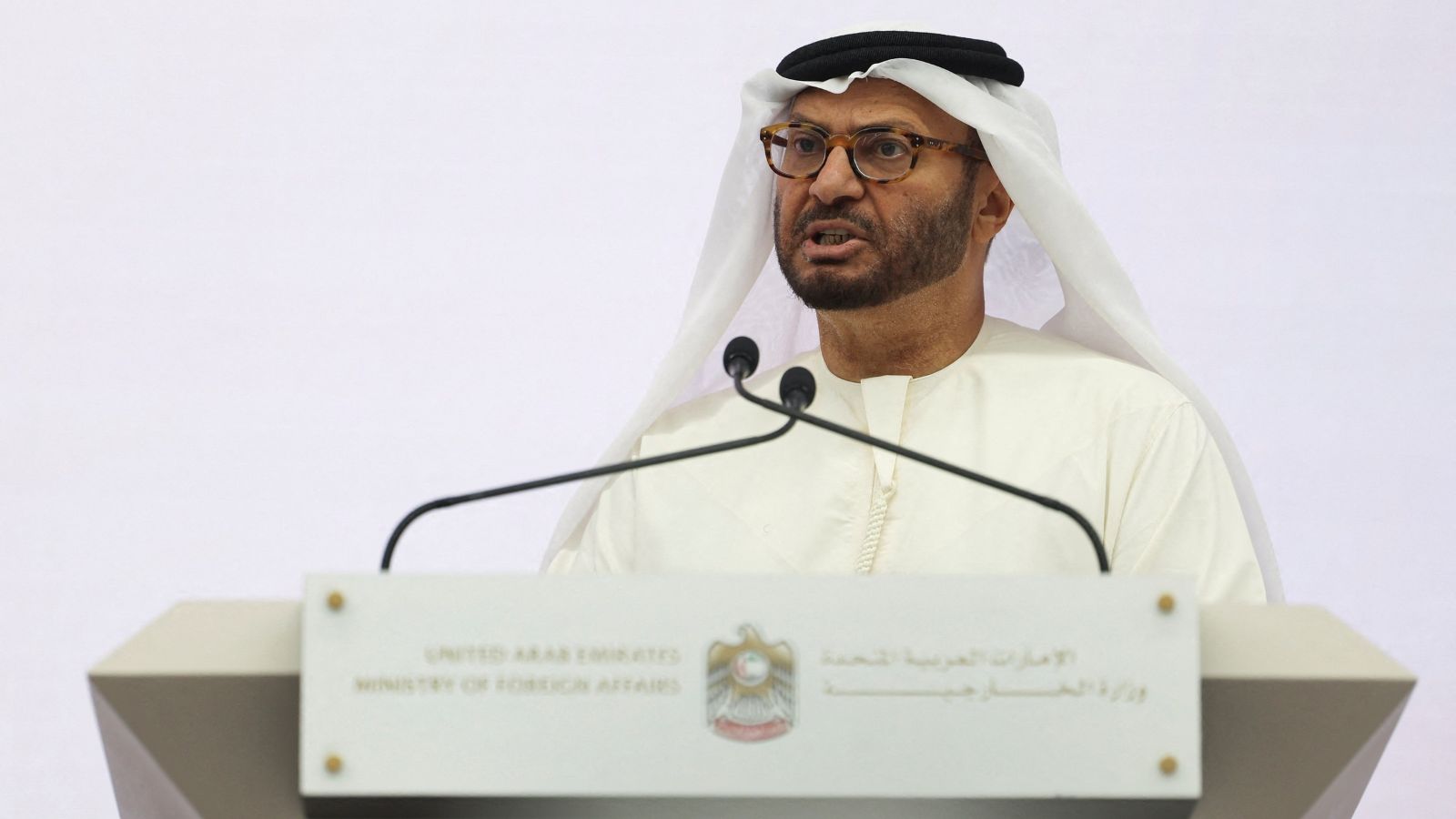
Washington loves a clean morality play. When news broke that Abdul El-Sayed, stepping into the national spotlight as a prominent Muslim American political figure, questioned American aid to Pakistan over alleged violations of international law, the pundit class immediately reached for its favorite lazy script.
On one side, cable news hawks cheered the tough talk on Islamabad. On the other, identity-obsessed commentators marveled at the optics of a Muslim American progressive breaking ranks with traditional diplomatic solidarity. Both sides missed the actual story. Completely.
The lazy consensus in foreign policy coverage treats US aid to Pakistan like a charity allowance that Washington can simply revoke whenever Islamabad misbehaves. That framing is pure fiction. It misunderstands how American foreign assistance actually functions, why Congress has failed to enforce its own human rights laws for decades, and why El-Sayed’s critique hits a nerve that neither party in Washington wants to touch.
The Myth of the Benevolent Checkbook
If you read standard wire coverage of Capitol Hill debates over South Asia, you get the impression that American taxpayers are writing blank checks out of the goodness of their hearts, only to be shocked—shocked—when foreign militaries use those funds to suppress domestic dissent, subvert elections, or violate international norms.
Stop buying that fairy tale.
US aid to Pakistan has never been about charity, democratic nation-building, or regional goodwill. Since the early days of the Cold War, through the Soviet-Afghan conflict, and across two decades of the War on Terror, American assistance to Islamabad has been a transactional protection racket. Washington buys logistical access, counterterrorism intelligence, airspace rights, and nuclear containment. In exchange, Pakistan’s military establishment—Rawalpindi, not the civilian parliament in Islamabad—gets hardware, hard currency, and international legitimacy.
When a rising political figure like El-Sayed points out that American money is being used to violate international law, he isn't merely offering a moral objection. He is exposing a structural hypocrisy built directly into the US legal code.
Enter the Leahy Law Nobody Enforces
To understand why this matters, look at the Leahy Law. Named after former Senator Patrick Leahy, this statutory provision prohibits the US Department of State and Department of Defense from providing military assistance to foreign security force units that violate human rights with impunity.
On paper, the Leahy Law is clear. In practice, it is routinely bypassed through semantic gymnastics, national security waivers, and intentional bureaucratic blindness.
I have watched policy teams in Washington spend weeks agonizing over whether a specific battalion in a partner nation technically counts as the "same unit" after a commander gets rotated or a regiment gets renamed. That is how the game is played. Lawyers split hairs while billions of dollars in Foreign Military Financing and security assistance keep flowing.
When El-Sayed questions aid to Pakistan on legal grounds, he is forcing a collision between two irreconcilable Washington habits: lecturing the world on the "rules-based international order" while quietly subsidizing security apparatuses that trample those exact rules at home and abroad.
Why the Identity Politics Framing Fails
Most mainstream coverage fixates on the biographical headline: First Muslim US Senator-Elect questions aid to a Muslim-majority nation.
Editors love that angle because it generates easy clicks. It plays into simplistic assumptions that Muslim politicians act as a monolithic voting bloc driven by religious affinity rather than constitutional principle or strategic realism.
That assumption is insulting, and it blinds readers to a massive generational shift in American foreign policy thinking.
For decades, foreign policy orthodoxy in Washington operated on a strict double standard:
- Adversaries were judged by their worst human rights abuses and authoritarian tendencies.
- Strategic partners were judged solely by their usefulness to Pentagon planners.
Younger, progressive, and anti-interventionist lawmakers—regardless of their religious background—are rejecting that framework entirely. Their argument isn't rooted in sectarian loyalty. It is rooted in consistency. If you demand accountability for human rights violations in Gaza, Ukraine, or Xinjiang, you cannot turn a blind eye when an American security partner jails political dissidents, dismantles judicial independence, or conducts cross-border operations that violate international law.
By framing El-Sayed’s remarks purely through the lens of his faith, legacy outlets trivialize a serious legal and strategic critique. They turn a constitutional argument about taxpayer complicity into a human-interest sidebar.
What People Are Actually Asking—And Why the Questions Are Flawed
Whenever a high-profile politician challenges aid to Islamabad, search engines light up with the same predictable questions. Almost all of them are built on false premises.
"Does cutting US aid to Pakistan actually hurt the Pakistani people?"
This is the classic humanitarian shield deployed by defense contractors and State Department lifers every time someone proposes conditioning security assistance.
Here is the brutal truth: Security aid and humanitarian aid are two completely different buckets of money.
When critics target military assistance, Foreign Military Financing, or weapons sustainment packages, they are not cutting off polio vaccines, flood relief, or educational grants administered through USAID. In fact, funneling billions into a bloated military apparatus often crowds out civilian economic development in Pakistan. It entrenches a parallel corporate empire run by the military brass—controlling everything from real estate and banking to cement and cereal manufacturing—while ordinary citizens bear the brunt of inflation and IMF austerity.
Cutting unchecked security aid doesn't starve the public. It starves an unaccountable elite of external validation.
"If the US pulls back, won't Pakistan just run straight into China's arms?"
Washington treats every diplomatic disagreement like a zero-sum board game where Beijing automatically wins whatever Washington drops.
Pakistan is already in China's arms. The China-Pakistan Economic Corridor (CPEC) represents tens of billions of dollars in infrastructure, energy, and port investments. Beijing is already Islamabad's largest supplier of major defense equipment.
The idea that keeping a trickle of US taxpayer dollars flowing prevents a Sino-Pakistani alignment is pure delusion. Islamabad plays Washington and Beijing against each other precisely because Washington is terrified of losing a seat at the table. Paying extortion money to a partner who has already signed a lease with your rival isn't grand strategy. It is bad business.
The Heavy Hitters Who Saw This Coming
El-Sayed is hardly the first voice to recognize that unconditional security assistance breeds blowback, though his platform gives the argument fresh urgency.
Decades of scholarship from realists and regional specialists—from Stephen Walt and John Mearsheimer’s critiques of reflexive interventionism to Husain Haqqani’s exhaustive documentation of the troubled US-Pakistan alliance in Magnificent Delusions—point to the exact same conclusion. When Washington subsidizes a foreign military without enforcing strict political and legal conditions, it doesn't buy stability. It buys resentment from the local population and contempt from the generals who cash the checks.
Look at the track record:
- The 1980s: Billions poured into Zia-ul-Haq’s military regime to fight the Soviets, radicalizing the borderlands and hollowing out civilian institutions.
- The 2000s: Over $30 billion in Coalition Support Funds and security aid flowed during the War on Terror, even as elements within Pakistan’s intelligence services sheltered the very insurgents fighting American troops across the border in Afghanistan.
- The 2020s: Continued diplomatic cover and military sustainment packages while democratic norms inside Pakistan suffered catastrophic erosion.
Every single time, Washington told itself that "stability" required looking the other way. Every single time, looking the other way produced the exact instability policymakers claimed to fear.
The Downside Nobody Wants to Admit
Intellectual honesty requires admitting that the contrarian path carries real risks. Conditioning or cutting aid to Pakistan is not a magic wand, and anyone pretending it comes without costs is selling you snake oil.
If Washington enforces strict international law compliance and suspends military assistance, three things happen almost immediately:
- Loss of tactical intelligence: Cooperation on counterterrorism—specifically monitoring groups like ISIS-K operating along the Afghanistan-Pakistan frontier—will freeze overnight. The Pentagon loses eyes and ears in a volatile neighborhood.
- Nuclear anxiety spikes: Washington’s deepest, quietest obsession regarding Pakistan has always been the security of its rapidly expanding nuclear arsenal. Alienating the military leadership reduces American visibility into command-and-control safeguards.
- Diplomatic friction: Islamabad will retaliate by restricting logistical corridors, stalling regional diplomatic initiatives, and leaning even harder into rhetorical anti-Americanism to rally domestic support.
Those are serious operational headaches. Ignoring them would be reckless.
Yet there is a massive difference between managing short-term tactical friction and underwriting long-term strategic failure. For twenty-five years, Washington chose short-term convenience over legal and strategic coherence. The result? Anti-American sentiment in Pakistan sits near historic highs, democratic governance is in tatters, and regional security is more fragile than ever.
How Foreign Aid Should Actually Work
If Congress and the incoming generation of lawmakers want to break this cycle instead of just scoring cable news soundbites, moral outrage won't cut it. You have to rewire the incentives.
- Separate civilian aid from security aid completely. Ring-fence humanitarian, climate-resilience, and public health funding so it flows directly through vetted non-governmental organizations and multilateral agencies—never through state ministries controlled by security apparatuses.
- Enforce automatic Leahy triggers. Remove executive branch national security waivers for routine Foreign Military Financing. If independent human rights monitors and State Department reports document systematic violations of international law, the money stops automatically until verified prosecutions occur.
- Audit end-use agreements publicly. Taxpayers have a right to know where every rifle, armored vehicle, and surveillance system ends up. If equipment sold or granted for external border defense is deployed against domestic protesters or journalists, the contract terminates immediately.
- Stop rewarding hostage diplomacy. End the practice of paying foreign militaries simply to prevent them from collapsing or aligning with Beijing. A partner that requires constant bribes to act responsibly isn't an ally; it is a liability.
El-Sayed’s intervention matters because it refuses to play by Washington’s polite fiction. Calling out the misuse of American taxpayer money under international law shouldn't be treated as a radical outlier position or a quirky biographical footnote. It is the bare minimum requirement of a functioning constitutional republic.
Washington has spent half a century funding foreign generals while preaching democracy to the rest of the world. The bill for that hypocrisy has finally come due—and no amount of spin from the foreign policy establishment is going to pay it off.