The fluorescent lights of a midnight distribution center do not care about geopolitics. They hum with a flat, indifferent energy, casting long shadows over rows of empty cardboard boxes.
Think of Sarah. She is thirty-four, sitting in a parked sedan in Ohio, staring at a dashboard clock that reads 11:42 PM. Her phone vibrates with an automated alert from a logistics firm she applied to three hours ago. They want an interview. Tomorrow. This is her third invitation this week. On her radio, the late-night news anchor speaks in a low, urgent drone about drone strikes, blockaded shipping lanes, and the escalating economic fallout from the war in Iran. Energy prices are creeping upward. Global markets are jittery. The world feels fragile, trembling on the edge of something fractured.
Yet, Sarah’s inbox is full of opportunity.
This is the great paradox of the current economic moment. By all traditional scripts of history, a major conflict involving a critical global energy hub should trigger an immediate defensive crouch from the business world. Corporations usually freeze hiring, hoard cash, and wait for the dust to settle. Instead, the American labor market is behaving like a runaway train fueled by an insatiable hunger for human capital.
The numbers released for April reveal a jarring truth. US job openings did not just hold steady; they climbed to a staggering 7.6 million.
To understand why this feels so disconnective, we have to look past the sterile charts published by the Bureau of Labor Statistics. We have to look at the machinery beneath.
The Ghost in the Boardroom
When a land war erupts in a region that dictates the flow of the world’s oil, the shockwaves travel fast. They ripple through manufacturing supply chains, inflate the cost of aviation fuel, and inject a toxic dose of uncertainty into quarterly forecasts. In the old days—say, the early 2000s—this level of geopolitical friction would have caused an immediate chill on Main Street.
But the American economy has mutated.
Step into the shoes of a regional operations manager trying to keep a supply chain moving right now. The war in Iran means a container ship carrying critical electronic components is currently taking the long way around the Cape of Good Hope. It is late. It is expensive. The old, hyper-efficient, just-in-time inventory systems are broken. They have been breaking for years, and this latest conflict is the final hammer blow.
To survive, companies can no longer rely on frictionless global transit. They have to build fortresses at home.
Building fortresses requires muscle. It requires people.
This is the secret engine behind those 7.6 million open positions. The surge in hiring is not a sign of reckless corporate optimism; it is an act of aggressive adaptation. Companies are frantically hiring logistics coordinators, warehouse managers, domestic manufacturing hands, and data analysts to re-route their entire operations. They are trying to outrun the chaos. The high number of job openings is actually a measure of how much structural repair the economy needs to withstand the global storm.
The Friction of Abundance
It sounds like a luxury problem. Millions of open jobs should mean a worker's paradise. But if you talk to the people looking for work, or the managers trying to fill these roles, the reality feels less like a paradise and more like a maze.
Consider the structural mismatch.
A job opening is not a guarantee of employment; it is a confession of a vacancy. The roles open today are vastly different from the roles workers held five years ago. We are seeing a massive demand in specialized healthcare, localized defense manufacturing, and advanced logistics technology. You cannot seamlessly drop a displaced retail worker into a cleanroom manufacturing semiconductors or a facility managing complex aerospace inventory.
The labor market is a massive puzzle where the pieces are changing shape faster than the players can fit them together.
This creates a peculiar exhaustion. Job seekers report sending hundreds of resumes into automated corporate portals, only to be met with silence, while those same corporations complain to trade publications that they cannot find qualified talent. The 7.6 million figure represents a profound friction. It is the sound of an economy grinding its gears, desperate to shift into a new era but caught in the transition.
The Cost of Staying Put
There is another layer to this April data that catches economists off guard: the resilience of consumer spending.
Typically, when war dominates the headlines, consumer confidence plummets. People delay buying a new car. They skip the kitchen remodel. They save for a rainy day because they smell smoke on the horizon.
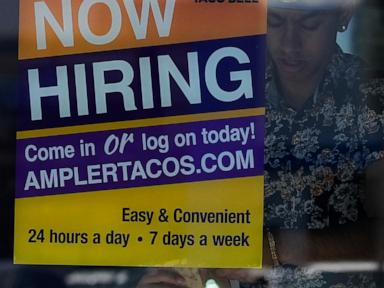
But the sheer volume of open positions has created an strange psychological floor. Even if a worker feels uneasy about the state of global affairs, the ubiquitous "Help Wanted" signs outside every local business provide a subliminal sense of security. It creates a collective mindset: The world might be messy, but my neighbor just got a new job, and my company is still trying to hire three more people in my department.
This psychological cushion keeps cash circulating. It prevents the psychological downward spiral that usually turns a geopolitical shock into a full-blown domestic recession.
But this resilience comes with a hidden tax.
With 7.6 million openings, employers have to compete fiercely for the available pool of workers. They raise wages. They offer sign-on bonuses. They sweeten the benefits. On the surface, this is a win for the American worker. But in the grand calculus of macroeconomics, rising wages combined with rising energy costs due to the Iran conflict create a persistent upward pressure on prices.
We are trapped in a strange loop. The abundance of jobs protects us from unemployment, but the cost of filling those jobs ensures that our weekly grocery bill remains stubbornly high. We are earning more, but we are chasing a cost of living that is constantly adjusting its stride to stay just ahead of us.
The View from the Factory Floor
Walk through an industrial park in Indiana at shift change. The air smells of ozone, damp asphalt, and cheap coffee. The faces of the people walking out of the gates are lined with a specific kind of modern fatigue.
They know the factory is hiring. They see the banners draped over the chain-link fences offering hiring bonuses. But they also know that the parts they are assembling are costing more every month because the raw materials are caught in the global logistics bottleneck. They know their shifts are being rescheduled because shipments are unpredictable.
The war in Iran feels thousands of miles away, an abstract sequence of shaky video clips on evening news broadcasts. Yet it sits right beside them on the assembly line. It dictates the speed of the conveyor belt. It determines whether their overtime is approved or canceled.
This is the reality of the modern global economy. There is no longer such a thing as a localized event. A decision made in a bunker in the Middle East echoes through the hiring algorithms of a healthcare provider in Denver and modifies the shift schedule of a fulfillment center in Charlotte.
The 7.6 million job openings are not just a statistic to be debated by talking heads on financial networks. They are a living, breathing map of our collective attempt to adapt to a world that refuses to hold still. They are the sum total of thousands of businesses trying to pivot, trying to hedge their bets, and trying to find enough human hands to steady the ship while the waters grow choppy.
Sarah puts her car in gear. The headlights cut through the dark, damp air of the parking lot, illuminating the brick facade of the distribution center. She checks her phone one last time before pulling away. The interview is confirmed for 9:00 AM.
The economy is trembling, the world is at war, and she has to go to work.