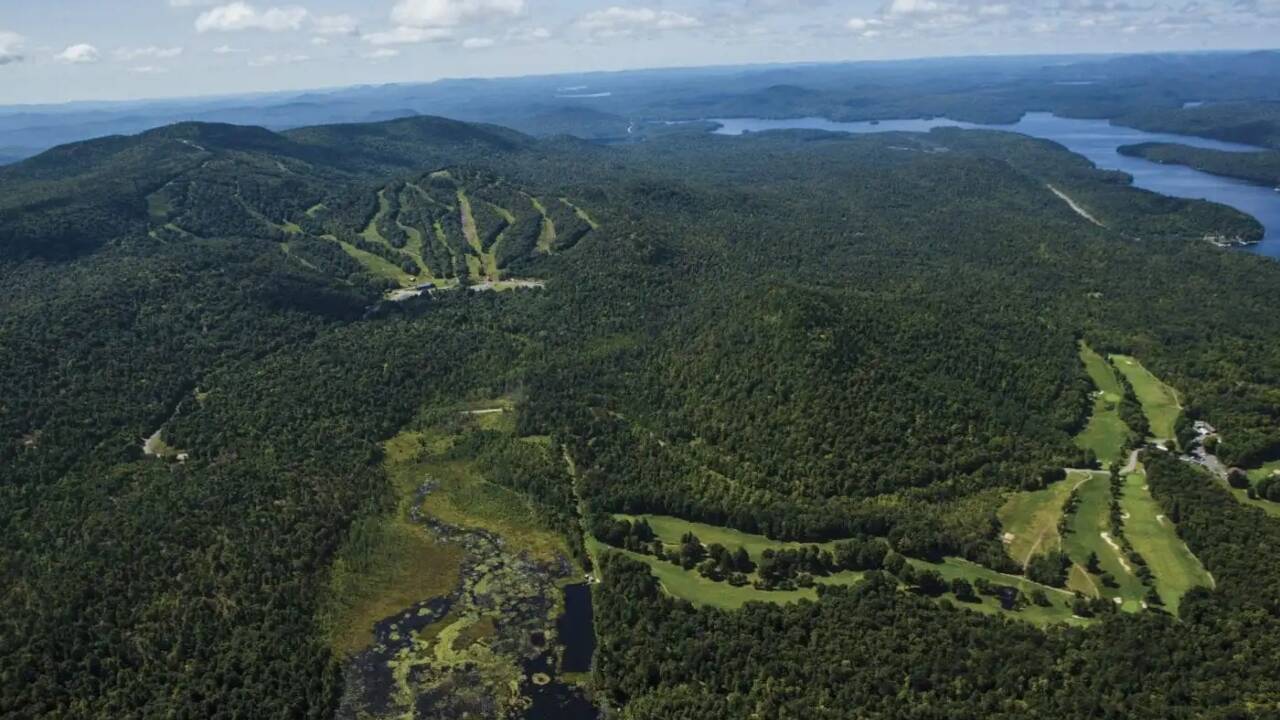
Another massive chunk of the Adirondack Park is hitting the auction block, and the mainstream press is treating it like a local festival. Nearly 5800 acres of prime New York timberland and wilderness are up for grabs, prompting predictable hand-wringing from regional green groups and celebratory press releases from liquidation agents. Everyone agrees on the lazy consensus. They tell you this is a rare chance to expand public stewardship, protect fragile watersheds, or lock up raw acreage forever.
They are wrong.
Auctions of this scale do not save ecosystems. They expose the fundamental bankruptcy of how we handle conservation finance in the United States. Poring over the offering memorandums reveals an uncomfortable truth that local land trusts refuse to speak out loud. When thousands of acres shift hands through distressed sales or corporate portfolio pruning, the people cheering the loudest are usually the ones profiting from the bureaucratic gridlock that made the land unviable to hold in the first place.
I have watched private landowners bleed dry trying to manage large timber holdings under the suffocating weight of New York tax codes and state-level land use restrictions. When a parcel hits the auction block, it is rarely a sign of a vibrant rural economy. It is a distress signal.
The Myth of Perpetual Preservation
Let us dismantle the core premise driving the coverage of this auction. The standard narrative claims that getting more land into public hands or tying it up in restrictive conservation easements equates to permanent environmental victory.
That is an administrative fantasy.
When you freeze thousands of acres under rigid legal frameworks, you often achieve the exact opposite of ecological health. Forests are not museum displays. They are dynamic, chaotic biological systems that require active management, selective thinning, and capital investment. When a massive tract is auctioned off to the highest bidder with zero skin in the game regarding active stewardship—or conversely, bought up by government agencies with flat budgets and zero staffing—the land stagnates.
Consider the financial reality of holding 5800 acres in New York. Property taxes alone will crush any owner who tries to practice long-term conservation without a revenue-generating model. If the winning bidder is a speculative investor looking to flip timber rights or carve up parcels on technical loopholes, the ecosystem loses. If the state steps in to buy it, taxpayers inherit an unfunded liability for maintenance, invasive species control, and boundary enforcement that they are entirely unequipped to handle.
We romanticize acreage while ignoring the balance sheet.
Why the State is the Worst Landlord in the Room
People assume that public ownership is the gold standard for wilderness protection. I have spent enough time navigating state land acquisition committees to know how dysfunctional that machine actually is.
When bureaucrats acquire new territory, they treat it as a trophy. They hold press conferences, pose in flannel shirts, and talk about legacy. Then the cameras leave. The funding dries up. The trails wash out, the deer populations get out of balance, and pests like the emerald ash borer or beech bark disease tear through the canopy unchecked because environmental review boards take three years just to approve a sanitation cut.
Private capital, for all its flaws, operates under accountability. A private entity that mismanages forest land goes bankrupt. A state agency that mismanages forest land simply asks for a bigger budget next fiscal year.
By framing this 5800-acre auction as a simple battle between conservationists and developers, the media misses the real economic engine at play. The rules governing the Adirondack Park—specifically the Adirondack Park Agency regulations—create an artificial scarcity trap. They drive down private land values while making sustainable economic activity nearly impossible for local families. Then, when a corporate owner finally throws in the towel and dumps the acreage at auction, the state swoops in like a savior, fixing a market failure of its own making with public debt.
The Counter-Intuitive Play
If we actually wanted to protect regions like this, we would stop treating private enterprise as the enemy of ecology.
Imagine a scenario where tax policy rewarded landowners for measurable biodiversity outcomes and active carbon sequestration rather than penalizing them for keeping forests intact. Imagine a market where timber harvesting was integrated directly into conservation finance, generating the revenue needed to fund ecological health without relying on taxpayer bailouts or philanthropic whim.
Instead, we get archaic auctions that feed into a cycle of boom-and-bust land speculation.
The upcoming auction of these 5800 acres will come and go. Bids will clear. Headlines will fade. But the underlying structural rot in how we value, tax, and manage large tracts of American wilderness will remain entirely untouched.
Stop celebrating the transfer of paper titles. Start looking at who actually has to pay for the trees to stay standing tomorrow morning.


