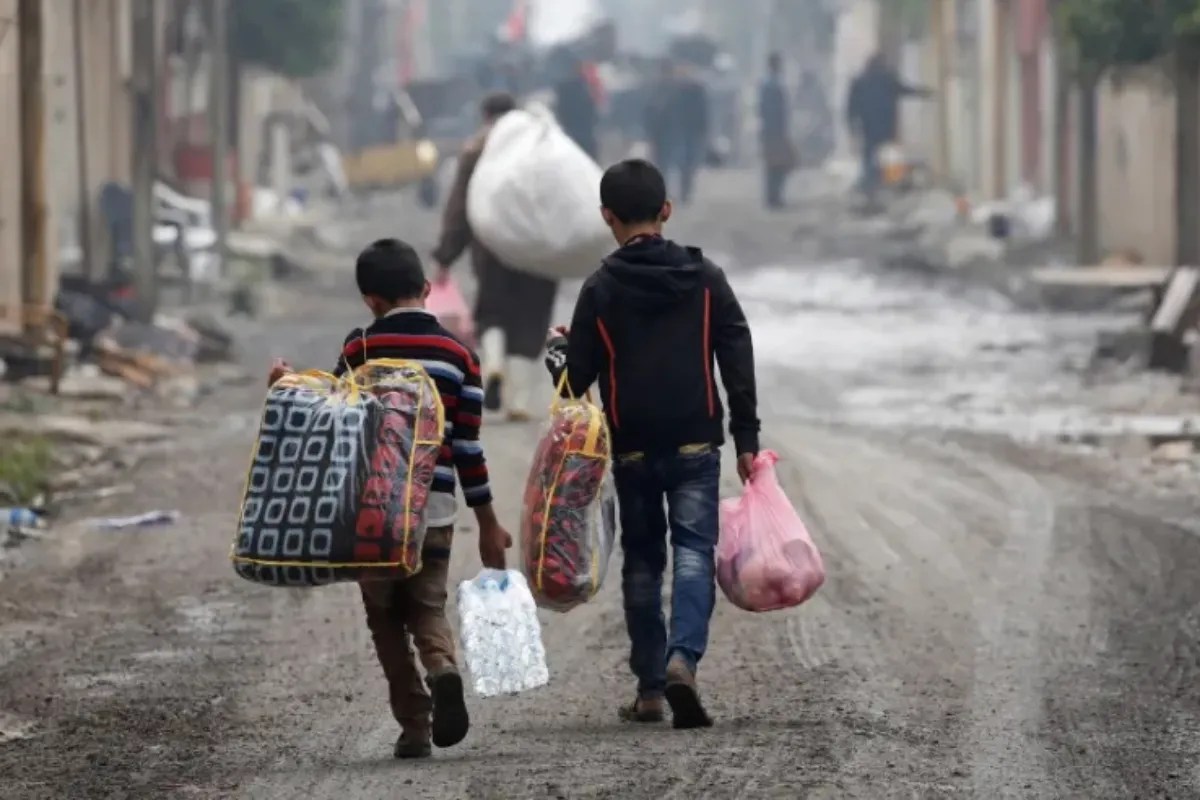
The global commitment to the Sustainable Development Goals (SDGs) faces a terminal bottleneck. Current projections from UNICEF indicate that 27.3 million children will die before their fifth birthday by 2030 if current intervention velocities remain static. This is not a failure of medical science, but a failure of distribution and infrastructure. The mortality rate is a lagging indicator of systemic poverty, geographic isolation, and the breakdown of primary healthcare delivery. To understand why 27.3 million lives are at risk, we must deconstruct the crisis into its constituent mechanical failures: neonatal fragility, infectious disease penetration, and nutritional deficits.
The Triad of Pediatric Mortality Drivers
The risk to these 27.3 million children is concentrated within three distinct operational sectors. Each sector requires a different logistical response, yet they are currently being treated with broad, uncoordinated philanthropic strokes.
- Neonatal Vulnerability (The First 28 Days): Approximately 45% of under-five deaths occur within the first month of life. This is a "Point-of-Birth" failure. The primary drivers are preterm birth complications, intrapartum-related events (birth asphyxia), and neonatal sepsis. These deaths are highly sensitive to the presence of skilled birth attendants and the availability of basic resuscitation equipment.
- The Infectious Disease Envelope: For children who survive the neonatal period, the risk profile shifts toward pneumonia, diarrhea, and malaria. These are "Environmental Penetration" failures. They occur when the child’s surrounding ecosystem—water, sanitation, and vector control—is compromised.
- Nutritional Stunting and Wasting: Malnutrition is rarely the direct cause of death on a certificate, but it acts as a physiological multiplier. A wasted child is up to 11 times more likely to die from common childhood illnesses than a well-nourished peer. This is a "Resource Scarcity" failure.
The Geography of Risk: Sub-Saharan Africa and Southern Asia
The 27.3 million figure is not a global average; it is a hyper-localized crisis. Sub-Saharan Africa and Southern Asia account for over 80% of these projected deaths. In these regions, the "inverse care law" is in full effect: the availability of good medical care tends to vary inversely with the need for it in the population served.
In Sub-Saharan Africa, the mortality rate is 1 in 14 children dying before age five. In contrast, in high-income countries, that ratio is 1 in 189. This disparity represents a 13-fold increase in risk based purely on GPS coordinates. The bottleneck here is the lack of "Last-Mile Delivery." Even when life-saving vaccines or antibiotics exist, the cold chain (the temperature-controlled supply chain required for pharmaceuticals) often breaks down before reaching rural clinics.
The Cost Function of Prevention vs. Reactive Care
The economic logic of the current crisis is skewed toward reactive, high-cost interventions rather than proactive, low-cost prevention. The math of child survival is remarkably affordable on a per-unit basis, yet the aggregate funding remains insufficient.
- Oral Rehydration Salts (ORS): Costs pennies and can prevent death from diarrheal dehydration, yet usage remains below 50% in high-burden areas.
- Immunization: Scaling up vaccine coverage to 90% globally could prevent a significant portion of the projected 2030 mortality.
- Breastfeeding Advocacy: Exclusive breastfeeding for the first six months acts as a natural immunization, yet structural barriers—such as lack of maternity leave or aggressive formula marketing—undermine this biological safeguard.
The failure to scale these interventions is a failure of "Primary Healthcare (PHC) Integration." Most systems are designed around vertical programs (e.g., a specific fund for Malaria, another for HIV) rather than horizontal integration where a single community health worker can address all three pillars of the mortality triad.
Structural Bottlenecks in the 2030 Countdown
To understand why the 2030 goal is slipping, we must examine the specific frictions preventing progress.
The Human Resource Deficit
There is a global shortage of health workers, but the density is lowest where the mortality is highest. In many high-burden regions, the ratio of physicians to the population is less than 1 per 10,000. This necessitates a shift toward "Task-Shifting"—training community members to perform basic diagnostics and treatments. However, task-shifting requires a rigorous supervisory framework that most fragile states cannot maintain.
Data Invisibility
A significant portion of the 27.3 million deaths will occur "off the grid." Civil registration and vital statistics (CRVS) systems are non-existent in many high-risk zones. When a child dies without a birth or death certificate, they become a statistical ghost. This lack of data prevents the targeted allocation of resources. We cannot optimize a system we cannot measure.
The Fragility Multiplier
Conflict and climate change are the two most potent accelerators of pediatric mortality. In conflict zones, routine immunization halts, and water infrastructure is often the first target of destruction. Climate-induced droughts lead to crop failure, which triggers acute malnutrition, resetting years of progress in weeks.
The Mechanism of "Catch-Up" Growth in Survival Rates
History shows that rapid progress is possible through targeted, technology-driven interventions. For example, between 1990 and 2022, the global under-five mortality rate declined by 59%. This was achieved through the mass distribution of insecticide-treated bed nets and the expansion of the Expanded Programme on Immunization (EPI).
The "Catch-Up" mechanism requires a focus on three technical areas:
- Digital Health Surveillance: Utilizing mobile technology for real-time reporting of disease outbreaks at the village level.
- Point-of-Care Diagnostics: Developing low-cost, rugged diagnostic tools that do not require a laboratory setting.
- Oxygen Access: Hypoxemia is a major killer in pediatric pneumonia. Scaling up oxygen concentrators in district hospitals is a high-yield intervention that is currently underfunded.
The Logistics of the 27.3 Million
The UNICEF report is a projection based on current "business as usual" trajectories. To bend the curve, the intervention must move from "Global Policy" to "Local Logistics."
The focus must shift from the total number of deaths to the Rate of Reduction. Currently, the world is reducing under-five mortality at a rate of roughly 3% per year. To meet the SDG targets and save a significant portion of those 27.3 million children, that rate must accelerate to nearly 8% in high-burden countries.
This acceleration cannot happen through incrementalism. It requires a radical restructuring of health financing. Currently, out-of-pocket expenses for healthcare drive millions of families into poverty, which in turn increases the risk of child mortality. Universal Health Coverage (UHC) is the only structural solution that decouples a child's survival from their parents' income.
Strategic Pivot: Horizontal System Strengthening
The era of the "Silver Bullet" (a single vaccine or drug) solving global health crises is over. The remaining 27.3 million deaths are the "Hard-to-Reach" cases. They are protected by barriers of distance, poverty, and systemic neglect.
The strategic play is the transition from vertical, disease-specific funding to horizontal health system strengthening. This means investing in the boring, foundational elements: reliable electricity for clinics, paved roads for ambulances, and living wages for community health workers.
If the current trajectory holds, 27.3 million lives will be lost by 2030. The solution is not more awareness; it is more logistics. The mandate for 2026 and beyond is to move away from aspirational targets and toward the rigorous engineering of healthcare delivery systems in the world's most neglected geographies.