Traditional housing makes no sense. You plug yourself into a grid, drain your bank account on monthly utility bills, and live in a structure that bakes in the summer and freezes in the winter without constant mechanical intervention. Mike Reynolds looked at this broken system back in the 1970s and decided to build something radically different out of trash. He called them Earthships.
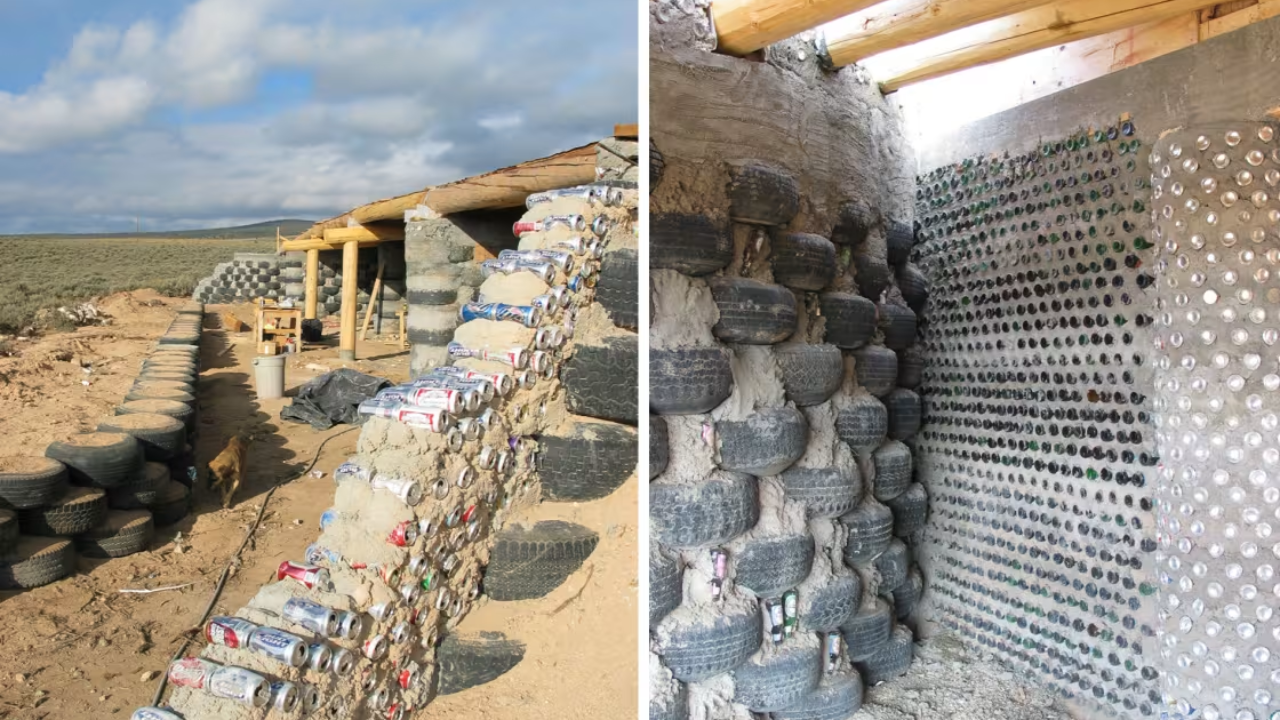
You might picture a quirky hippie commune in the New Mexico desert. Honestly, you wouldn't be completely wrong about the location, but the engineering beneath those adobe walls is dead serious. Reynolds didn't just stack waste; he engineered a thermal mass fortress. He used old automobile tires packed densely with dirt, reinforced with aluminum cans, and coated in mud plaster.
The core idea is deceptively simple. Earthships operate completely off the grid by leveraging physics instead of fossil fuels. They harvest their own water, treat their own sewage, generate their own electricity, and maintain a comfortable indoor climate year-round without a furnace or an air conditioner.
The Physics of Trash Walls
Building a house out of discarded rubber tires sounds like a structural nightmare. It works because of sheer weight and density. A single tire rammed solid with earth weighs roughly three hundred pounds. Stacked in a staggered pattern, they form a load-bearing wall that can withstand earthquakes, high winds, and heavy roof loads.
Dirt acts as a massive thermal battery. When the desert sun beats down on the glass-fronted southern facade of an Earthship, the earth-packed tires absorb that heat slowly. As the temperature drops overnight, the walls release that stored warmth back into the living space. You get natural thermal inertia. The indoor temperature usually hovers comfortably between seventy and seventy-two degrees Fahrenheit, even when outside weather swings wildly between freezing nights and scorching afternoons.
Most people mess this up by ignoring orientation. An Earthship only functions if it faces true south. If you point it east or west, the solar gain system collapses, and you end up living in a giant, inefficient greenhouse.
Water Management in an Arid Wasteland
Water scarcity is the ultimate design constraint. Traditional homes treat water as a linear resource—it comes in clean, gets used once, and flushes away. Earthships use a closed-loop system that recycles every single drop up to four times.
It starts on the roof. Rain and snowmelt are captured and channeled into a cistern system. Gravity feeds this water into a series of filters before it reaches the kitchen and bathroom sinks for washing and drinking.
Once you use that water, it doesn't vanish down a municipal sewer line. It becomes greywater. This greywater flows directly into indoor botanical cells—long, interior planter troughs filled with tomatoes, bananas, and flowers. The plants act as living bio-filters, cleaning the water through their root systems while thriving in the nutrient-rich runoff.
After passing through the botanical cell, the water is filtered one final time and used exclusively to flush the toilets. Blackwater from the toilets then goes into outdoor solar septic chambers, where natural bacteria break it down safely beneath the desert floor. You stop needing a municipal hookup entirely.
Overcoming the Real-World Hurdles
Let’s be honest. Building an Earthship isn't a weekend DIY project you knock out with a hammer and a few friends. It is brutally physical labor. Ramming dirt into hundreds of heavy rubber tires by hand will break your back.
Permitting remains the biggest administrative nightmare. Municipal building codes love standardized lumber, drywall, and concrete foundations. When you walk into a county office with architectural drawings featuring stacked tires and mud walls, local inspectors tend to panic. Reynolds spent decades fighting zoning boards in New Mexico just to prove these structures were structurally sound. Things have loosened up in specific off-grid pockets, but getting a permit in a standard suburban neighborhood is basically impossible.
Cost is another factor people misunderstand. While the materials like used tires are practically free, the labor investment is massive. If you hire a professional crew to build one, the custom engineering and specialized labor will cost just as much as a traditional stick-built home. The real financial savings show up decades later when your monthly utility bill is literally zero dollars.
Why This Architecture Matters Now
We are staring down severe climate unpredictability and grid instability. Relying on centralized infrastructure that fails during a heavy winter storm or a summer heatwave is a massive vulnerability.
An Earthship represents a shift toward radical self-reliance. You don't need to rebuild an entire desert compound to learn from these designs. Modern sustainable architecture has quietly stolen pages from the Earthship playbook. Passive solar orientation, thermal mass walls, and greywater recycling are finding their way into high-end suburban homes and urban retrofits.
Stop waiting for utility companies to fix the grid or lower your rates. The blueprint for independent, resilient living has existed for fifty years. It just happens to be buried inside a stack of old tires.