When a missing dog reappears a thousand miles away, the public loves a miracle. Headlines declare heartwarming reunions, networks broadcast footage of tearful owners at airport terminals, and everyone assumes the universe simply corrected itself.
They are missing the point entirely.
A dog does not trot across state lines, bypass highway patrols, and check into an out-of-state municipal shelter on its own accord. When an animal turns up a thousand miles from its living room, human intervention is always the engine. Either someone transported the pet across the country intentionally, or a fragmented, uncommunicative national animal welfare network dropped every administrative ball along the way.
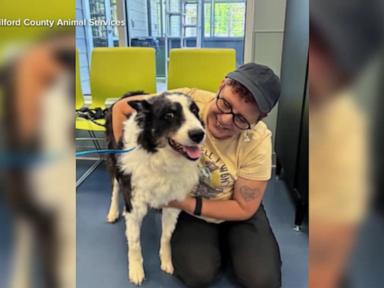
Consider the mechanics of modern pet recovery. We live in an era of satellite tracking, GPS collars, and digital databases. Yet, thousands of family pets vanish every year, only to pop up in distant zip codes months later. The recent case of Rio, an Australian shepherd who vanished from Oklahoma and turned up two weeks later in North Carolina, is a textbook study in administrative blindness. A Good Samaritan found him wandering, took him to a county facility, and a microchip scan solved the puzzle.
Except the microchip did not solve the mystery of how he got there. It merely put a bureaucratic band-aid on a massive operational failure.
Nobody can explain how the dog crossed eleven hundred miles in fourteen days. Animal control officials shrug. Owners are too relieved by the emotional reunion to ask aggressive questions. The narrative hardens into a feel-good viral clip, masking a terrifying reality. Our regional animal rescue operations operate in dark, isolated silos.
If a stray animal is picked up in Tulsa and transported—whether by an illegal trafficker, a well-meaning cross-country driver, or an unvetted rescue transport group—there is no cross-jurisdictional mechanism to flag it. Local databases do not talk to neighboring states seamlessly. National registries require owners to manually update secondary contact information, a step frequently forgotten in moments of panic.
The animal welfare sector treats these long-distance appearances as statistical anomalies. They are not anomalies. They are symptoms of a fractured infrastructure that relies on luck rather than logic.
Look closely at how stray animals move across state lines. Commercial pet transport has exploded into a multi-million-dollar shadow market. Independent operators load vans with surrenders and strays, driving from the South to the Northeast under the banner of rescue work. Oversight is minimal. Paperwork is frequently forged, lost, or ignored. When an animal slips out of a transport vehicle in Ohio, wanders off at a Virginia rest stop, or is dumped in a Pennsylvania alley, the local shelter downstream inherits a ghost.
They scan for a chip. If the chip is registered to an owner three states away, the phone call happens. The tears flow. The camera crews arrive.
Then the shelter closes its doors for the evening, and the structural rot remains entirely unexamined.
We refuse to audit the transport pipeline because the happy ending makes us feel too good to complain. Journalism loves a redemption arc. The industry wraps up the messy reality of pet theft, interstate neglect, and shelter disorganization in a neat bow of viral sentimentality.
Ask the shelter directors who field these calls off the record. They will tell you about the animals that never get scanned. They will whisper about the transport vans operating without state-level permits, dropping off unvetted dogs to meet quotas. They will admit that the thousand-mile journey is often less about canine resilience and more about human negligence.
Technology exists to track every pallet of commercial cargo across international borders with pinpoint precision. We can map the exact trajectory of an overnight shipping envelope down to the city block. Yet, millions of microchipped domestic animals are treated like loose change, floating haphazardly across the American landscape until someone happens to scan a transponder.
The next time a viral video surfaces about a dog that somehow crossed a continent to find its family, do not just watch the reunion. Ask who drove the van. Ask why the local authorities failed to track the animal's transit. And recognize that every miraculous homecoming represents a dozen systemic failures that we simply chose to ignore.