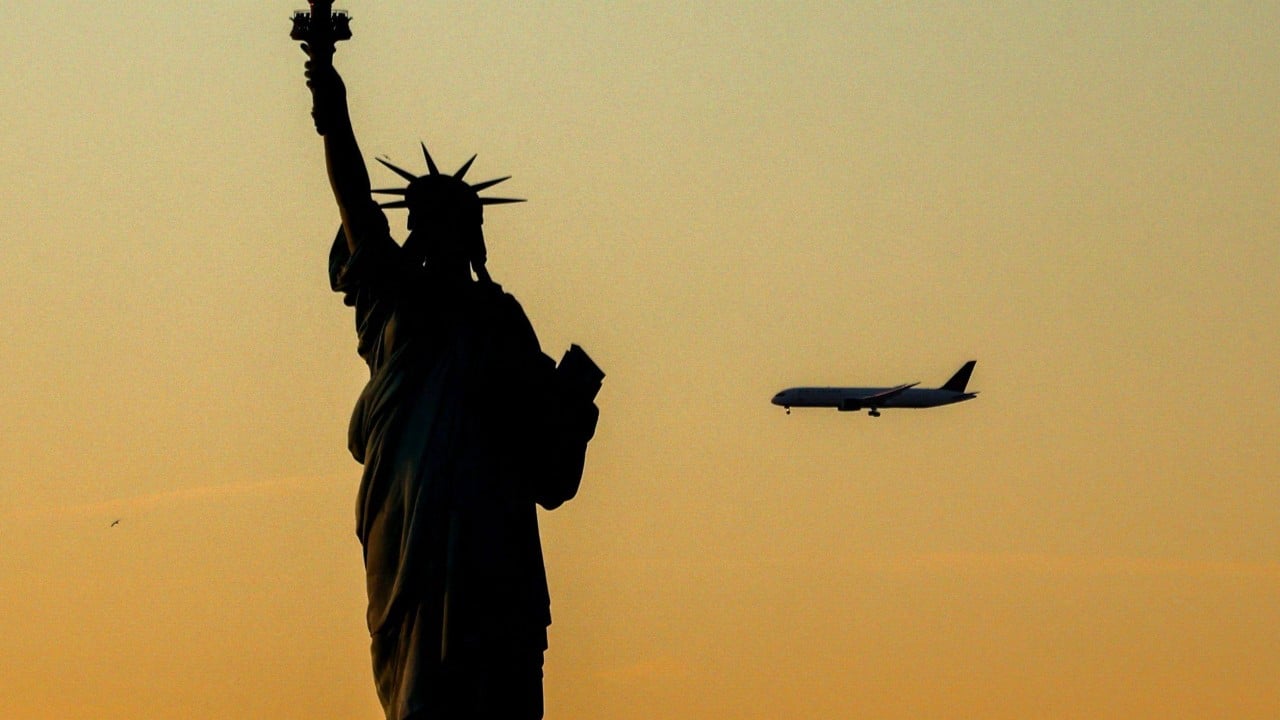
The tarmac at JFK airport at 4:00 AM smells like jet fuel, damp asphalt, and unfulfilled promises.
A young family from Brisbane stands at the international arrivals queue, shifting their weight from foot to foot. The father clutches three passports with white-knuckled intensity. His wife whispers to their six-year-old daughter, trying to distract her from the imposing, bulletproof-vested Customs and Border Protection officers stationed just past the plexiglass barriers. Read more on a related issue: this related article.
This family didn't choose New York lightly. For six months, their group chat was a battleground of viral TikTok videos detailing street crime, news clippings about political upheaval, and warnings from well-meaning relatives who treated a vacation to the United States as an existential gamble.
They are here anyway. But the anxiety in their chests is palpable. They represent the single greatest challenge facing the American tourism machine today: the creeping, pervasive belief that the United States has become too angry, too violent, and too broken to visit. Further analysis by AFAR explores comparable views on this issue.
The Man in the Crosshairs of Perception
Chris Thompson understands this anxiety better than anyone, even if his job requires him to dismantle it.
As the Australia-born head of Brand USA—the nation’s official tourism marketing organization, originally appointed during a turbulent political era—Thompson’s daily reality centers on a bizarre paradox. He is tasked with selling a dream that the nightly news actively tries to destroy.
When international travelers look at America, they no longer just see the neon glow of Times Square or the majestic peaks of Yosemite. They see a filter of cable news chyrons and social media algorithms that amplify the country's worst days.
"We have to separate perception from reality," Thompson often notes when pressed about the shifting global sentiment.
But perception is a stubborn beast. It doesn't care about quarterly statistics. It cares about how a mother feels when she books a flight for her children.
The global travel market is a fierce, zero-sum game. If an Australian, a Brit, or a German feels an inkling of dread about visiting Chicago or Los Angeles, they don't dig into localized crime data to reassure themselves. They simply change their destination. They book Tokyo. They choose London. They spend their thousands of euros and dollars in places that feel safe.
This shift isn't just a cultural snub. It is an economic hemorrhage.
The Cold Math of Warm Welcomes
To understand the stakes, we have to look past the postcard imagery and look at the ledger.
International tourism is not a luxury hobby; it is a massive export industry. When a traveler from Sydney buys a hot dog in Manhattan, stays in a hotel in Miami, or rents a car in Utah, they are injecting foreign capital directly into the American economy.
Consider the anatomy of a single international trip:
- The Airline Ticket: Often booked via domestic carriers, supporting aviation infrastructure.
- The Hospitality Ecosystem: Housekeepers, bartenders, Uber drivers, and tour guides whose livelihoods depend entirely on foot traffic.
- The Main Street Effect: Small businesses in secondary markets that rely on travelers stepping off the beaten path.
When those travelers stay home, the impact ripples through communities that have never even seen an international flight. A dip in global visitation means fewer hours for a diner waitress in Arizona or a hotel clerk in Orlando.
The primary myth Thompson and his team constantly fight is that the entire United States can be painted with a single, chaotic brush. A headline about an incident in one neighborhood of a major metropolitan area can depress bookings across an entire state. To an outsider, the distance between a localized protest and a peaceful suburban theme park is entirely invisible.
The data tells a story of resilience, but the human psyche is fragile. Fear is the most effective deterrent in the world, and right now, America’s chief export sometimes feels like drama.
Rebranding the Melting Pot
How do you fix a broken image when you don't control the narrative?
You don't do it by denying the flaws. You do it by changing the camera angle.
The strategy currently deployed by tourism officials isn't about pretending the United States is perfect. It is about reminding the world of the sheer scale and diversity of the American experience. If a traveler is wary of big cities, the focus shifts to the open roads of Montana, the coastal quiet of New England, or the musical heritage of the Deep South.
The narrative must evolve from "Is it safe?" to "Where will you go?"
But the real work happens at the micro-level. It happens in the way border agents greet visitors. It happens in the ease of the visa process. Security is non-negotiable, but a nation can be secure without being hostile. The moment a vacation feels like an interrogation, the battle is lost.
The Australia-born tourism chief faces a unique cultural hurdle here. Australians, by nature, possess a deeply ingrained sense of egalitarianism and a low tolerance for bureaucratic friction. When they look at the current American landscape, the stark polarization can feel exhausting.
The counter-argument is found not in politics, but in the people.
Go to a Friday night high school football game in Ohio. Sit at a communal table in a Texas brisket joint. Listen to a jazz trio in a cramped New Orleans basement. The noise of the national news cycle evaporates in these spaces. What remains is a culture that is still remarkably open, generous, and eager to share its stories with strangers.
The Unspoken Cost of Isolation
If the critics win, and the world decides that America is no longer worth the trouble, the loss won't just be measured in billions of dollars of lost revenue.
The real casualty will be perspective.
Travel is the ultimate antidote to tribalism. When international visitors come to the US, they humanize the country for their families back home. When Americans interact with foreign tourists, their own worldview widens. It is an ongoing, vital exchange of culture that keeps a superpower grounded in the global community.
Without that exchange, the walls grow higher—both literally and metaphorically.
The family from Brisbane finally reaches the front of the line at JFK. The officer takes their passports, scans their fingerprints, and looks at the tired, anxious faces of the parents.
He looks at the little girl, who is clutching a stuffed koala.
The officer’s stern expression softens. He slides the passports back across the counter with a quick, practiced motion.
"Welcome to New York," he says, his voice carrying the distinct, gravelly warmth of Queens. "Make sure you get some pizza."
The father blinks, his shoulders dropping two inches as the tension drains from his spine. The mother smiles, taking her daughter’s hand as they pass through the final security gate and step out into the bustling, chaotic, impossibly alive energy of the terminal.
The myths didn't disappear. The headlines didn't change. But for this one family, the real America just began.